Sending Sitemate Into The AI Era – Introducing Storm 1.0
Today, I'm sending Sitemate into the AI era.
I'm excited to announce the release of Storm 1.0, the #1 AI Data Collection Agent, built specifically for the front line of the built world.
Storm 1.0 is the first wave of what will be a relentless assault on our own legacy, and on the old way of doing things. The old user experience patterns; filling in forms, clicking buttons, picking list items from dropdowns. The list, excuse the pun, goes on and on.
This is the beginning of something we've been building towards for a long time. So before I tell you what Storm does, I want to tell you why it exists.
Why We Built Storm
For anyone who's ever spent time on a site within the built world, or in the back office that supports one, they know the truth;
The work is physical, but the proof is in the paperwork.
I learned that the hard way.
In 2014, I was working as a junior site engineer on a project to widen the M5 motorway in Sydney. Every Wednesday, I'd spend an entire day filling out nine separate, thirty-page permits to work. Then I'd spend the rest of the week carrying them around the office chasing signatures, before driving up and down 20km of motorway alignment just to get them out to the crews.
I spent more than 30% of my working week as a civil engineer doing mindless, manual paperwork.
What I didn't realize at the time was that this was the norm. It's no wonder that 98% of large projects face cost overruns or delays.
And it's only gotten worse. Rising material and labour costs, expanding HSEQ regulation, more parties on every project, more brownfield work, a less experienced workforce. Every one of these forces drives the volume of paperwork up, and up, and up. They compound, not linearly but exponentially.
The more society demands safety, quality, and accountability,
the more paperwork gets pushed onto the people closest to the work,
the people with the least time to do it.
That's the paradox we set out to break. Our mission is to Multiply The Engineering Power Of The Built World, and that doesn't mean taking people digital, or streamlining things. It means unshackling our engineering workforce and freeing them of their burnout and their burden, so they can get on with the real work.
Storm is how we deliver on that promise.
The Old Way Is Over
At some point, we put our own product on trial.
Not because it was bad, but because it was trapped in an old assumption. Forms UX still expected clicking and typing. A human, standing in the dust and the noise and the glare, translating messy reality into neat little boxes.
Once I saw that clearly, I couldn't un-see it.
What if forms didn't need to be filled?
What if they could be produced as a side effect of the work happening?
For most of computing history, "filling a form" meant a keyboard, a mouse, structured fields, and a human doing the hardest part. That made sense when typing was the only reliable input. But voice became practical. Conversation became an interface. Photos and videos became readable by machines.
On the front line, a quick walkthrough video often contains more real signal than a 40-field checklist. The old workflow treats media as an attachment. Storm treats it as the input.
This is the double jump. A large portion of the built world will go straight from physical paperwork to zero click forms, skipping the digital form-filling step entirely.
What Storm Does
To show what Storm 1.0 actually does, we used The Sitemate Manifesto as our inspiration, and crafted a launch film to tell the story of Jane.
Jane is an engineer, running various front lines across the built world. She's the bottleneck, caught between the front line that actually does the work and knows what's going on, and the management that needs to steer the site to a safe and successful outcome.
Storm is built for Jane. Here's what that looks like.
Site diaries and daily reports. You don't need to fill them in anymore. You just talk to Storm about the day, dump in your photos, scribble a few notes if you want, and Storm checks the weather and writes it all up for you.
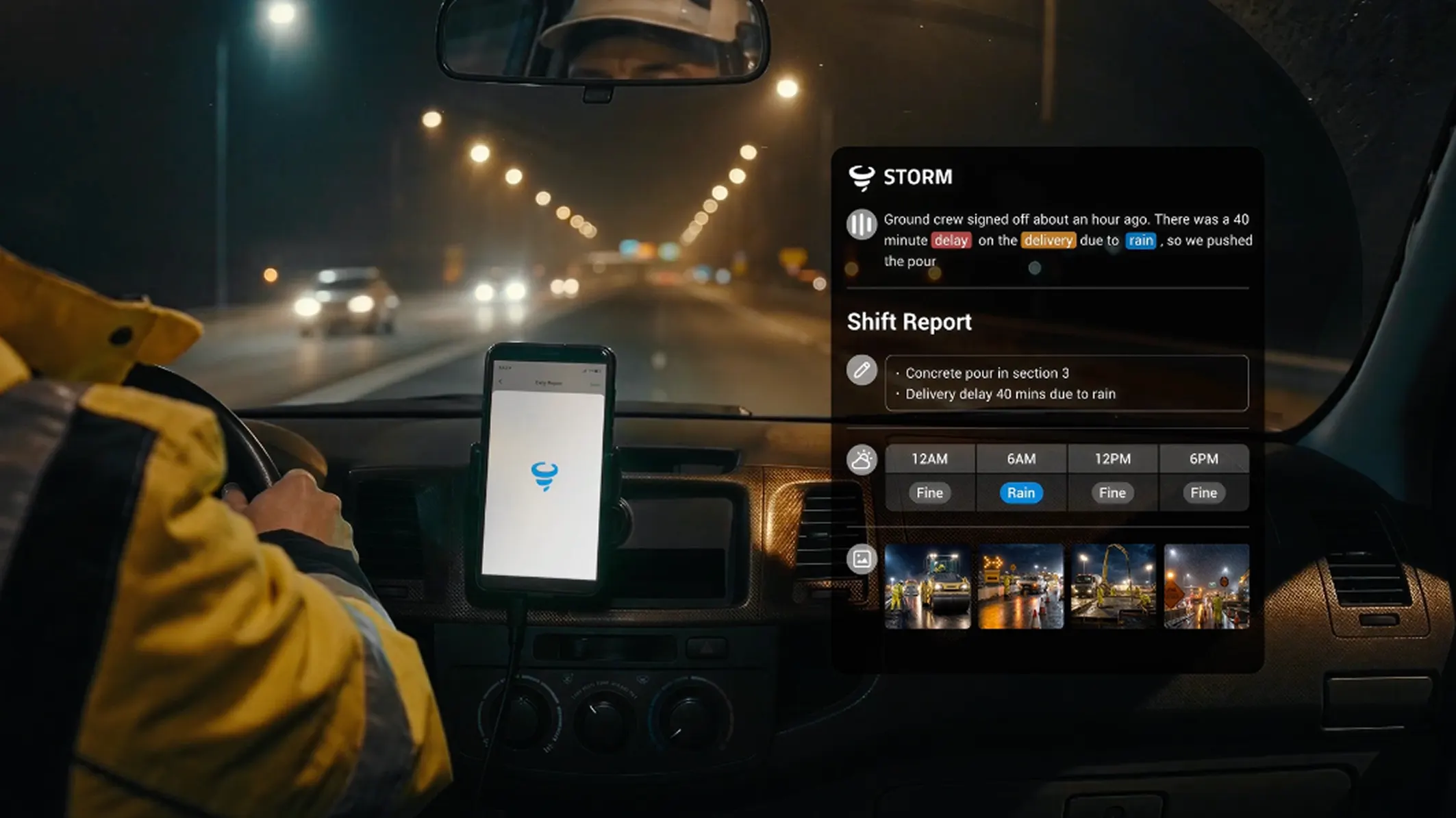
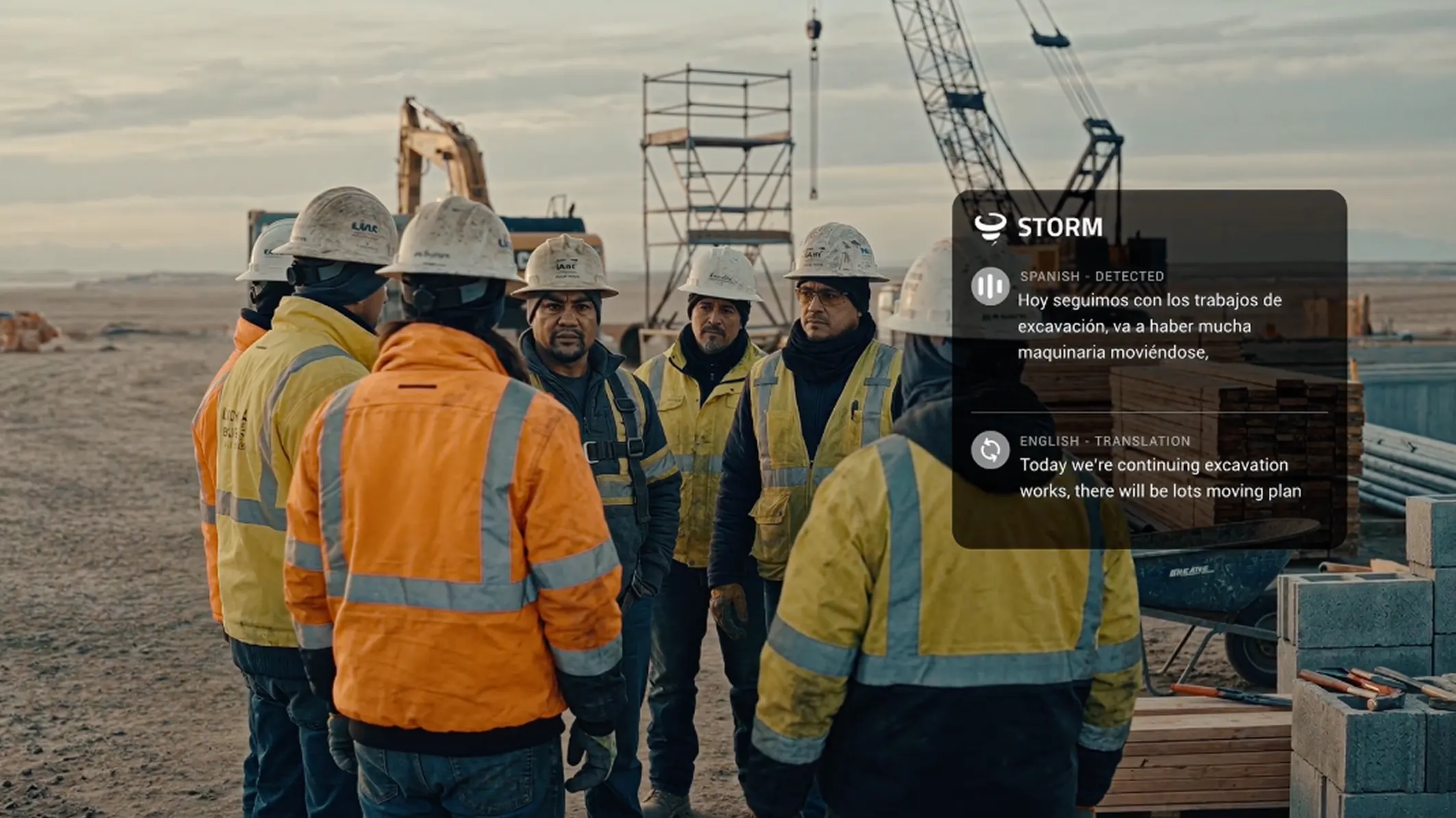
Morning briefings and toolbox talks. Storm generates a draft of the topics for your review. Once you've deployed them to the front line on the Sitemate software rails, Storm listens to the briefing, checks the weather for the day, and writes the minutes for you in the background, while you scan and sign the crew on, with location and attendance verification.
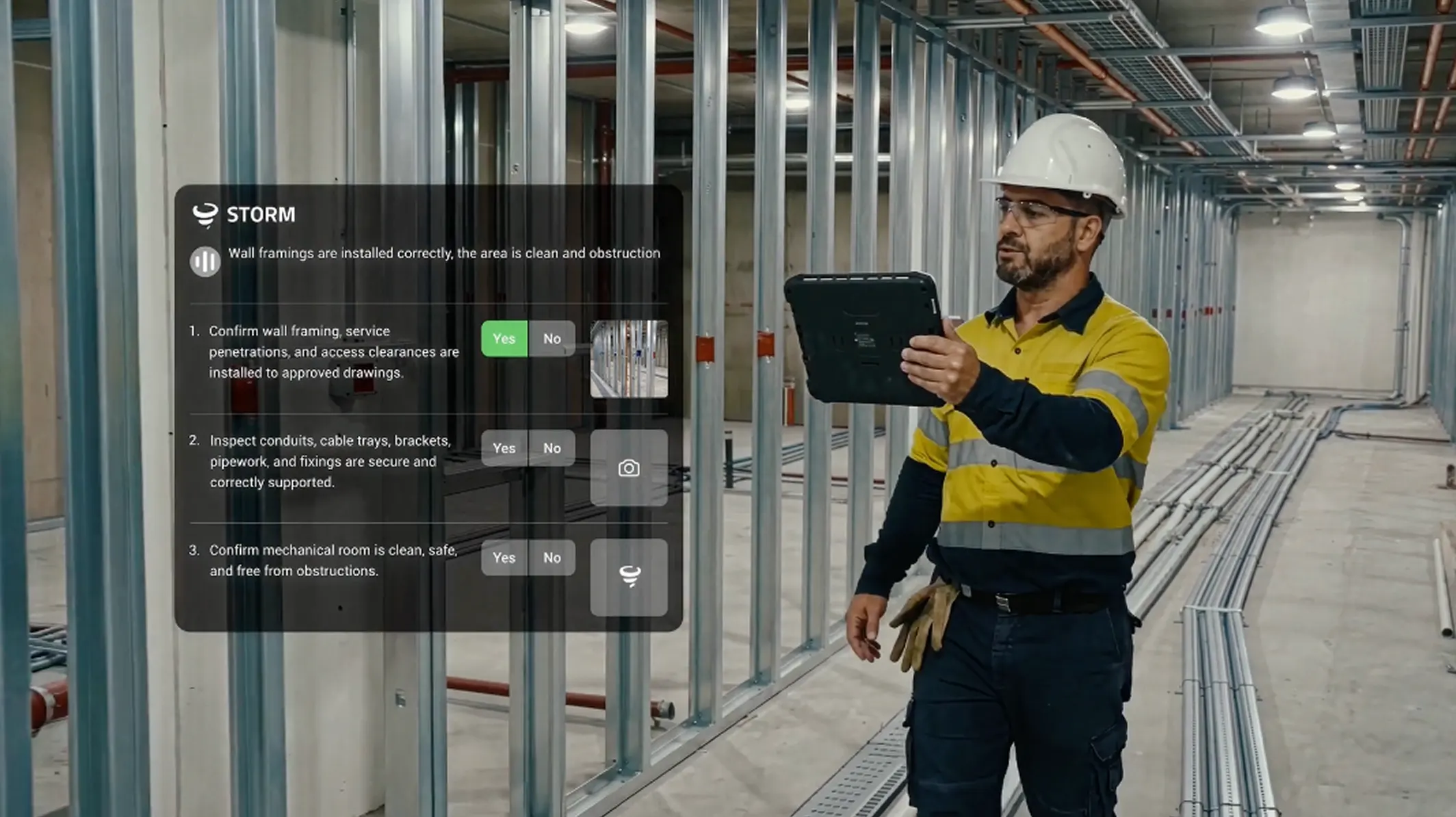
Inspections, checklists and site walkthroughs. 50-point check to do? Just let Storm listen as you go, drop in your photos, and Storm maps the notes and photos to the correct fields, identifying action items and defect items automatically.
And past that, pretty much anything you want. Storm is enabled on any custom process, form or workflow you build on the Sitemate rails.
Through all of it, you stay in control. Storm produces a draft. You review, you approve. Nothing is committed without you.
Wherever you are on the front line of the built world, Storm will be working for you now, so that you can get on with the real work.
Just Ask Claude
Also going live today is the Sitemate MCP, with connectors for Claude, ChatGPT and Microsoft Copilot.
Want to know what's happening at the front line? Just ask Claude.
This is the other half of the strategy. We take AI to the front line, where the work is real and the truth is created. And then we let the back office (the copilots, the warehouses, the reasoning layers) read over that truth cleanly.
Because in the built world, the truth isn't sitting neatly in a warehouse waiting to be summarized. It's created in moments; when the power is isolated, when the weld is still hot, when the inspection is happening in the rain. If we capture that moment while it's still true, everything downstream compounds.
What This Means For The Built World
Most AI products will win by getting better at reasoning over existing information.
Sitemate will win by getting better at creating the information worth reasoning over.
The front line is cold, windy, dusty, hot, busy, noisy and dirty. It's the polar opposite of a knowledge worker sitting at a desk with a matcha and a MacBook Pro. It's exactly where most software fails, because reality is messy, fast, physical, and unforgiving.
Most technology companies run away from that challenge.
Sitemate is running towards it.
For the engineer, the supervisor, the foreman, the safety officer, for the ones who work in the dark, in the cold, and in the silence, away from the limelight, this is what Storm means; less time translating your work into boxes, and more time doing the work itself.
That's what it means to multiply the engineering power of the built world. And Storm 1.0 is just the first wave.
Thank You
A big, big shout out to the team at Wonder Studios: Xav, Harry, Max, and everyone involved. Thank you for your dedication to helping us shed light on the often forgotten, often ignored, amazing real work that happens at the front line of the built world, each and every day.
This is just the beginning.

About the author
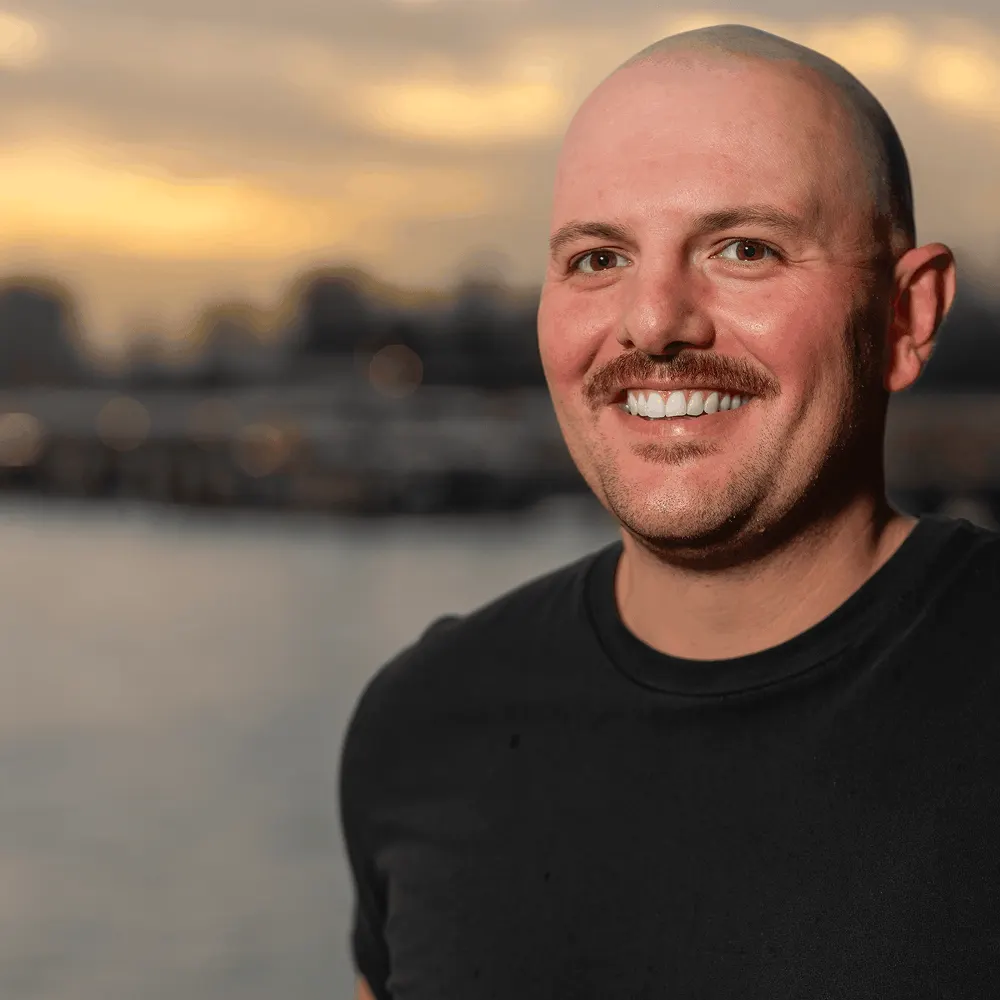
Hartley Pike
CEO & Co-founder

Education:
University of Technology Sydney - Master of Business Administration in Entrepreneurship (Dropped Out)
University of Technology Sydney - Bachelor of Engineering (BE), Diploma in Engineering Practice, Civil Structures
Bio:
Hartley is the Founder and CEO of Sitemate, where he turns real-world construction and infrastructure experience into software products that site teams want to use. With a background in civil engineering across major transport infrastructure projects, manufacturing, and large-scale site operations, he brings experience to product strategy and development.
He applies lean principles to improve productivity and efficiency across complex, high-risk operational workflows. Today, he leads Sitemate’s product strategy and growth, building platforms such as Dashpivot, Flowsite, Gearbelt and more that transform standard operating procedures into structured, data-driven workflows, helping teams deliver work more reliably, safely, and on time.
Past projects:

 English (United States)
  English (Australia)
  English (UK)
  English (New Zealand)
  English (South Africa)
  German