SiteDocs alternative for RAMS
Need an alternative for SiteDocs to produce and manage your risk assessment method statement (RAMS)? While SiteDocs provides safety management software that helps make every aspect of your safety compliance easier, Sitemate's Dashpivot provides a niche approach in managing safety, quality, and equipment documentation and process management. Dashpivot also has an AI assistant that could help users create and complete forms more efficiently.

Trusted by companies, projects and teams of all sizes


The short answer
Use SiteDocs to build safety forms to monitor compliance. However, if you want a platform that is more flexible in adapting your workflow, Dashpivot is the perfect tool for you.
What SiteDocs Is Built For
SiteDocs is built for managing workplace health and safety, particularly for construction companies and other businesses with workers operating in the field.
- On-site safety checklists and sign-off workflows
- Safety documentation storage and compliance records
- Field-level sign-offs across construction crews
- Core safety form management
- Built around North American construction requirements
Why Teams Look for an Alternative
SiteDocs can effectively cover essential safety processes. However, some teams like to have forms that are adapted to their workflow. SiteDocs offers little flexibility when it comes to providing forms relevant to safety management.
- Annual subscription cost rising steeply
- Buyers report large year-on-year jumps
- Little new functionality for the higher cost
- Subcontractor sign-in: email, then link, then QR
- Multi-step sign-in slows crew RAMS sign-on on site
- User caps limit access for growing teams
- Failed implementations left some teams without a working setup
- Support delays from timezone lag
- Support blames user devices instead of fixing the issue
It's 6am, the job starts at seven, and the RAMS is a Word file nobody can find on SharePoint. The client wants it signed and emailed before anyone's on site.
What Dashpivot by Sitemate Is Built For
Dashpivot by Sitemate is a field system for building, running and signing off safety documents like RAMS, then keeping the record. You build the RAMS once, run it on any device, and every version stays filed against the job.
- RAMS and method statements built from a reusable template, not retyped for every job
- Sign-on on site so the crew is recorded against the RAMS they were actually briefed on
- One register of every RAMS, across every job and every subcontractor


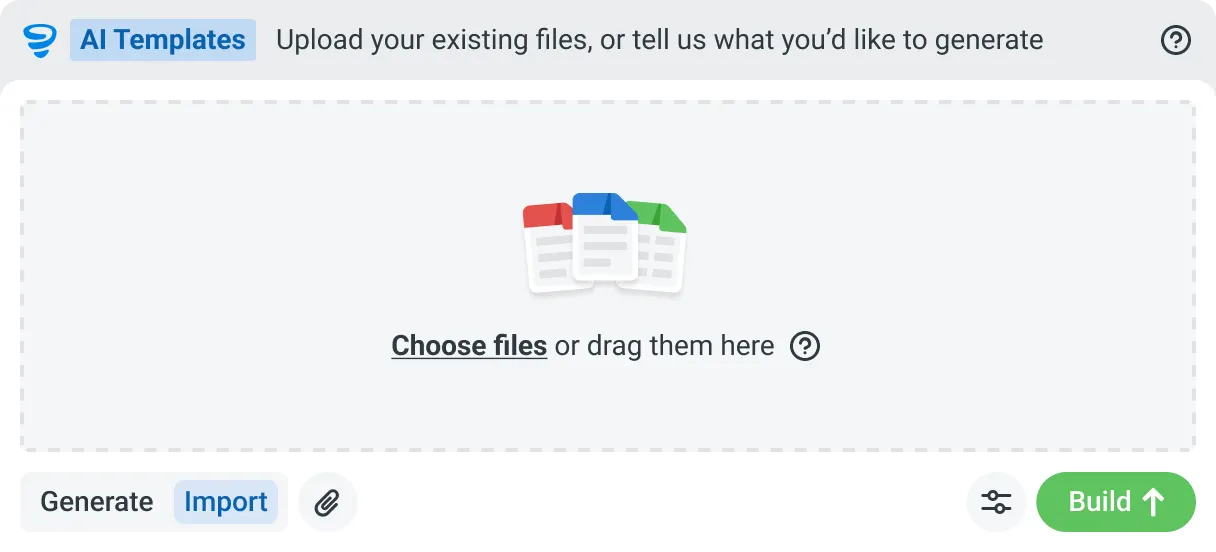
AI Templates
Describe the template you need in plain language, or upload an existing PDF, Word or Excel document. Storm builds the structure, with the right fields, sections, columns and workflow attached, and you review and refine it before you save.

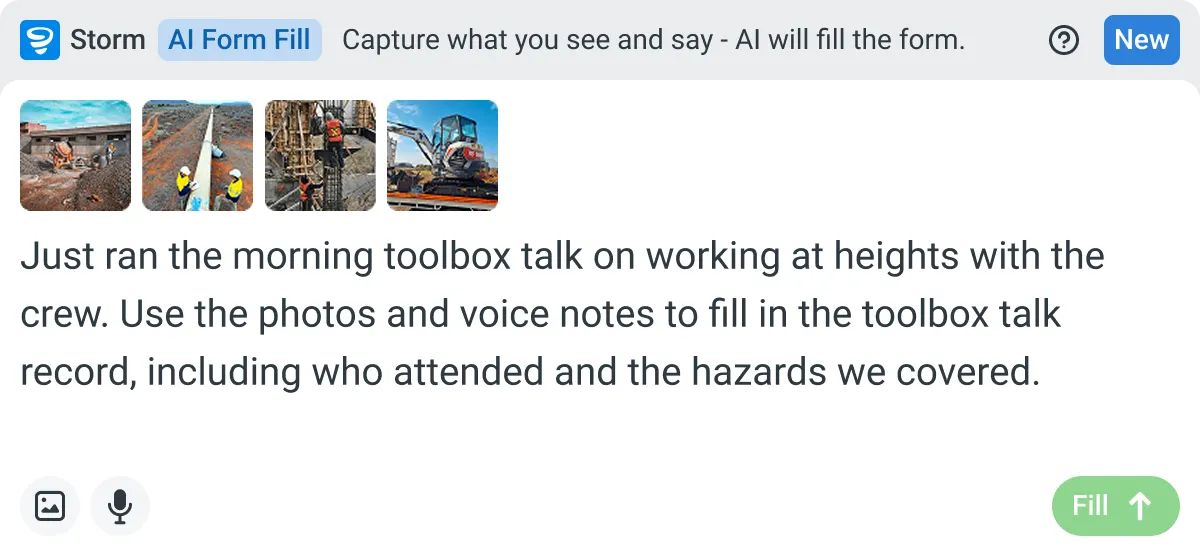
AI Form Fill
Capture what you see and say, and Storm drafts the form for you. The details land in the right fields, so there is a record to check the moment the work is done, and you review and submit it yourself.

Works on site
Built for gloves, cabs, and screen protectors. Captures inputs offline and processes in the background. No waiting on the field.

You stay in control
Storm never commits a record on its own. Every output is a draft for human review. Admins control what Storm can write to.
How Dashpivot does [the job]
Three steps, and you own the record at the end of all of them. Set the RAMS up once, run and sign it on site, and keep every version filed against the job it belongs to.
-
Step 1
Set the RAMS Up Once
Build your RAMS with the hazards, risk scores, controls and method steps your work needs, or start from a free template and adjust it. It becomes the form every job runs from.
-
Step 2
Run and Sign It On Site
Fill it on any device, offline if the site has no signal. Storm can draft the first version from the work scope, and the crew signs onto it before the job starts.
-
Step 3
Keep the Signed Record
Every RAMS is filed against its job and date, versioned and audit ready. Export it to PDF, email it to the client, and it stays yours after the job closes.
What Dashpivot Does Not Replace
While the use of Dashpivot can effectively help streamline the whole RAMS process, it has limitations on what it can do.
What Dashpivot Does for RAMS Today
Dashpivot is a powerful platform that assists users in streamlining their workflows. Dashpivot can significantly improve the process of creating a RAMS template and completing it in the field.
- RAMS and method statement templates, reusable across jobs
- Templates hold hazards, risk scoring, controls
- Storm drafts first version from the work scope
- User edits and checks Storm's draft
- Crew sign-on to the RAMS on site
- Sign-on on any device, offline
- One register for every RAMS, versioned, audit ready
- PDF export, email to client or principal contractor
Where Dashpivot Stops
The human factor is always needed when completing documents. AI bots are smart and knowledgeable. However, it is not good practice to let AI bots decide whether the RAMS is fully complete and adequate enough to effectively manage hazards. Its limits are:
- No decisions on control adequacy, competent person owns that call
- Not a legal or regulatory RAMS sign-off
- Not a replacement for estimating, accounting or design tools
- SiteDocs stronger on safety checklist forms
Dashpivot is used as an industry-specific platform, whereas SiteAudit provides a broader approach in assisting with safety management. To get a clearer picture of the difference between the two, here is a side-by-side comparison:
- Capability | Dashpivot | SiteDocs
- Structured RAMS / method statement authoring | Yes, reusable template | Safety forms, less method statement focus
- Subcontractor sign-on without seat friction | Yes | User caps, sign-in friction reported
- One RAMS register across jobs and subcontractors | Yes | Yes, within safety
- Storm drafts first version from work scope | Yes | No
- New capability at the same price | Ongoing | Buyers report steep increases, little new
Where the Two Actually Differ
The two platforms provide an excellent tool for managing safety. However, there are key differences that make them unique in their own ways.
- RAMS authoring: Dashpivot builds structured RAMS from a reusable template, with hazards, risk scoring, controls
- Safety checklists: SiteDocs stronger on safety forms and checklists, weaker on method statements
- First draft: Storm drafts from work scope, you edit rather than start blank, no SiteDocs equivalent
- Subcontractor sign-on: Dashpivot needs no email, link, QR chain and no paid seat
- Value at renewal: Dashpivot adds capability at same price, SiteDocs buyers report large increases, little new
Where SiteDocs Is the Better Choice
SiteDocs has tools for building forms, has offline capabilities, can assist with monitoring compliance, and helps users evaluate trends.
- Team based in North America
- Team already embedded in SiteDocs, cost not an issue
- Light RAMS work, main need is safety checklist sign-off
- No need for full method statement authoring
- Safety workflows already built around SiteDocs
- Migration cost would exceed any savings
How Teams Move From SiteDocs
Nobody moves every RAMS at once. You decide whether it's worth it, bring one job across, then widen out once a crew has signed onto a live one.
-
Step 1
Decide
If SiteDocs already covers your safety paperwork and the seat count works for your crews, staying put is reasonable. Move when subcontractor sign-on gets expensive, or when you want your RAMS in the same system as the rest of your field records.
-
Step 2
Convert
Bring one job's RAMS across. Rebuild it as a Dashpivot form, or start from the free RAMS template and add your hazards and method steps. Word and PDF documents can ride along while you switch.
-
Step 3
Pilot
Run it live on one job. The crew signs onto the RAMS on site, and you keep exporting the PDF you send the client, so nothing you depend on switches off while you test it.
-
Step 4
Roll Out
Once one crew has run a live RAMS end to end, add the rest of your jobs and subcontractors. Every RAMS lands in one register, and the visibility gap closes.
Frequently Asked Questions
Can I use my safety forms in SiteDocs?

Yes! Their custom form builder can handle just about any form you throw at it, and you can make SiteDocs look and feel familiar to the forms your workers are used to. Your company’s logo can be included on all of your signed forms.
How do users create a RAMS template in Dashpivot?
Dashpivot has a template library for prebuilt templates for RAMS, like construction RAMS or scaffolding RAMS. These templates are easily editable to match the users’ workflow. If users want to start from scratch, they can make use of the AI assistant to help them structure their template.
Is SiteDocs only for the construction industry?
No. their current customers come from a wide variety of industries, such as Manufacturing, Aviation, Oil & Gas, Forestry, Logistics, Shipping, and many more.
Can I complete a RAMS document even when offline in Dashpivot?
Yes. Dashpivot can still function even when offline. Dashpivot allows users to still record or upload data in the RAMS form even without internet connectivity. The app just automatically syncs recorded data when connectivity returns.
Is there an offline mode in SiteDocs?
Yes, SiteDocs will work offline! All forms are stored locally on the mobile device while in offline mode and are synced with the server once you are able to reconnect to Internet service. If you are using multiple SiteDocs accounts on a single device, just remember to connect and sync before switching accounts.
What happens with the final document in Dashpivot?
The RAMS is stored in a cloud storage location and will also be distributed directly to personnel who need to be notified.