Free Field Reporting template
Project Status Report Template
No credit card required.
Are you looking for a more efficient way to complete status reports? Sitemate's Project Status Report template already contains the standard required fields, so it accurately captures all relevant project details. Maintaining a high-level detail consistently helps the project team make the right decisions as the project progresses.
This Project Status Report has integrated a smart AI assistant when users use the Dashpivot platform. Users can simply describe what they observed, and the AI can automatically and accurately fill out the fields in the report, speeding up the entire reporting process.
- 100% fully editable Project Status Report
- Export your Project Status Report to PDF or CSV
- Access your Project Status Report on mobile, tablet or computer
- Thousands of templates including other Field Reporting templates
 Click to preview
Trusted by thousands of companies, projects & teams worldwide















See how this Project Report template compares with traditional Word, Excel, and PDF-based processes
Curious how this Project Status Report works? Check out the example below to see exactly what the completed document looks like, from the overall project health summary through to milestone tracking, risk registers, and action items. You can generate your own version just as quickly, export it as a custom form with your company branding and project details, and have a finished, stakeholder-ready Project Status Report in your hands within minutes.

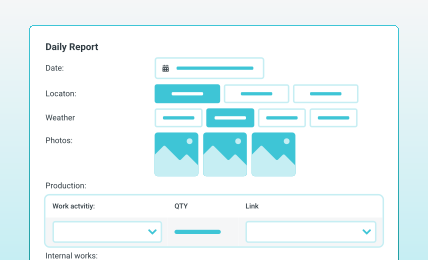
This Project Status Report was generated using Dashpivot, where project teams can build, complete, and distribute structured reporting forms with smart fields, automated workflows, and PDF export, all from a single platform. The template follows project management best practices aligned with PMI PMBOK and PRINCE2 reporting standards, giving teams a ready-to-use format they can edit to their own governance requirements.
- Access, edit and complete your Project Status Report from any device - mobile, tablet or computer.
- Print, download or send your Project Status Report as perfectly formatted PDF documents with your company logo.
- Store your Project Status Report securely online, where they can be searched and found in seconds
- Invite internal and external parties to see, edit and sign off on Project Status Report online.
Need a version for your own site?
Storm, the AI agent in Dashpivot, can build one from a short description or the form you already use.


 GLOBAL


What is a Project Status Report?
A Project Status Report is a structured document used by project managers, site supervisors, and project teams to communicate the current state of a project to stakeholders, executives, and clients. It provides a snapshot of where the project stands at a given point, covering progress against planned milestones, budget and schedule performance, risks and issues, and the actions being taken to keep the project on track.
Applicable Standards and Policies for Project Status Report
Performing status reports helps maintain quality project management. The report provides the exact details of what is currently in progress and other information that is vital for completing the project. The data in this report provides vital information for stakeholders, especially for making crucial decisions. Furthermore, the report complies with the following regulatory provisions:
- PMI PMBOK Guide (Project Management Body of Knowledge)
- PRINCE2 (Projects in Controlled Environments)
- ISO 21500:2021 – Project, Program and Portfolio Management
- AS/NZS ISO 21500:2021 (Australia/New Zealand adoption)
- Contract and Client Reporting Requirements
Staff Members and Parties That Use the Project Status Report
Project Status Reports require personnel who understand the processes behind every activity conducted. In order for the report to be accurate and useful, the following staff members should be involved in making a Project Status Report:
- Field engineers: These are the personnel who primarily fill out the report. They record every detail of the activity while it is in progress on site. They record the work performed, the materials and parts used, the findings, and the total time spent on the activity.
- Managers and supervisors: These personnel watch and lead the project activity according to the approved plan. It is their responsibility that tasks are completed based on quality and safety standards.
- Quality compliance coordinators: These personnel audit the quality of the job and the quality measures provided to maintain and improve processes.
Business Risks Reduced by the Project Status Report
The Project Status Report is a necessary document for checking the progress and quality of the activities by proactively recording vital details. The record will serve as a guide for the decisions needed for the project to move forward without any delay. Failing to make this report or producing an inaccurate one could lead to the following business risks:
- Cash flow friction
- Delayed invoicing
- Unattained targets and quotas
- Customer disputes and loss of trust
- High costs for non-compliance
- Damaged reputation
- Low chances of winning future bids
Business Opportunities Created by the Project Status Report
Completing a Project Status Report can provide more than just information about an ongoing or completed construction activity. The report will serve as a guide in moving the activity or project much more efficiently and helps identify potential problems that can be mitigated before they escalate into something major. The Project Status Report will also present the following business opportunities:
- Data-driven decisions
- Predictive plans
- Smarter scheduling
- Plans are tracked accurately
- More efficient performance
- Good company reputation
What Should a Project Status Report Include?
Here are the important sections that should be present in a Project Status Report:
- Form information
- Reporter information
- Project information
- Major milestones and deliverables
- Project costing and tracking
- Project issues and risks
How to Create a Project Status Report
Creating an effective project status report requires the right structure, the right information, and a clear understanding of who will be reading it. Follow these steps to build a project status report that keeps stakeholders informed and your project on track.
Prerequisites before making a Project Status Report
- Current project schedule, including planned versus actual progress against milestones
- Up-to-date budget and cost data, including spend to date and forecast cost to complete
- Risk register and issue log from the previous reporting period
- Actions assigned in the last status report and their current completion status
- Input from site supervisors, workstream leads, or subcontractors on progress in their areas
- Any approved variations, contract changes, or scope amendments since the last report
- Stakeholder reporting requirements, including format preferences, distribution list, and deadline
Add report details
Start with the section that provides details about the report. It should contain the following fields:
- Report number
- Reporting period
- Project name
- Project description
- Reporter details
Add a project summary section
This section details information about the project, its status, and current updates. It should have the following fields:
- Project summary status
- Project summary comments
- Project start date
- Project end date
- Current phase of work
Add a milestones and project summary section
This section provides details on the milestones completed. It should contain the following fields:
- Milestones or deliverables
- Status
- Planned date
- Revision details
- Actual date
- Completion percentage
Add a project costing and tracking section
This section details the financial aspect of the project. It should have the following fields:
- Primary comment on the budget
- Planned budget to date
- Actual budget to date
- Variance
Add a project risk and issues section
This section details the problems and issues found. It should have the following:
- Date the problem was identified
- Issue or risk
- Description
- Status
- Reporter signature
Project Progress and Status Updates
This report provides an overview of the project's current progress, including completed tasks, ongoing activities, and upcoming priorities. It also highlights the progress made against the original timeline, any challenges encountered during implementation, and the actions being taken to address potential delays or issues. By reviewing these updates, the team can identify areas that need more attention, ensure that tasks are progressing as expected, and make the necessary adjustments to keep the project on track. Regular status reporting also helps keep stakeholders informed about the project's progress and ensures that everyone is aligned on the current priorities, responsibilities, and next steps.
How to Create Your Project Status Report in an App or Software System
Managing project status reporting through digital tools rather than Word documents and email chains gives project teams significantly better visibility, consistency, and speed. Digital project status report software allows project managers to complete and submit reports from the field or the office using a mobile device, with all submitted reports automatically stored in a register that the PMO or executives can access at any time. Automated distribution workflows eliminate the manual step of emailing reports to stakeholders, and version-controlled templates ensure every team across the company is using the same project status report format regardless of project type or reporting frequency.
How to make a Project Status Report in an app
Using an app that employs digital forms instead of paper-based ones may help improve the process by:
- Assistance with artificial intelligence (AI).
- Having fewer manual data entries.
- All produced forms are stored in a single-access cloud platform.
- Reformatting is straightforward and can be adapted to new protocols or updated standards.
- Formula integration is much simpler.
- Workflows and notifications may be automated and scheduled.
- Improved template design and look.
Creating the report information section
- Add a date range field for the reporting period.
- Add a text field for the project name.
- Add another text field for the project description.
- Add a 5-column table for the reporter details.
- Format the first 4 columns of the table as text fields for the following information: name, role, email address, and phone number.
- Edit the last column of the table as a signature field.
Creating the project summary section
- Add a multiple-choice field for project status. Use the following selection items: on track, off track, at risk, and not started. You can integrate colors onto the selection items to make the report more visually appealing.
- Add a photo field to allow users to upload photos relevant to the project status.
- Provide date fields for the project start and end dates.
- Provide a text field for the current phase of work.
Creating the milestone section
- Add a 6-column table where users can freely add rows.
- Format the first column as a text field for the milestone or deliverable.
- Format the second column as a selection field. Use the following selection items: completed, on track, off track, at risk, and not started. You can integrate colors onto the selection items to make the report more visually appealing.
- Format the third column as a date field for the planned date of completion.
- Format the fourth column as a text field for the details of revision for each milestone.
- Format the fifth column as a date field for the actual date of completion.
- Format the last column as a text field for the percentage of completion of each milestone.
Creating the project cost tracking section
- Add a 4-column table where users can freely add rows.
- Format the first column as a text field for the budget status.
- Format the second and third columns as text fields for planned budget (to date) and actual budget (to date).
- Format the last column as a text field for the variance.
Creating the project issues and risk section
- Add a 4-column table where users can freely add rows
- Format the first column as a date field for the date when the problem or risk was identified.
- Format the second column as a text field for the issue or risk.
- Format the third column as a text field for the issue or risk description.
- Format the last column as a selection field. Use the following selection items: under control, getting worse, and getting better. You can integrate colors onto the selection items to make the report more visually appealing.
Frequently Asked Questions
Who should complete a Project Status Report?
The project manager or person responsible for overseeing the project should complete the report. They should gather updates from team members, review completed tasks, and identify any issues that could affect the project timeline or overall progress.
When should a Project Status Report be completed?
A project status report should be completed at regular intervals throughout the project, such as weekly, biweekly, or monthly, depending on the project's requirements. It can also be completed when a major milestone is reached or when stakeholders request an update.
Why is it important to keep Project Status Reports updated?
Keeping project status reports updated helps project managers and stakeholders understand whether the project is progressing as planned. It also makes it easier to identify delays, track outstanding tasks, and address issues before they have a greater impact on the project.
Can this Project Status Report template be used for different types of projects?
Yes. The template can be used across construction, engineering, IT, marketing, and other industries. The fields can be adapted to suit the project's scope, reporting requirements, milestones, and key performance indicators.
About the Author

Felmar Mantalaba
Content Engineer
 LinkedIn
Education
Cebu Institute of Technology - University - Mechanical Engineering with Mechatronics
Bio
Felmar is a mechanical engineer, whose four years of experience in the mining industry inspired him to write and share stories to progress the revolution of new technologies and create smarter, smoother ways of living.
Past Projects
Safety, Health, and Environment Management System (SHEMS) CoordinationSHEMS Coordinator at Atlas Consolidated Mining, ensuring organizational compliance with ISO 14001 and ISO 45001 standards, performing risk assessments, developing policies, and conducting audits and inspections to maintain a safe and environmentally responsible workplace.
Maintenance Management and OptimizationSenior Maintenance Manager (OIC) leading equipment maintenance and operational efficiency initiatives, reducing downtime by 10%, improving Mean Time Between Failure (MTBF) and Mean Time To Repair (MTTR) for major equipment, and managing maintenance schedules, manpower, and materials, while overseeing capital project optimization.
Inspection Engineering and Equipment ReliabilityInspection Engineer responsible for technical blueprint interpretation, vendor collaboration, preventive maintenance scheduling, and data collection for vibration and temperature readings, delivering actionable recommendations and comprehensive reports to improve equipment reliability and operational performance.
End-to-End Operational Oversight in Mining EngineeringContributed to multiple facets of operational management, including SHEMS compliance, maintenance optimization, inspections, and capital project evaluation, integrating safety, reliability, and efficiency improvements across all stages of copper production operations.
Version history
Last edited on 16 October 2026, template version 25-11-v2