Output:
Applies to:
Updated on:
High Speed 2 (HS2) UK Project: definition, requirements, and step-by-step compliance process
High Speed 2 (HS2) is the United Kingdom’s major high-speed rail infrastructure megaproject designed to connect London with the West Midlands and eventually extend to Crewe, Manchester, and the East Midlands. As of 2024, HS2 is Europe’s largest infrastructure project and is intended to significantly improve transport capacity, reduce congestion on existing rail lines, and shorten travel times between major cities.


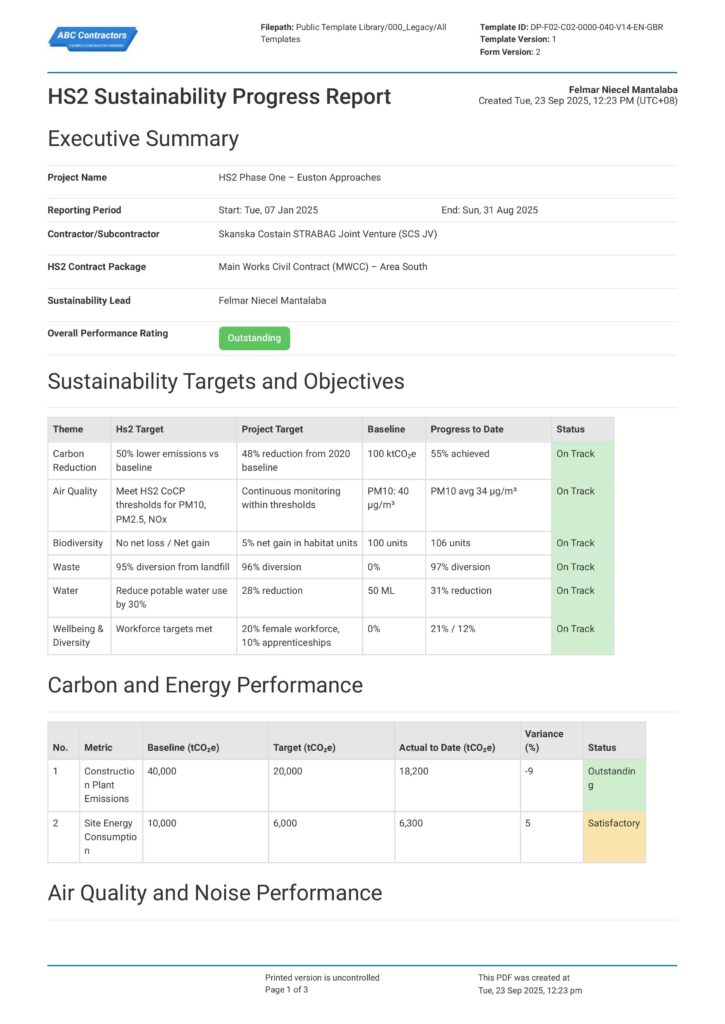
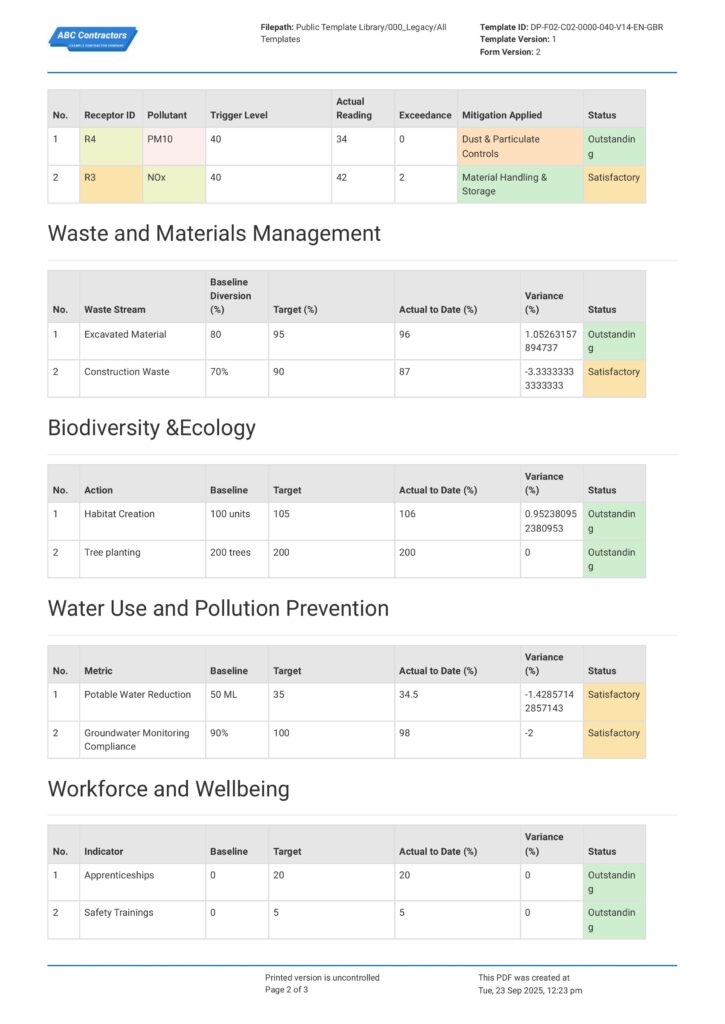

Table of Contents
Summary
- High Speed 2 (HS2) is the UK’s largest rail infrastructure project and aims to transform national rail travel by connecting London with the Midlands and the North of England through high-speed rail lines.
- The project involves a large network of contractors, engineers, environmental specialists, and consultants who must comply with strict regulatory standards during the planning, construction, and operational phases. These standards require teams to document environmental performance, maintain compliance evidence, and report on construction progress.
- Because of the scale of the project, digital construction management systems are often used to capture field data, produce reports, and maintain audit trails that demonstrate compliance with HS2 requirements.
What Does High Speed 2 Mean?
Definition
High Speed 2 (HS2) is a national high-speed railway project in the United Kingdom designed to increase rail capacity and reduce travel times between major cities including London, Birmingham, Manchester, and Leeds.
The new railway network is designed to support faster journeys, increase passenger capacity, and relieve congestion on the existing rail network. HS2 forms part of the UK government’s long-term strategy to develop transport infrastructure and support economic growth across regions.
Why High Speed 2 (HS2) matters
The HS2 project is expected to significantly improve transport capacity across the country by introducing new high-speed rail lines capable of moving passengers more efficiently between major economic points.
By creating dedicated high-speed routes, HS2 helps reduce congestion on existing railway infrastructure, allowing both passenger and freight services to operate more effectively. The project is also intended to support regional economic development by improving connectivity between cities and enabling faster travel for businesses and commuters.
When does High Speed 2 apply?
In-scope projects
HS2 compliance requirements apply to principal contractors, subcontractors, and consultants involved in delivering infrastructure works associated with the project.
This includes teams working on rail construction, environmental monitoring, engineering design, and other activities that support the planning and construction of HS2 infrastructure.
Out-of-scope scenarios
HS2 compliance requirements do not apply to infrastructure or rail projects that are not part of the HS2 project. Projects delivered under separate frameworks—such as Network Rail upgrades or regional transport developments—follow their own standards and reporting requirements.
Teams that are not contracted within the HS2 supply chain, including suppliers or consultants working on unrelated projects, are also generally outside the scope of HS2 compliance.
Roles and responsibilities
Project compliance responsibilities are typically shared between multiple stakeholders, including principal contractors responsible for delivery packages, engineering consultants who design and review infrastructure, and environmental specialists who ensure works comply with sustainability and environmental requirements.
These parties must work together to ensure that work carried out across the project meets regulatory standards and contractual obligations.
Prerequisites: What you need before starting HS2 compliance work
Input
Before construction or monitoring activities begin, teams must have access to key project documentation and resources. This typically includes
- Engineering drawings
- Environmental impact reports
- Technical specifications
- Any relevant compliance frameworks governing HS2 construction.
Tools
Teams often rely on field reporting platforms to capture data from inspections, document construction progress, and produce structured reports for project stakeholders. The following are essential.
- Access to site locations
- Inspection equipment
- Digital reporting tools
People:
In addition, successful compliance requires collaboration between architects, civil engineers, environmental specialists, project managers, and site supervisors responsible for overseeing daily operations.
Step-by-step: How to run the High Speed 2 process
Step 1 — Define the scope and requirements
The first step in any HS2 compliance process involves
- Understanding the scope of the project package and identifying the applicable regulations
- Technical standards
- Contractual requirements that must be followed
This includes determining which HS2 guidance documents apply to the project and identifying any special conditions that may affect compliance.
Step 2 — Collect project evidence and documentation
Contractors and project teams must collect evidence that demonstrates compliance with HS2 standards. This often includes
- Site photographs
- Inspection records
- Environmental monitoring data requirements that must be followed
- Documentation related to construction materials and methods
These records form the basis of compliance reporting and are essential for demonstrating adherence to regulatory requirements.
Step 3 — Inspect works against project standards
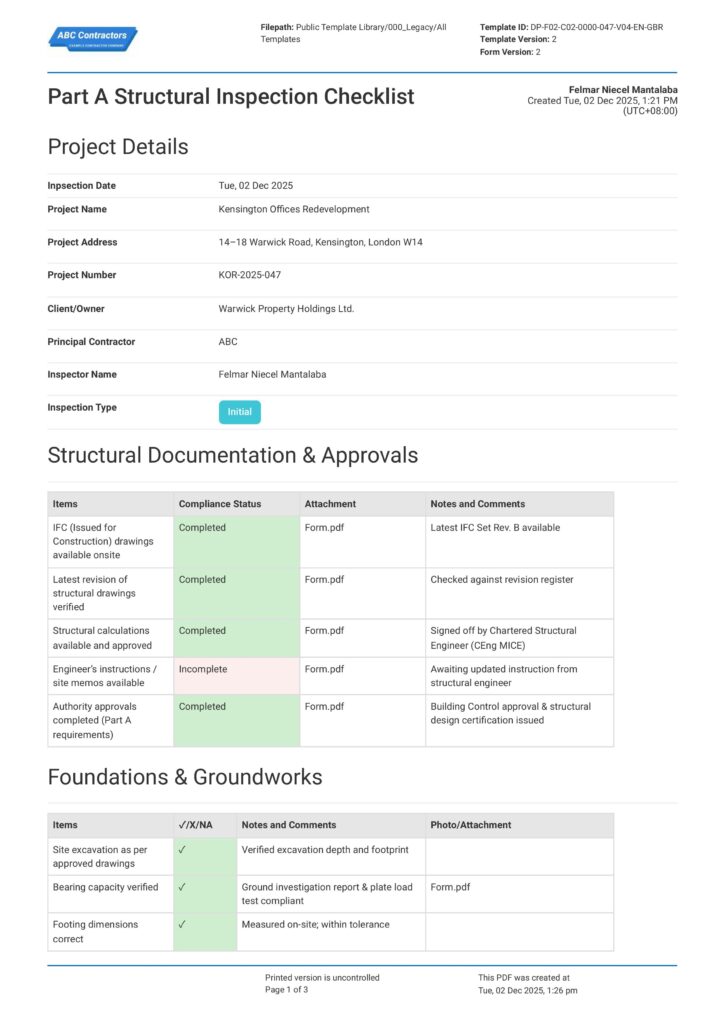
Inspection activities are carried out to ensure that construction activities align with the design specifications and compliance frameworks defined for the project. Site inspections typically involve
- Walkthroughs of work areas
- Reviews of installation processes
- Documentation of any deviations from approved designs or standards
Step 4 — Assess risks and sort corrective actions
When issues are identified during inspections or monitoring activities, teams must assess the associated risks and determine the appropriate corrective actions.
Risk assessments help sort tasks, assign responsibility for remediation work, and ensure that issues are addressed before they escalate into larger compliance problems.
Step 5 — Document findings and produce compliance reports
All inspection results, monitoring data, and corrective actions must be documented in structured compliance reports. These reports typically include
- Summaries of findings
- Supporting evidence
- References to the relevant project standards or regulatory requirements
Step 6 — Maintain compliance and audit readiness
Once corrective actions are completed, teams must verify that the work has been properly resolved and maintain records for audit or regulatory review.
Maintaining proper documentation and version control ensures that project stakeholders can easily trace compliance evidence when required.
Evidence checklist: what good HS2 documentation looks like
Mandatory report sections
HS2 compliance reports should clearly summarise the inspection or monitoring findings and explain how the work aligns with the relevant HS2 standards or contractual requirements. Reports should also document any issues identified and outline the corrective actions taken or required.
Evidence you should attach
Reports should include supporting evidence that verifies the findings recorded during inspections. This may include site photographs, inspection records, monitoring data, or product certificates that demonstrate compliance with project standards.
Retention and version control
Compliance documentation should be stored in an organised system that allows teams to track updates, approvals, and revisions. Maintaining version control ensures that records remain traceable and accessible throughout the project lifecycle.
Decision points and common pitfalls
Common decision points
One of the most common challenges in large infrastructure projects such as HS2 is determining which regulatory frameworks or standards apply to specific activities. Because HS2 projects often involve multiple contractors and complex scopes of work, teams must carefully identify which requirements apply and who is responsible for meeting them.
Pitfalls
Common pitfalls in HS2 compliance include missing evidence, outdated documentation, unclear approval processes, and poor traceability between inspection findings and corrective actions. These issues can make it difficult to demonstrate compliance during reviews or audits.
FAQs: HS2 project and compliance
What is HS2 (High Speed 2) and what is it trying to achieve?

Sed ut perspiciatis unde omnis iste natus error sit voluptatem accusantium doloremque laudantium, totam rem aperiam, eaque ipsa quae ab illo inventore veritatis et quasi architecto beatae vitae dicta sunt explicabo.
Why is HS2 considered a major UK infrastructure project (from a delivery/compliance lens)?
Sed ut perspiciatis unde omnis iste natus error sit voluptatem accusantium doloremque laudantium, totam rem aperiam, eaque ipsa quae ab illo inventore veritatis et quasi architecto beatae vitae dicta sunt explicabo.
What is the HS2 route today, and what are Phase 1 vs Phase 2 (2a/2b)?
Sed ut perspiciatis unde omnis iste natus error sit voluptatem accusantium doloremque laudantium, totam rem aperiam, eaque ipsa quae ab illo inventore veritatis et quasi architecto beatae vitae dicta sunt explicabo.
Which are the main HS2 stations and why do they matter for planning works?
Sed ut perspiciatis unde omnis iste natus error sit voluptatem accusantium doloremque laudantium, totam rem aperiam, eaque ipsa quae ab illo inventore veritatis et quasi architecto beatae vitae dicta sunt explicabo.
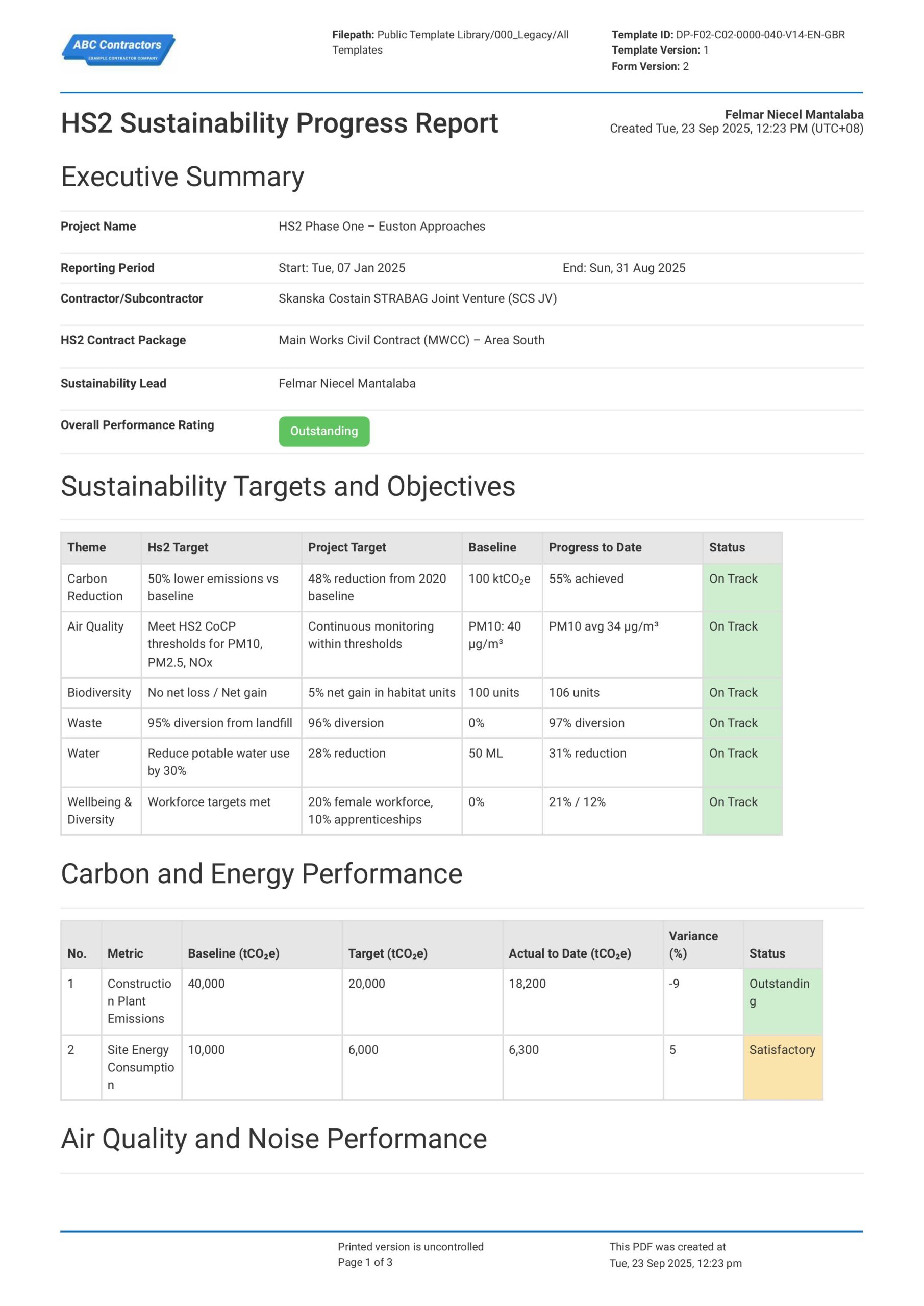
How should contractors structure an HS2 Sustainability Progress Report (what to include)?
Sed ut perspiciatis unde omnis iste natus error sit voluptatem accusantium doloremque laudantium, totam rem aperiam, eaque ipsa quae ab illo inventore veritatis et quasi architecto beatae vitae dicta sunt explicabo.
What does “zero-carbon in operation” mean for HS2, and what does it not mean?
Sed ut perspiciatis unde omnis iste natus error sit voluptatem accusantium doloremque laudantium, totam rem aperiam, eaque ipsa quae ab illo inventore veritatis et quasi architecto beatae vitae dicta sunt explicabo.
What are the key safety and environmental obligations commonly referenced on HS2 projects?
Sed ut perspiciatis unde omnis iste natus error sit voluptatem accusantium doloremque laudantium, totam rem aperiam, eaque ipsa quae ab illo inventore veritatis et quasi architecto beatae vitae dicta sunt explicabo.
Why is traffic management a big issue on HS2 works, and what plans are typically required?
Sed ut perspiciatis unde omnis iste natus error sit voluptatem accusantium doloremque laudantium, totam rem aperiam, eaque ipsa quae ab illo inventore veritatis et quasi architecto beatae vitae dicta sunt explicabo.
What’s the latest known HS2 progress (jobs, tunnels, major structures) and why does it matter operationally?
Sed ut perspiciatis unde omnis iste natus error sit voluptatem accusantium doloremque laudantium, totam rem aperiam, eaque ipsa quae ab illo inventore veritatis et quasi architecto beatae vitae dicta sunt explicabo.
How much has HS2 cost so far, and what’s driving cost change?
Sed ut perspiciatis unde omnis iste natus error sit voluptatem accusantium doloremque laudantium, totam rem aperiam, eaque ipsa quae ab illo inventore veritatis et quasi architecto beatae vitae dicta sunt explicabo.
When will HS2 be completed (and what’s the current uncertainty in dates)?
Sed ut perspiciatis unde omnis iste natus error sit voluptatem accusantium doloremque laudantium, totam rem aperiam, eaque ipsa quae ab illo inventore veritatis et quasi architecto beatae vitae dicta sunt explicabo.
Are site inductions and an induction register required for HS2 contractors (e.g., EMRs + CDM 2015)
Sed ut perspiciatis unde omnis iste natus error sit voluptatem accusantium doloremque laudantium, totam rem aperiam, eaque ipsa quae ab illo inventore veritatis et quasi architecto beatae vitae dicta sunt explicabo.
About the author

Jam Tanga-An
Content Engineering Manager
 LinkedIn
Education
Cebu Institute of Technology - University - Mechanical Engineering
Bio
Jam is a multi-disciplinary engineering professional and content marketer with hands-on experience across the construction and manufacturing verticals, operating to industry standards, and testing and compliance requirements. They apply their engineering background across core functions including Health and Safety, Quality, Design, Production and Construction, and Operations, ensuring consistency and compliance across projects and content.
Past Projects
High-rise building developmentMEPF Engineer Intern primarily supporting the design, coordination, and implementation of the building’s wastewater treatment system, while also contributing to multidisciplinary MEPF coordination and on-site implementation.
Product engineering and manufacturing projectHardware Engineer responsible for product design, testing, packaging, and transport of user-facing proprietary electromechanical systems, including cost-reduction analyses and improvement initiatives across the product lifecycle
Shipping test and compliance operationsShipping Test Laboratory In-Charge overseeing destructive and performance testing of products, transport documentation, data analysis, regular machine maintenance, while managing end-to-end testing procedures and technical reporting
Industrial machinery R&D project end-to-end machine designContributed to the full engineering lifecycle of bespoke industrial cutting machineries from concept design, 3D models, manufacturing drawings, to fabrication, supported by Finite Element Analysis (FEA) for structural validation
Version History:
Other popular templates you can use and edit for free
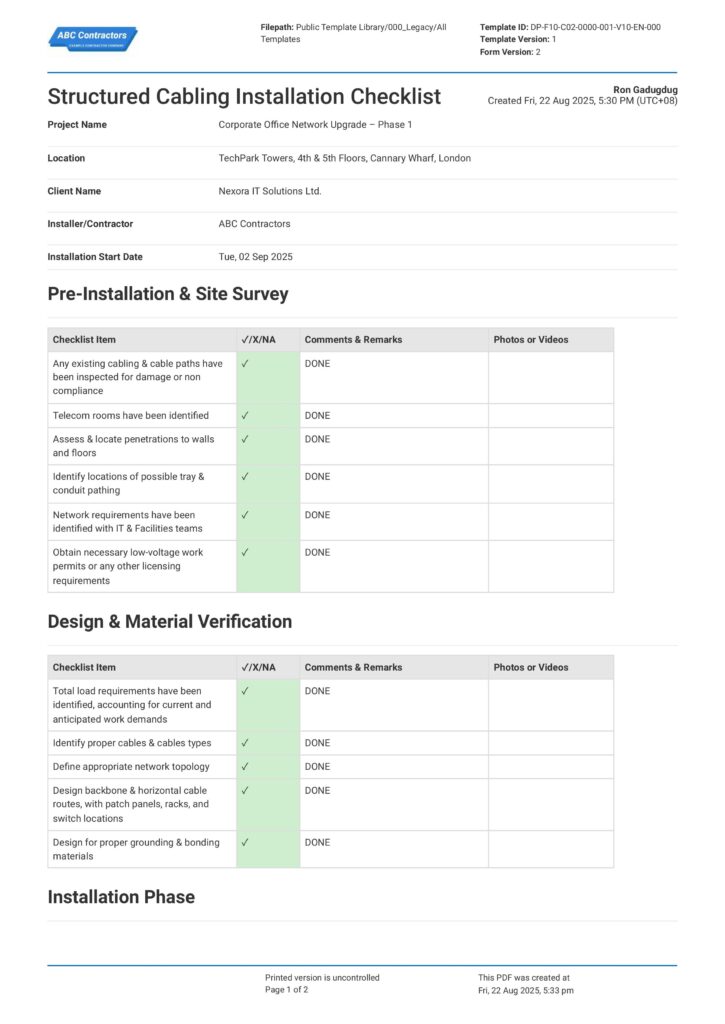
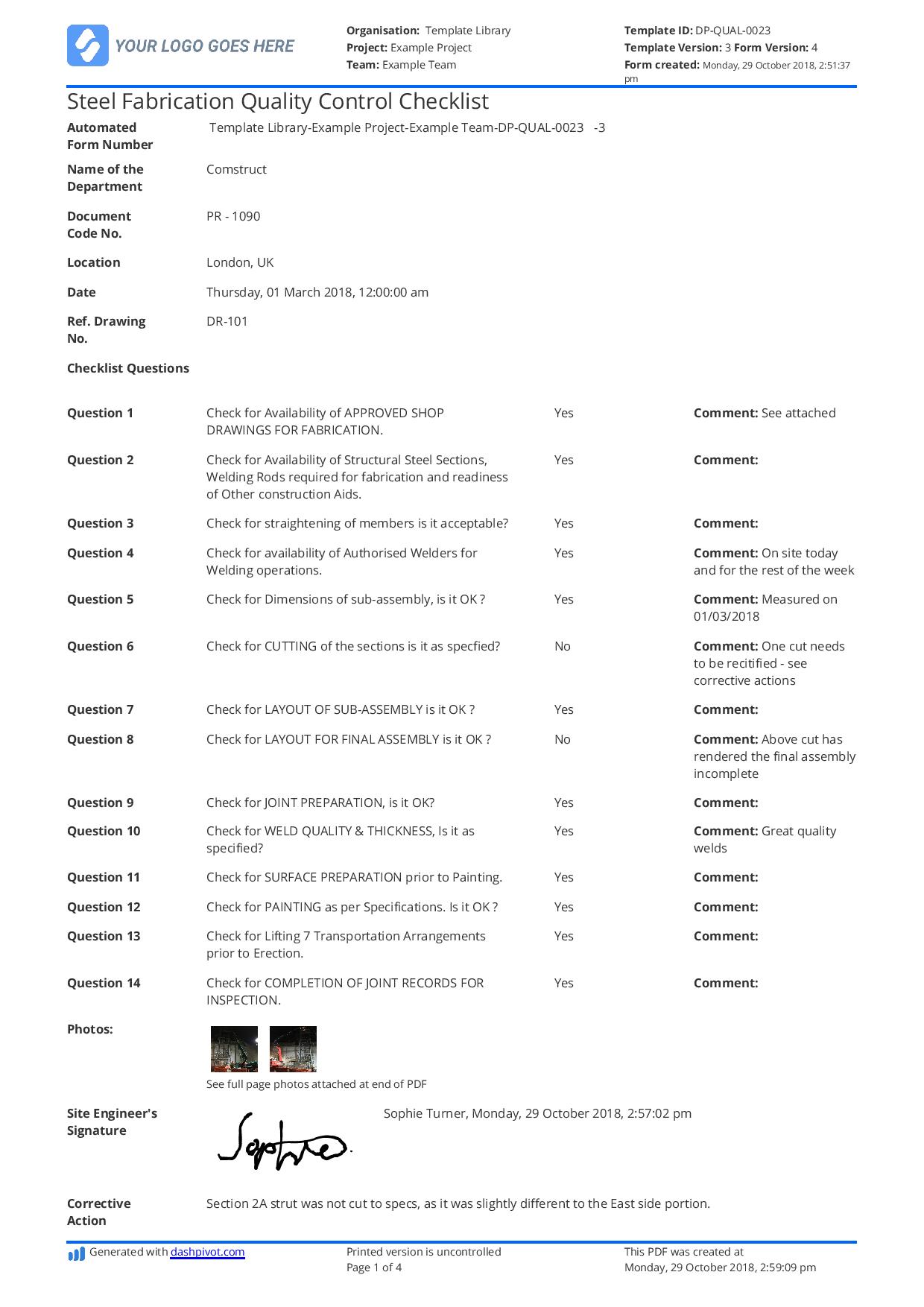
Use Dashpivot to manage HS2 documentation and compliance
Dashpivot provides construction teams with a digital platform for capturing site data, making standard reports, and maintaining traceable project documentation.
Using digital workflows allows teams to streamline inspections, manage compliance requirements more efficiently, and ensure that project documentation remains ordered and audit-ready throughout the lifecycle of infrastructure projects such as HS2.