Cladding Safe Work Method Statement (SWMS) Template

Start with a free 30-day trial. No credit card required.
This Cladding Safe Work Method Statement, or Cladding SWMS, is an easy-to-use form that your workers can use to plan and manage cladding risks before installing, fixing, cutting, or removing cladding materials. Easily select the scope of work, possible hazards, and required PPE from a list of choices, then work through a ready-to-use list of job steps, risk assessments, and method statements for common cladding activities.
After a cladding SWMS you can fill out on site and make your own? It comes pre-filled with cladding job steps, risk assessments, and method statements you can edit to match how your company works, and your crew can scan to sign on before starting and export the finished SWMS to PDF or CSV.
 100% fully editable Cladding Safe Work Method Statement (SWMS)
Export your Cladding Safe Work Method Statement (SWMS) to PDF or CSV
Access Cladding SWMS Form on mobile, tablet or computer
Trusted by companies, projects and teams of all sizes














What is Cladding Safe Work Method Statement (SWMS)?
A Cladding Safe Work Method Statement, or Cladding SWMS, is a document used by site teams, supervisors, installers, and contractors to plan how cladding work will be carried out safely. This SWMS usually includes details on the work area, cladding materials, access equipment, cutting tools, fixing methods, fall protection, PPE, job steps, hazards, risk ratings, and control measures.
Due to the risks that come with cladding work, hazards such as falls from height, falling materials, sharp edges, silica dust, manual handling injuries, wind exposure, noise, and interaction with lifting equipment have to be planned around to lessen potential accidents. This makes Cladding SWMS documents highly relevant in Australian construction, façade works, roofing, commercial fit-outs, maintenance, renovation, and industrial projects where external or internal cladding materials are installed, repaired, or removed.
Compare this to Cladding SWMS Form traditional Word and PDF documents
Preview this Cladding Safe Work Method Statement (SWMS) below and see how it's so much easier to create and navigate the SWMS form.
See how this Cladding Safe Work Method Statement can help make creating, completing, and managing SWMS more efficient. Preview it for free below.
Use this Cladding Safe Work Method Statement (SWMS) template for free

Generate this template automatically with Storm
You don't have to build the SWMS Process field by field. Let Storm, the AI Data Capture Agent inside Dashpivot, build the template for you in seconds.
Describe what you need
Tell Storm the form you want in plain language and it builds a structured digital template from scratch, with fields, tables, and signatures in place.
Upload what you already use
Drop in your existing PDF, Word, Excel, or even a photo of a paper form. Storm rebuilds it as a smart digital template with the structure intact.
 Storm
Storm
Generate a SWMS Process form template that I can use for my business
Applicable Standards and Policies for Cladding Safe Work Method Statement (SWMS)
There are generally no explicit formatting requirements for a Cladding Safe Work Method Statement. However, Australian WHS laws require PCBUs to prepare a SWMS for high-risk construction work where applicable, and to document hazards, risks, and control measures involved in cladding installation, work at height, lifting, cutting, fixing, and work near other trades. A Cladding SWMS is a good document to support compliance to this.
- Model WHS Regulations require a SWMS for high-risk construction work in Australia
- Safe Work Australia’s Construction Work Code of Practice covers SWMS requirements for high-risk construction work
- Safe Work Australia’s Managing the Risk of Falls at Workplaces Code of Practice 2018 covers work at height and fall risks
- Safe Work Australia guidance covers hazardous manual tasks, plant, PPE, and construction hazards
- State and territory WHS laws commonly require risk controls for cladding and construction work
Staff Members and Parties that use Cladding Safe Work Method Statement (SWMS)
A Cladding SWMS is primarily used by project teams that manage cladding installation, façade works, panel handling, cutting, fixing, scaffold use, EWP use, or other external building envelope activities. Here are examples of other common parties that use a Cladding SWMS:
- Site supervisors and project managers
- Cladding installers
- Façade workers
- Health and safety teams
- Contractors and subcontractors carrying out cladding work
Business Risks Reduced by Cladding Safe Work Method Statement (SWMS)
A Cladding SWMS puts controls in place for the hazards behind most cladding incidents, such as falls from height, falling objects, manual handling, panel lifting risks, cuts, dust exposure, poor access, and work near live edges or other trades. Applied consistently, it reduces the following business risks.
- Injuries, fatalities, and cladding-related incidents
- Non-compliance with Australian SWMS and work at height requirements
- Legal claims, enforcement action, and incident-related costs
- Project delays from injuries, dropped panels, rework, and site shutdowns
Business Opportunities Created by Cladding Safe Work Method Statement (SWMS)
A well-prepared Cladding SWMS helps businesses improve control over cladding installation, panel handling, access equipment, and work at height activities. Here are some ways a well-designed Cladding SWMS can help businesses:
- Improve worker confidence before cladding work begins
- Strengthen contractor prequalification and tender-offer competitiveness
- Improve coordination between supervisors, installers, façade workers, and site teams
- Build trust with clients, regulators, insurers, and project stakeholders
What Should be Included in a Cladding SWMS?
A Cladding SWMS should be prepared before cladding work is carried out as part of high risk construction work or on sites with higher-risk conditions. While exact requirements can vary across Australian states, territories, projects, and principal contractor requirements, there are some core elements that are typically included that you should know about:
- Scope of work, site location, cladding type, work area, and responsible persons
- Job steps for delivery, material handling, access setup, cutting, fixing, sealing, inspection, clean-up, and waste disposal
- Hazards such as falls, falling objects, sharp edges, silica dust, manual handling, wind exposure, power tools, and mobile plant interaction
- Required controls such as edge protection, exclusion zones, PPE, safe access, dust suppression, material storage, and lifting controls
- Risk ratings, emergency procedures, worker consultation, sign-off, and review requirements
Why are Cladding SWMS Important?
Cladding SWMS are important because cladding work can expose workers to falls, falling materials, sharp panels, dust, manual handling injuries, weather exposure, and risks from power tools or lifting equipment. This is critically important on construction, façade, refurbishment, commercial, and industrial projects where cladding may be installed at height, near edges, above public areas, or close to other trades.
Essentially, a Cladding SWMS helps confirm that the work steps, access method, material handling, fall controls, and safety measures have been reviewed before the task begins. Additionally, it gives project management teams clear documentation of the due diligence performed, supporting consultation, site coordination, and compliance with Australian WHS requirements where the work forms part of construction or higher-risk site activity.
How to Create a Cladding Safe Work Method Statement (SWMS)
Creating your own Cladding SWMS forms doesn’t have to be complicated. In this section, we break down the process step by step.
Before starting your Cladding Safe Work Method Statement (SWMS) form, the following pre-requisites should be ready.
- Project or site details are required.
- Cladding scope and work area must be listed.
- High-risk construction work details must be covered.
- Hazards, risks, and control measures must be stated.
- Access, lifting, and material handling needs must be included.
- Fall, cutting, dust, weather, and PPE controls must be noted.
- Worker sign-off and SWMS review requirements must be recorded.
Start with Project and SWMS Information
First, you need to place high-level general information at the beginning of your Cladding Safe Work Method Statement to help establish context for the work to be done. Here are some examples of core elements that you can use:
- Project name and site location
- SWMS title and document reference number
- Description of cladding works to be completed
- Name of the PCBU, contractor, or subcontractor
- Names and roles of workers, supervisors, and cladding installers
Define the Scope of Cladding Works
Next, you will want to define the scope of work so it is clear what cladding activities are covered by the SWMS. For example, you will want to list the following information in your Cladding SWMS:
- Type of cladding system or panels being installed
- Work area, wall, facade, roof edge, or structure location
- Materials being used, such as panels, fixings, brackets, sealants, and trims
- Tools, plant, and equipment required for lifting, cutting, fixing, and sealing
- Access equipment, scaffold, EWP, exclusion zone, and delivery requirements
Assess Cladding Work Hazards
It is important that potential hazards are identified before cladding work starts so the appropriate safety control measures can be implemented. Common hazards that you should look out for include:
- Falls from scaffolds, EWPs, ladders, edges, or elevated work areas
- Falling panels, tools, fixings, or other materials
- Manual handling of large, sharp, or awkward cladding components
- Dust, noise, sparks, sharp edges, or hazardous substances from cutting and fixing work
- Wind, rain, poor visibility, nearby services, or interaction with other trades
Record Safety Control Measures and Work Method
After the hazards are identified, you will want to determine the appropriate safety control measures to reduce risks for your workers and nearby site personnel. Be sure to document the following information in your SWMS:
- Safe access, scaffold, EWP, edge protection, and fall prevention requirements
- Panel lifting, carrying, storage, and fixing controls
- Exclusion zones, barricades, signs, and falling object controls
- PPE requirements such as gloves, eye protection, hearing protection, respiratory protection, and safety footwear
- Work sequence for set-up, material delivery, cutting, lifting, fixing, sealing, clean-up, and handover
Complete Review, Approval, and Worker Sign-Off
Complete your Cladding SWMS with review, approval, and worker sign-off to confirm that the work method and safety control measures have been communicated before work starts. Here are some examples of fields you can include:
- Names and roles of reviewers and approvers
- Date of review and approval
- Worker confirmation that the SWMS has been read and understood
- Supervisor or person in charge sign-off
- Revision number and next review trigger
Frequently asked questions
How to create SWMS Process in an App or Software System
A well-designed SWMS process ensures workers clearly understand the hazards, risks, and required control measures to perform high-risk work, while enabling your team to easily document, review, and share safe work procedures before work begins.
40 minutes
Medium difficulty
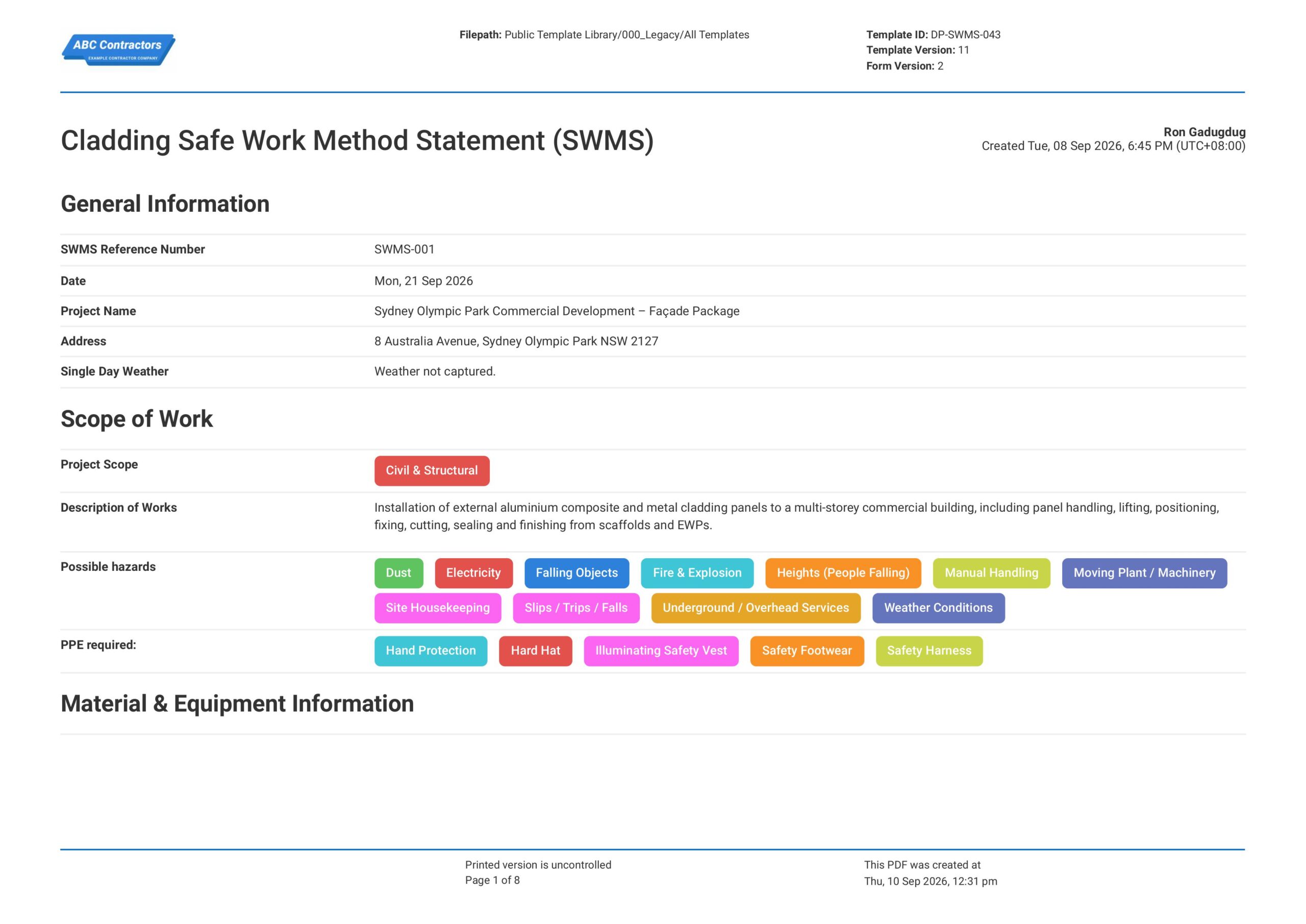
Start your Cladding SWMS with General Information
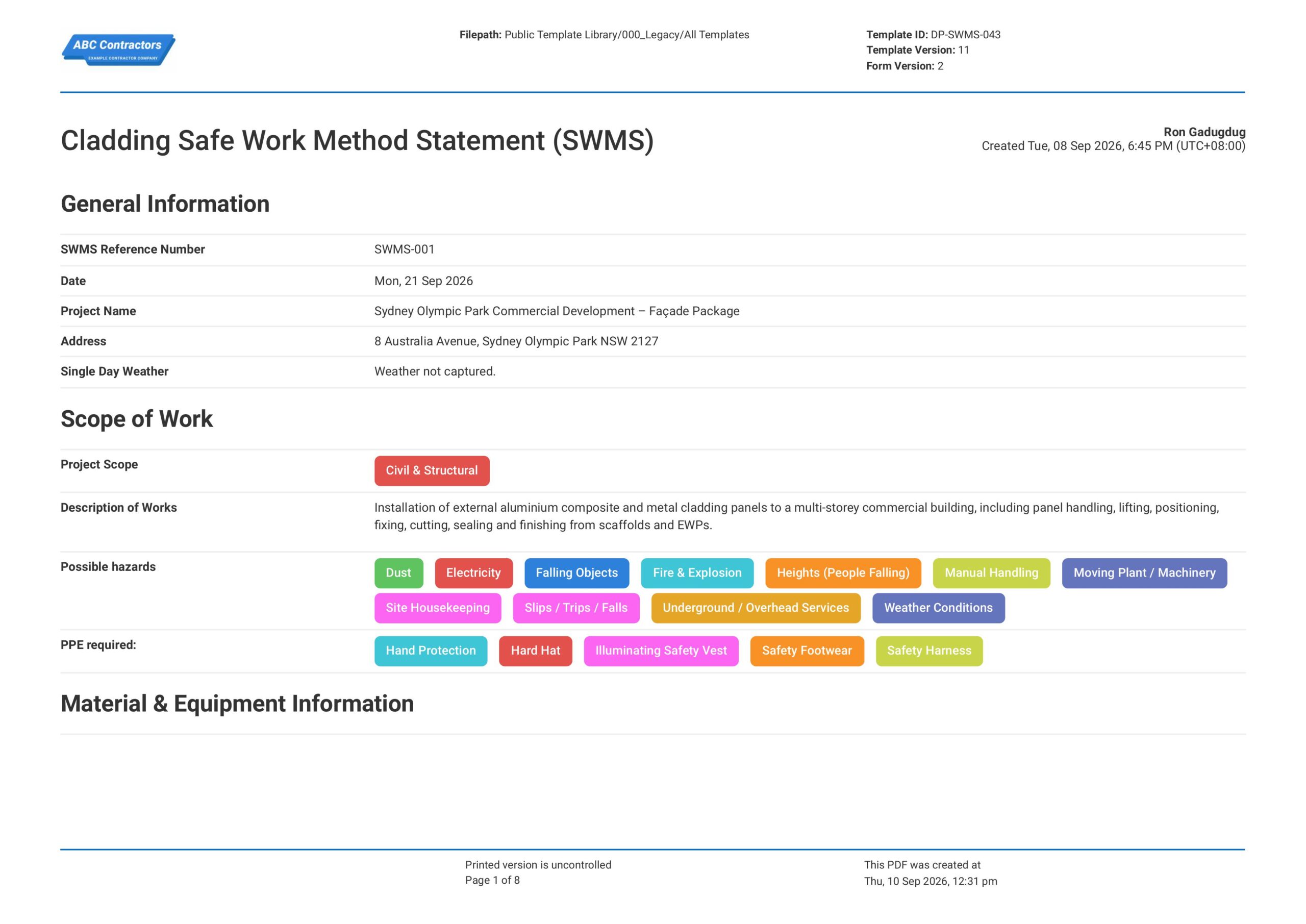
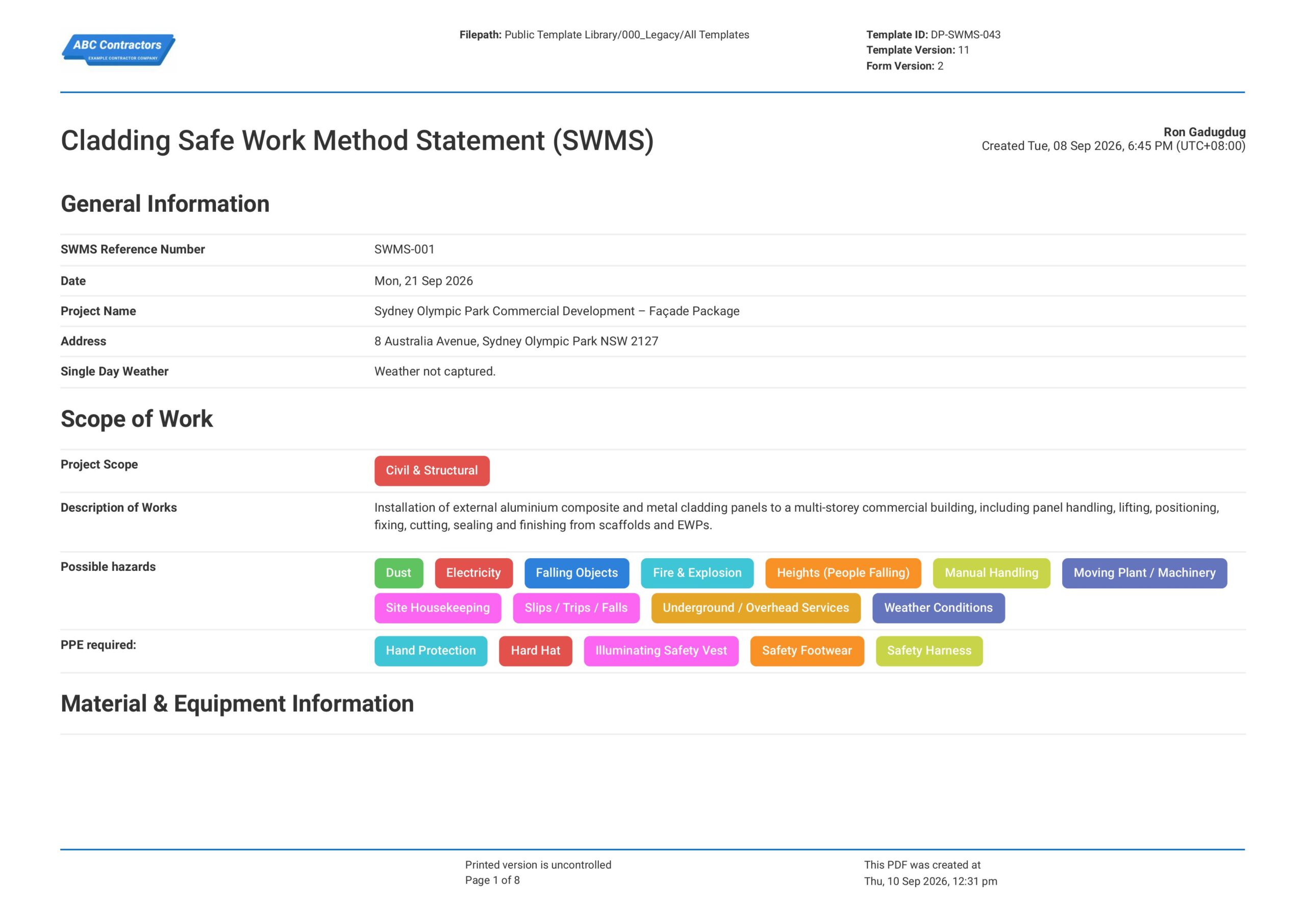
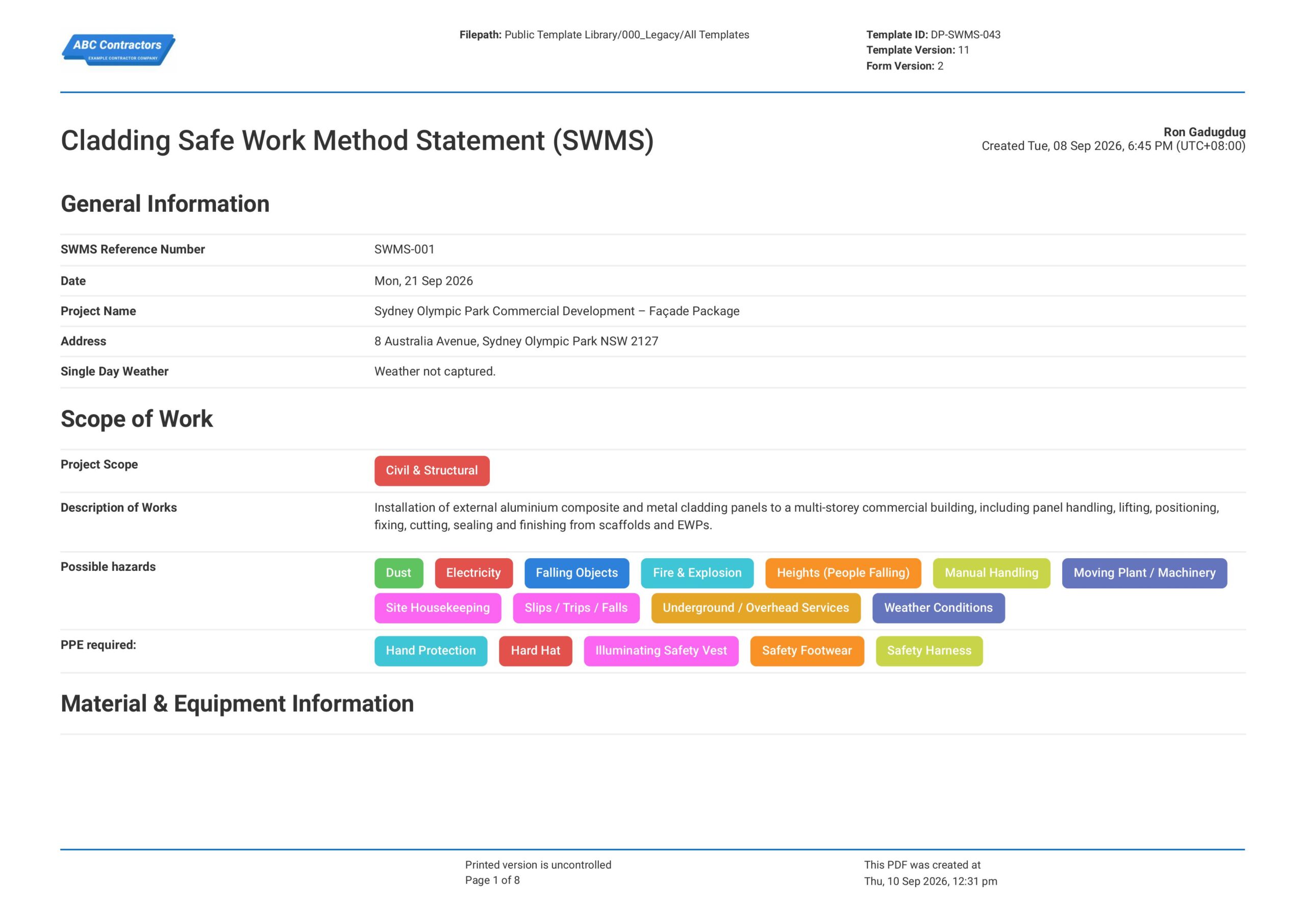
It is important to begin your Cladding Safe Work Method Statement (SWMS) with key project, site, date, reference, and location details so the document can be traced to the correct cladding activity. This section should use simple text and date fields for fields such as:
- Text field or Automatic Form Counter for SWMS Reference Number
- Date selector field for Date
- Text fields for Project Name and Address
- Text field or Automatic Single Day Weather capture
- Multi-line text field for Description of Work
Create a Section for Scope of Work, Hazards, and PPE
Next, create a section where users can select the project scope, possible hazards, and required PPE for the cladding works. For simplicity, we recommend using multiple-choice selector fields for this section, with fields such as:
- Multiple-choice selector field for Project Scope
- Multiple-choice selector field for Possible Hazards
- Multiple-choice selector field for PPE Required, including Safety Harness
- Conditional text field for other hazards or PPE not listed in the pre-filled choices
Create a Table for Material and Equipment Information
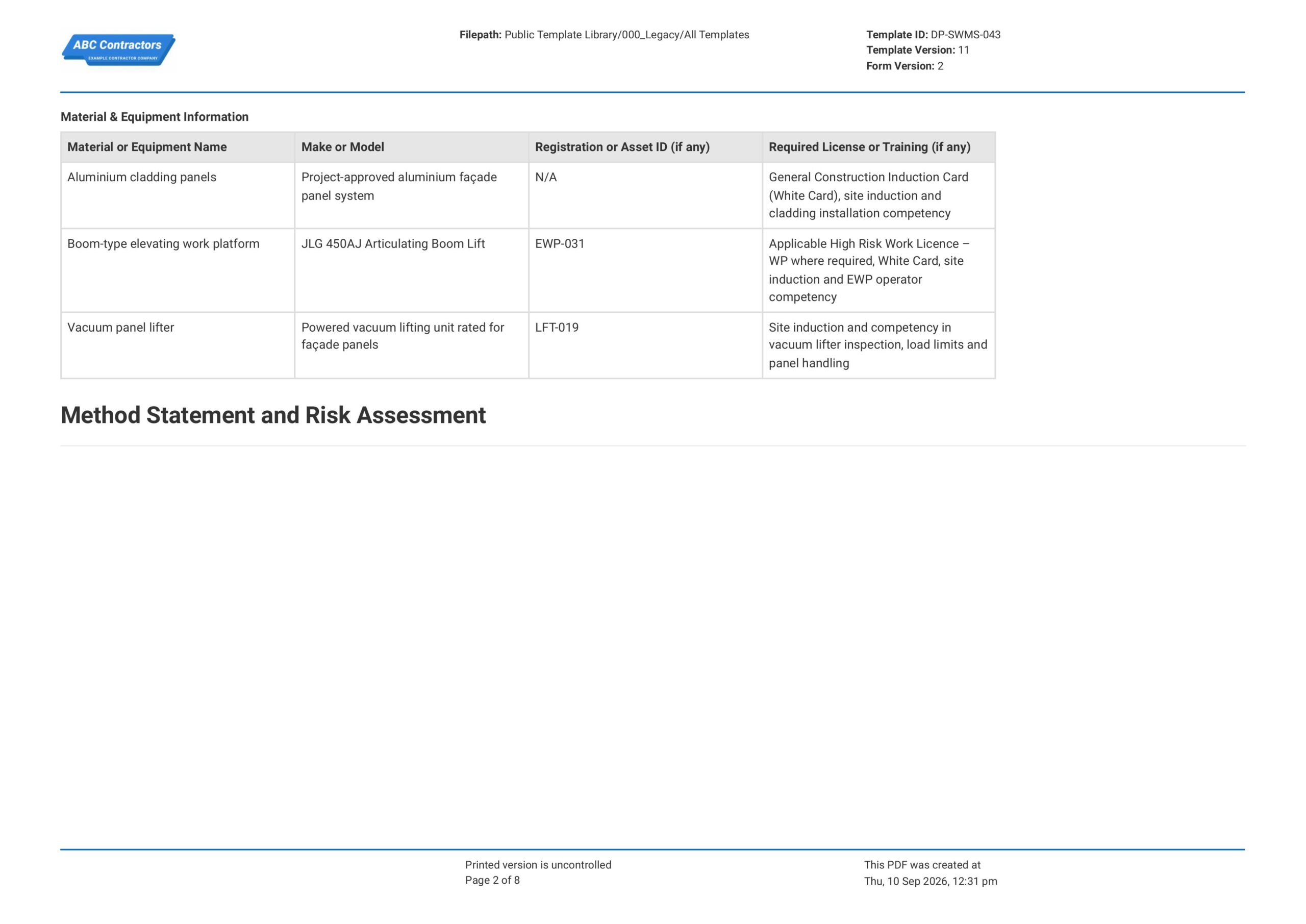
Users will next need to list the aluminium cladding panels, EWP, vacuum panel lifter, and other equipment required for the task. We highly recommend using a table for this section so each item can be recorded with its make, asset details, and required training information.
- First column for Material or Equipment Name
- Second column for Make or Model
- Third column for Registration or Asset ID, if any
- Fourth column for Required License or Training, if any
Create a Table for the Method Statement and Risk Assessment
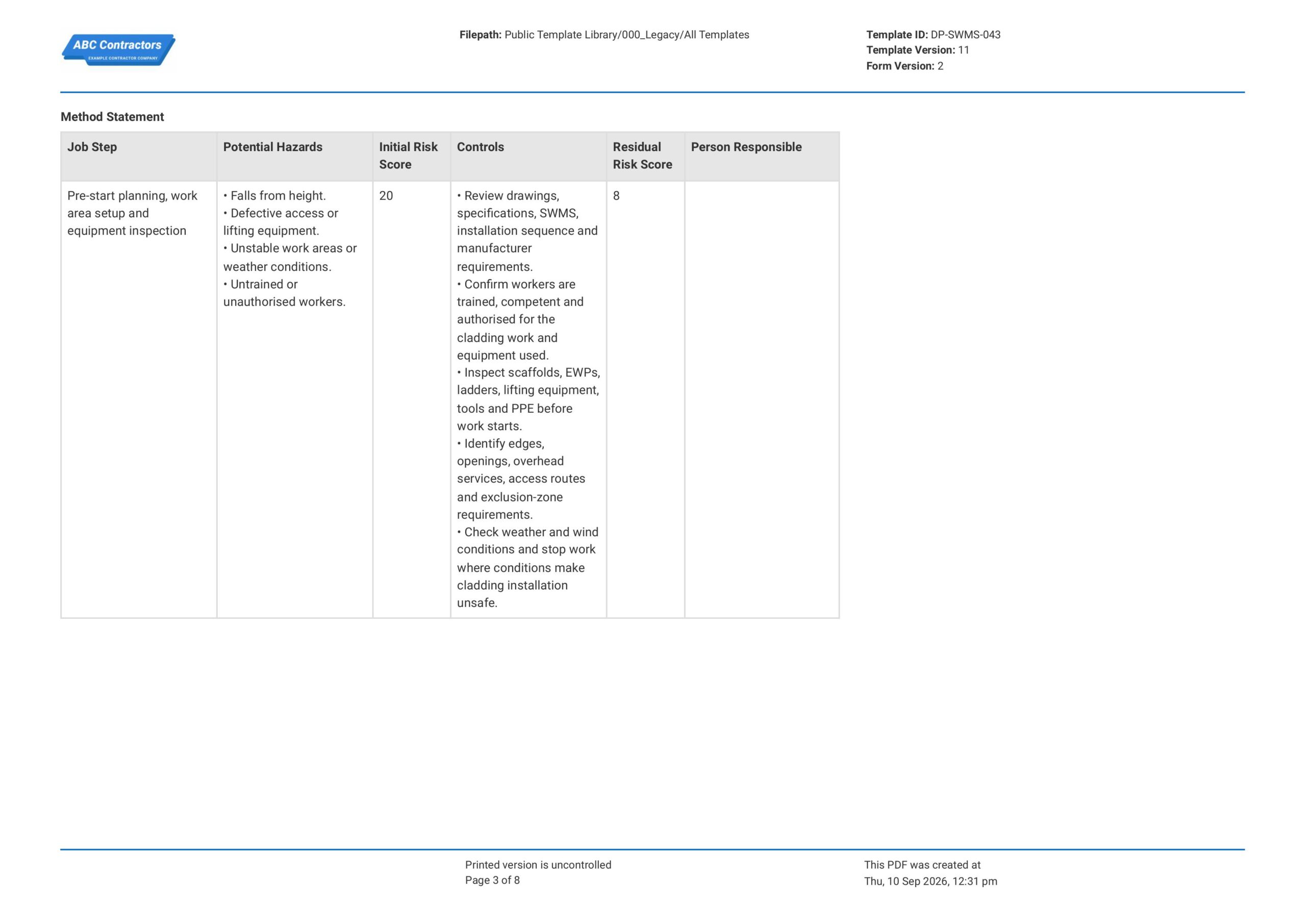
Next, create the main SWMS table where users can record each cladding job step, hazards, risk scores, controls, and responsible persons. We highly recommend using a table for this section, with the following formatting for the columns:
- First column for Job Step
- Second column for Potential Hazards
- Third column for Initial Risk Score
- Fourth column for Controls
- Fifth column for Residual Risk Score
- Sixth column for Person Responsible
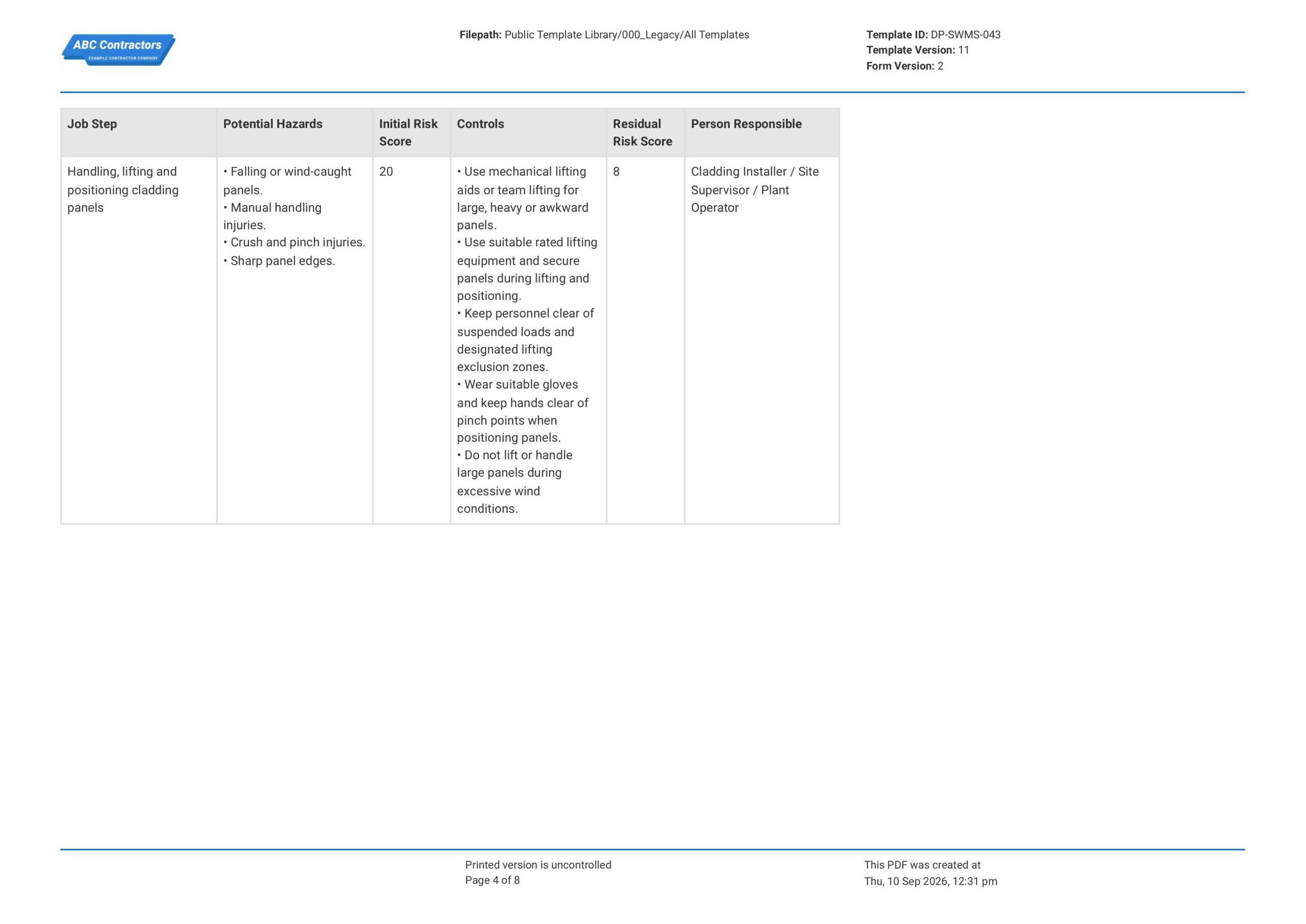
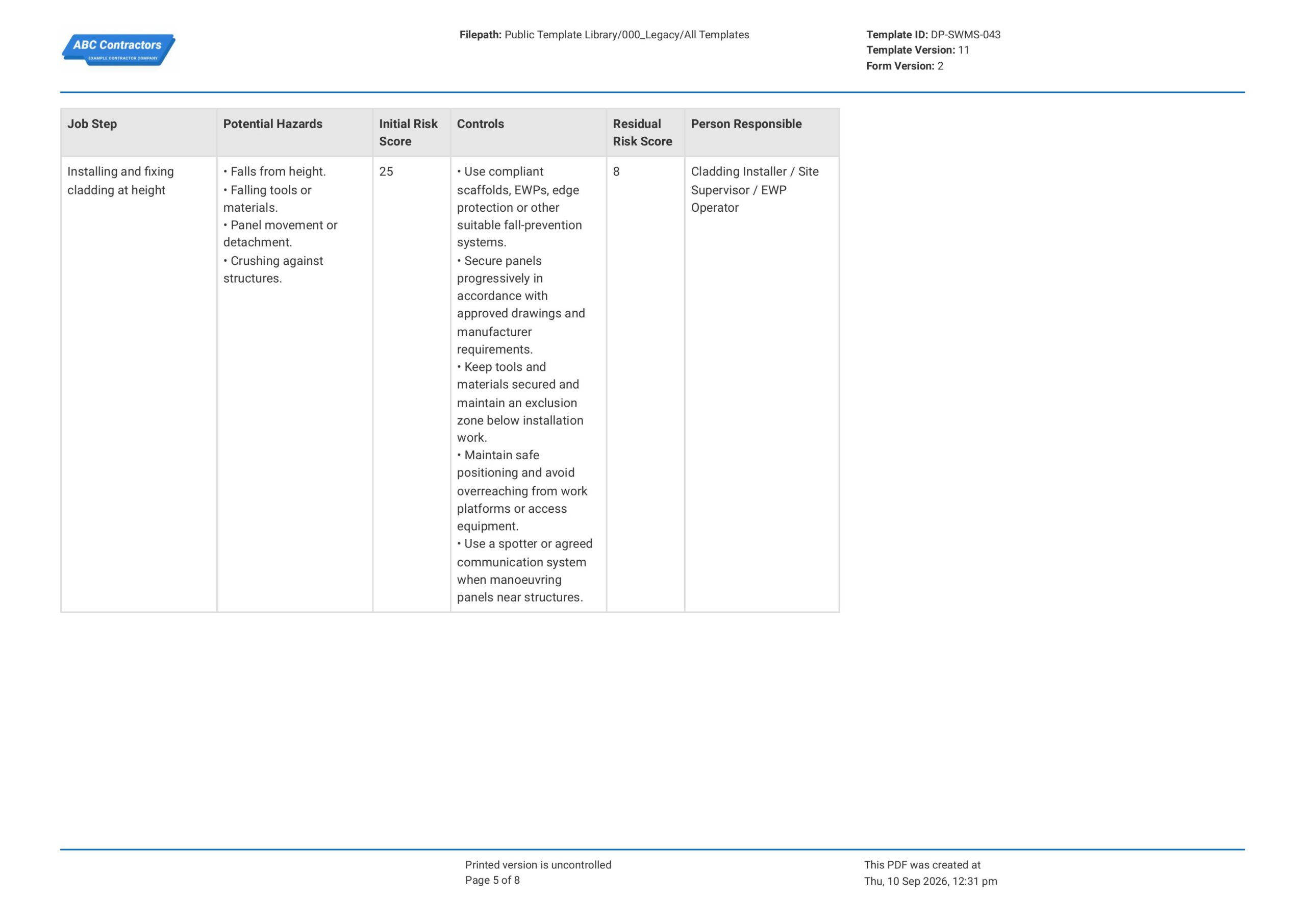
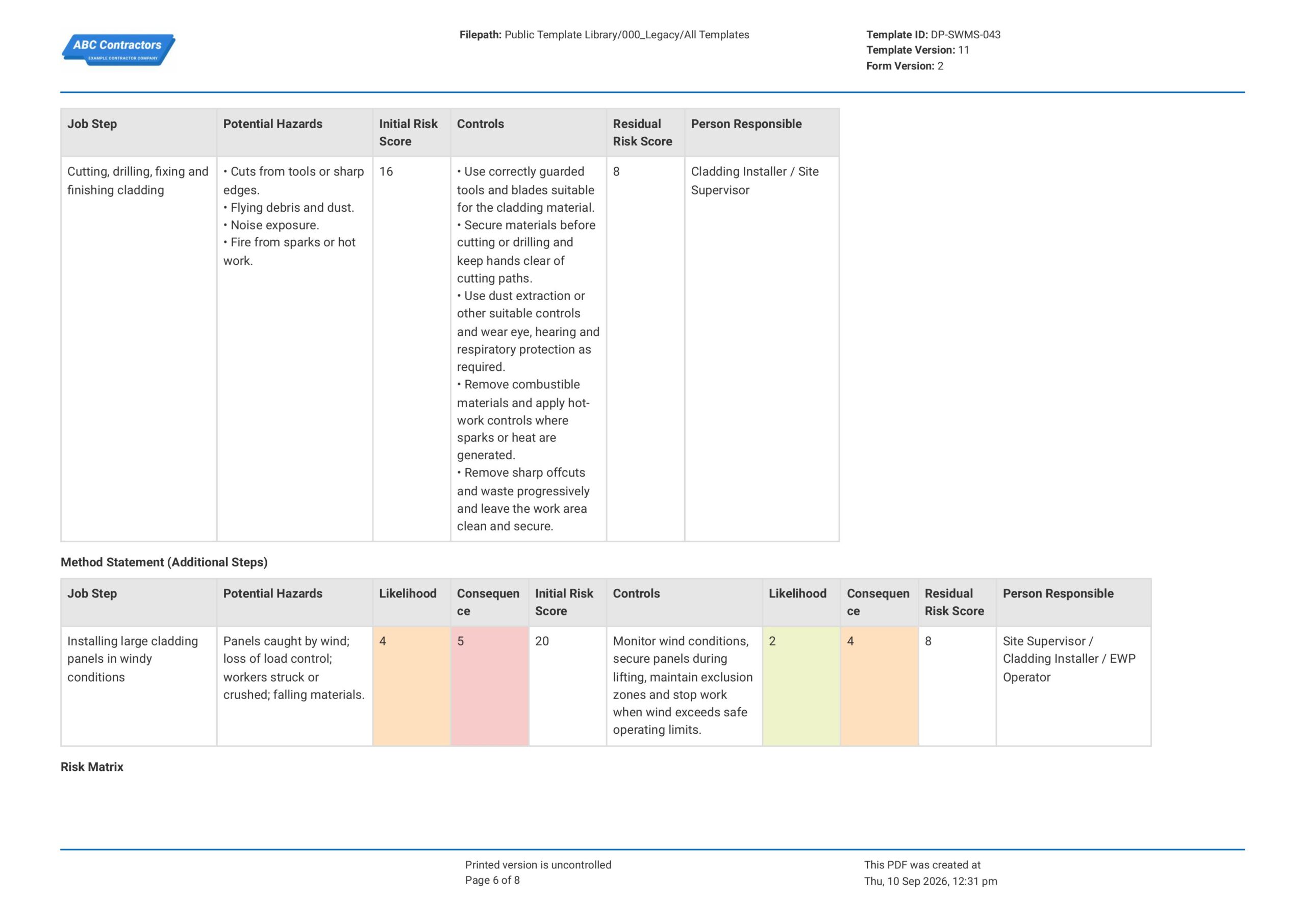
Add Pre-filled Method Statement Rows for Cladding Work
After the main table is created, add pre-filled rows that reflect the most common cladding job steps in the attached SWMS. These rows help users complete the form faster while still allowing the SWMS to be adjusted for the actual site task.
- Row for Pre-start planning, work area setup and equipment inspection
- Row for Handling, lifting and positioning cladding panels
- Row for Installing and fixing cladding at height
- Row for Cutting, drilling, fixing and finishing cladding
Create a Section for Additional High-Risk or Site-Specific Steps
Some cladding tasks may require extra job steps depending on large panel handling, wind conditions, EWP use, falling materials, exclusion zones, or how panels are lifted and secured. We highly recommend creating an additional method statement table so users can add extra risk assessment rows when needed.
- Columns for Job Step, Potential Hazards, Likelihood, Consequence, Initial Risk Score, Controls, Residual Risk Score, and Person Responsible
- Dropdown fields for Likelihood and Consequence scores
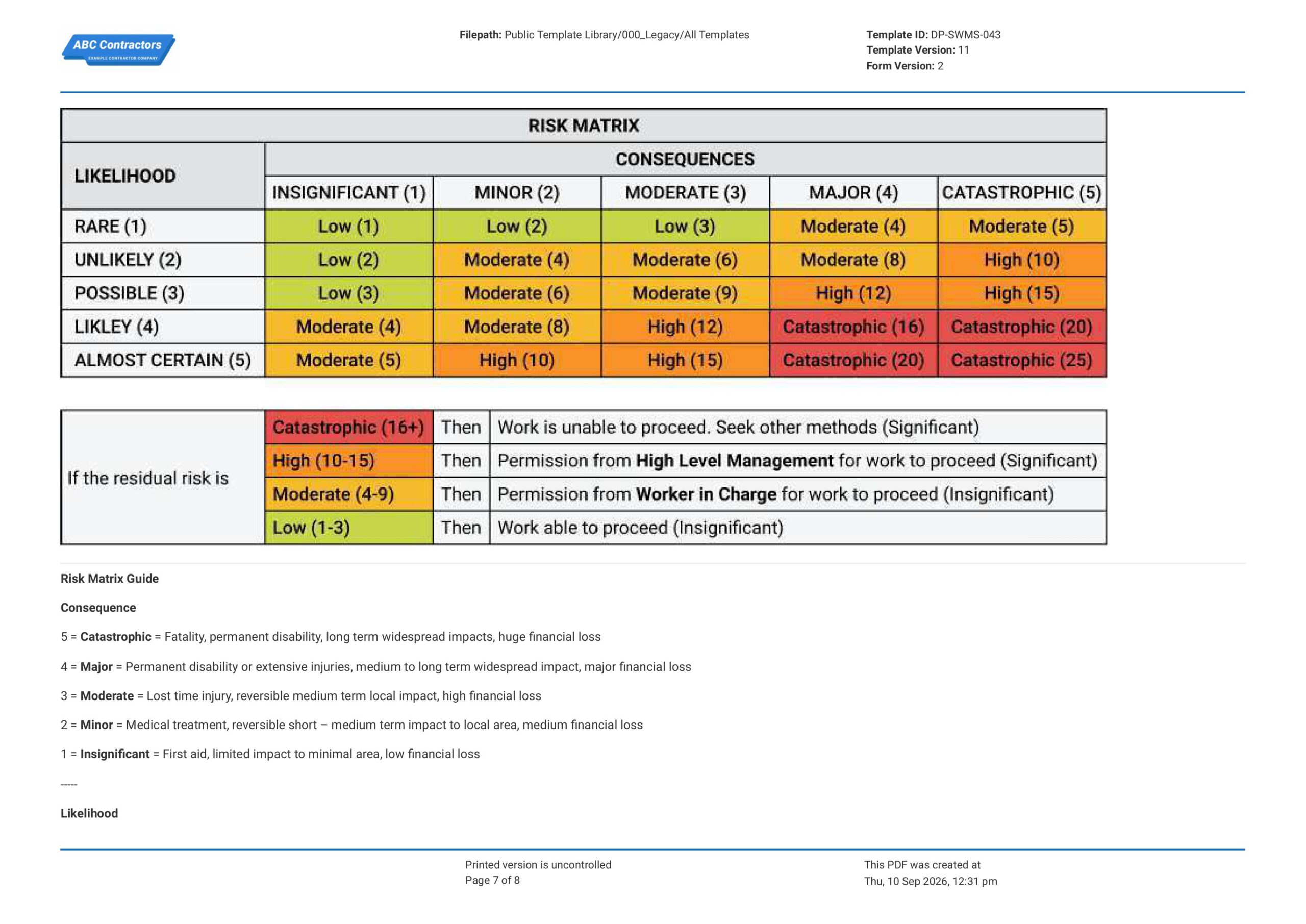
- Risk Score = Likelihood Rating x Consequence Rating
Create a Section for Risk Matrix Guidance
Next, add a risk matrix section as a guide for users to assess initial and residual risk scores for any additional job steps they may add. We highly recommend using the following fields and features to help guide users:
- Pre-filled or photo of the Risk Matrix table showing Likelihood, Consequence, and Risk Score levels
- Pre-filled text field for Consequence ratings from 1 to 5
- Pre-filled text field for Likelihood ratings from 1 to 5
- Pre-filled guide for residual risk actions, including Low, Moderate, High, and Catastrophic risk outcome
End your Cladding SWMS with Worker and Supervisor Sign-offs
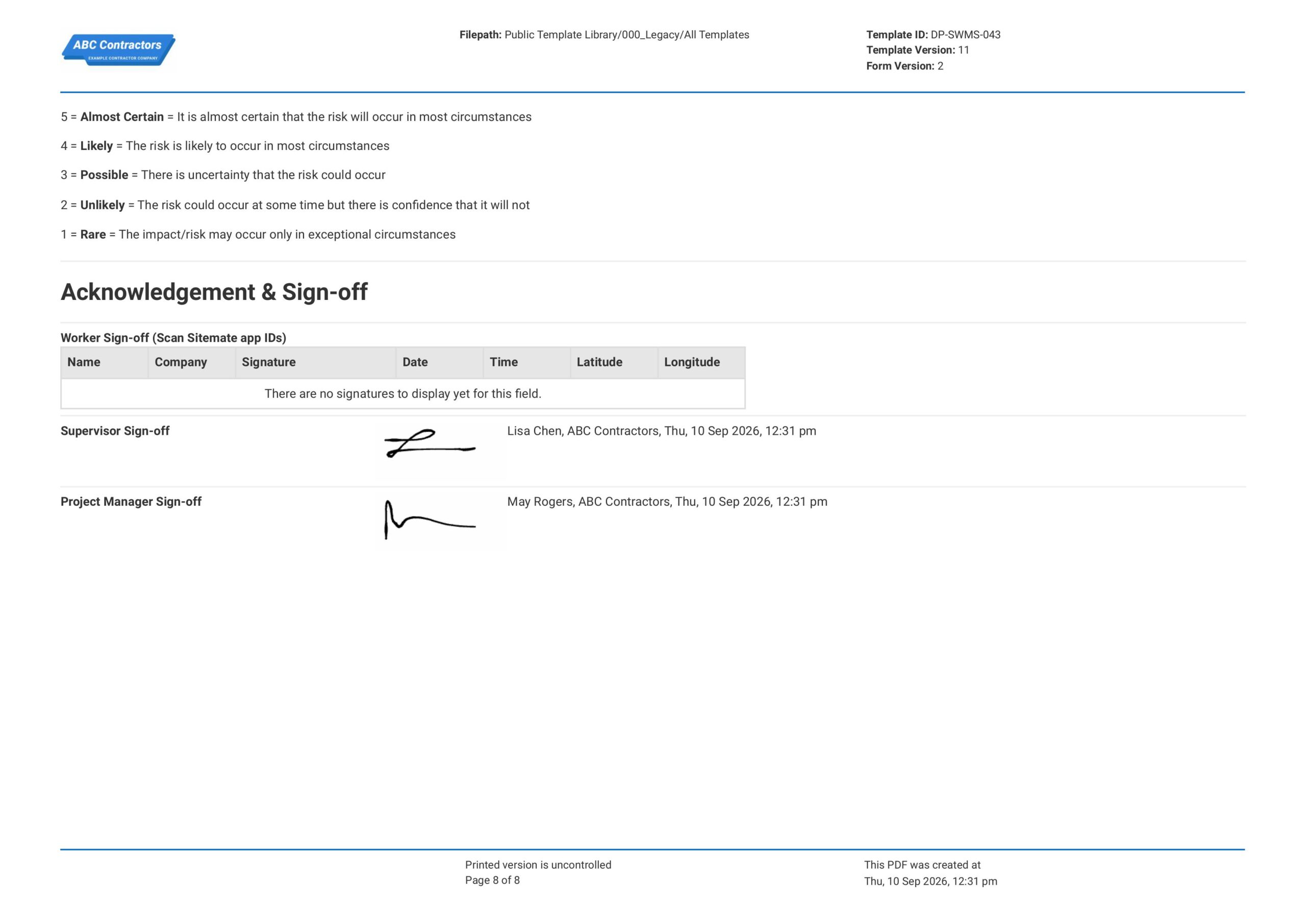
Finally, complete the Cladding Safe Work Method Statement (SWMS) with worker confirmation and sign-off fields for the responsible parties. If your app or software allows, use scan-to-sign and automatic e-signature fields to keep the sign-off process digital.
- A scan to sign-on table for workers’ sign-off
- E-signature field for Supervisor Sign-off
- E-signature field for Project Manager Sign-off
- Automatic date and time stamp fields for each sign-off
About the author

Ron Gadugdug
Engineering Content Writer

Education:
Cebu Institute of Technology - University - Civil Engineering
Bio:
Ron is a Civil Engineer with 6 years of experience in the construction industry, primarily focused on quantity surveying, cost estimation, project management, quality control, contract administration, and property & engineering insurance. At Sitemate, he writes about practical applications of evolving technologies and digital solutions that support construction professionals in improving efficiency, compliance, and project delivery across the built world.
Project Details:
Quantity Surveying & Cost Engineering
Performed quantity take-offs of several high-rise and horizontal structures using sheets and applications like Revit and Bluebeam Revu, and spearheaded trials with Building Information Modeling (BIM) software.
Project Management & Consultancy
Coordinated with project management teams during the construction of local projects such as a 4-tower hotel & resort, a 22 storey condominium project, and a school dormitory project.
Contract Administration
Assisted during contract biddings and negotiations with general contractors and sub-contractors, and oversaw progress reporting, billings, and payment.
Property & Engineering Insurance
Dedicated non-life claims handler, overseeing property and contractor all-risk insurance claims, risk management, and bonds.
Version History:
Other popular templates you can use and edit for free
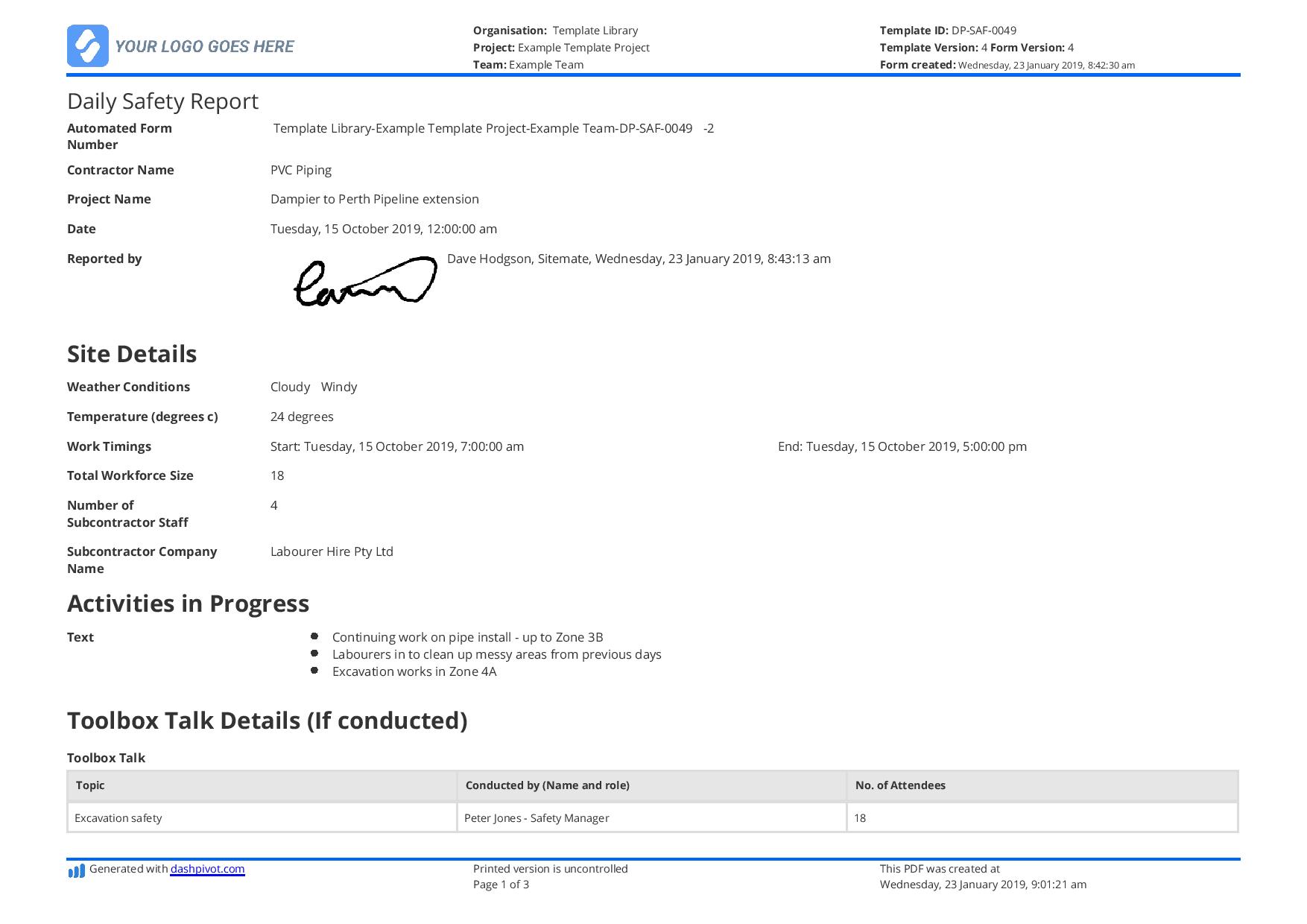
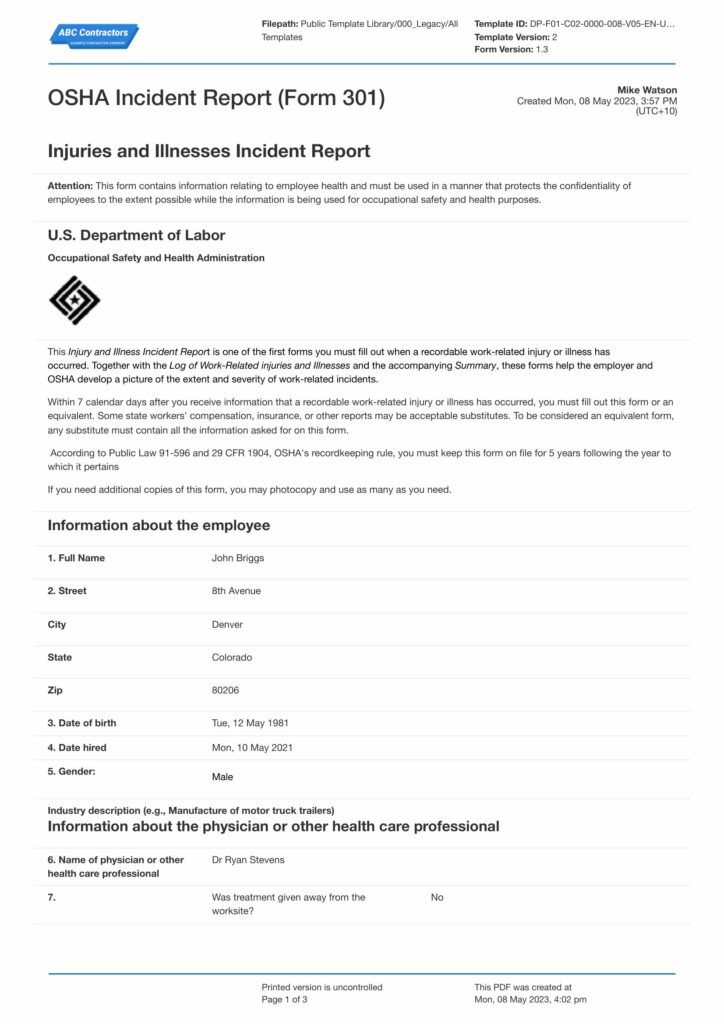
This SWMS form was generated with Dashpivot software
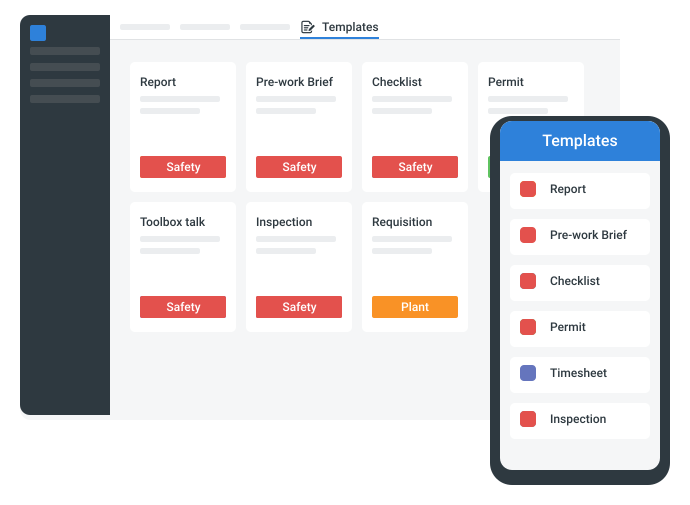
- Access, edit and complete your SWMS Process from any device - mobile, tablet or computer.
- Print, download or send your SWMS Process as perfectly formatted PDF documents with your company logo.
- Store your SWMS Process securely online, where they can be searched and found in seconds
- Invite internal and external parties to see, edit and sign off on SWMS Process online.
 English (United States)
  English (Australia)
  English (UK)
  English (New Zealand)
  English (South Africa)
  German