Part A Structural Design Checklist Template
Start with a free 30-day trial. No credit card required.
 100% fully editable Part A Structural Design Checklist
Export your Structural Design Checklist to PDF or CSV
Access design checklists on mobile, tablet or computer
Thousands of templates including other quality templates

~200 employees

~20 employees

~25,000 employees

~40 employees

~10,000 employees

~1,500 employees

~35,000 employees
What is a Part A Structural Design Checklist?
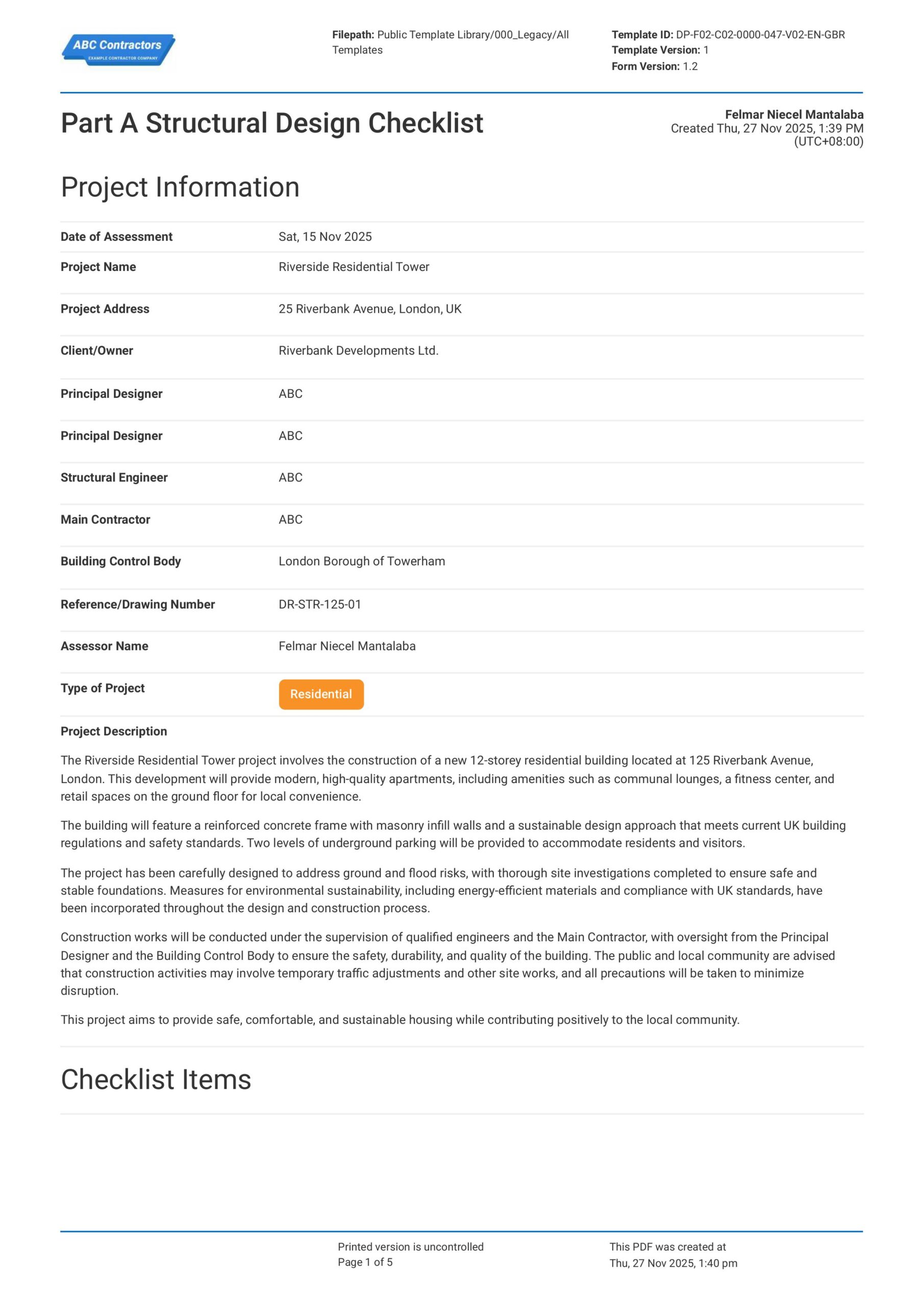
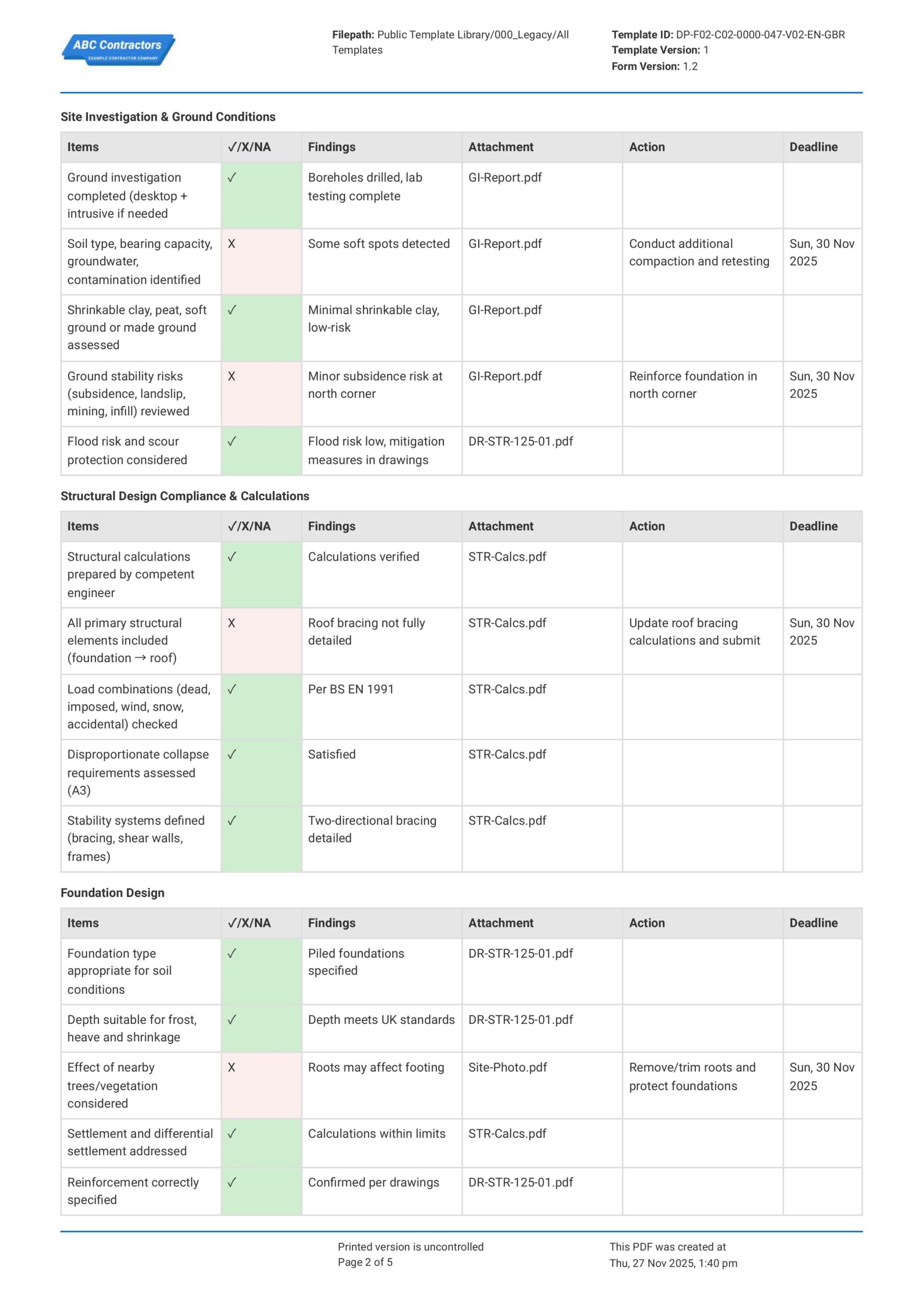
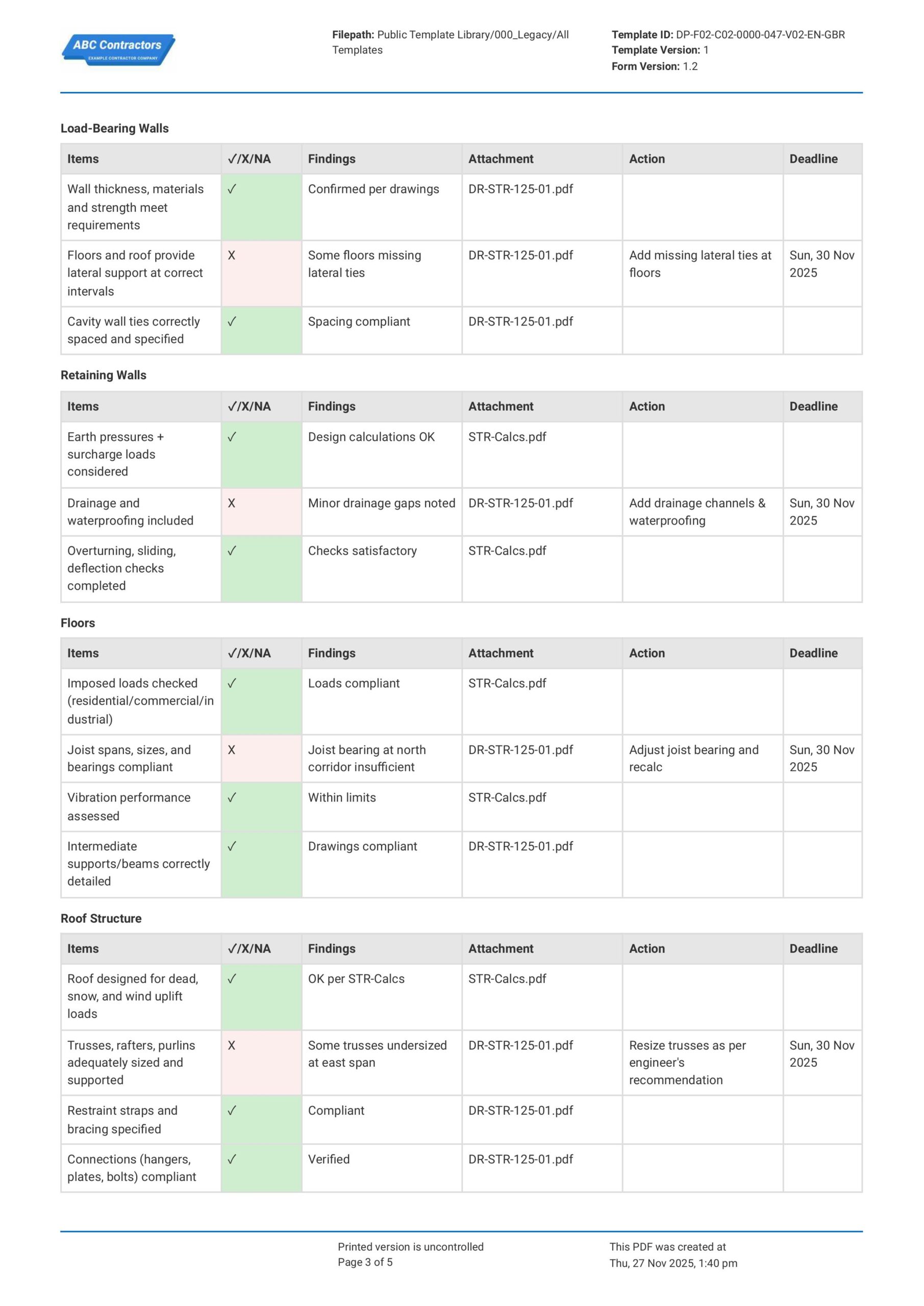
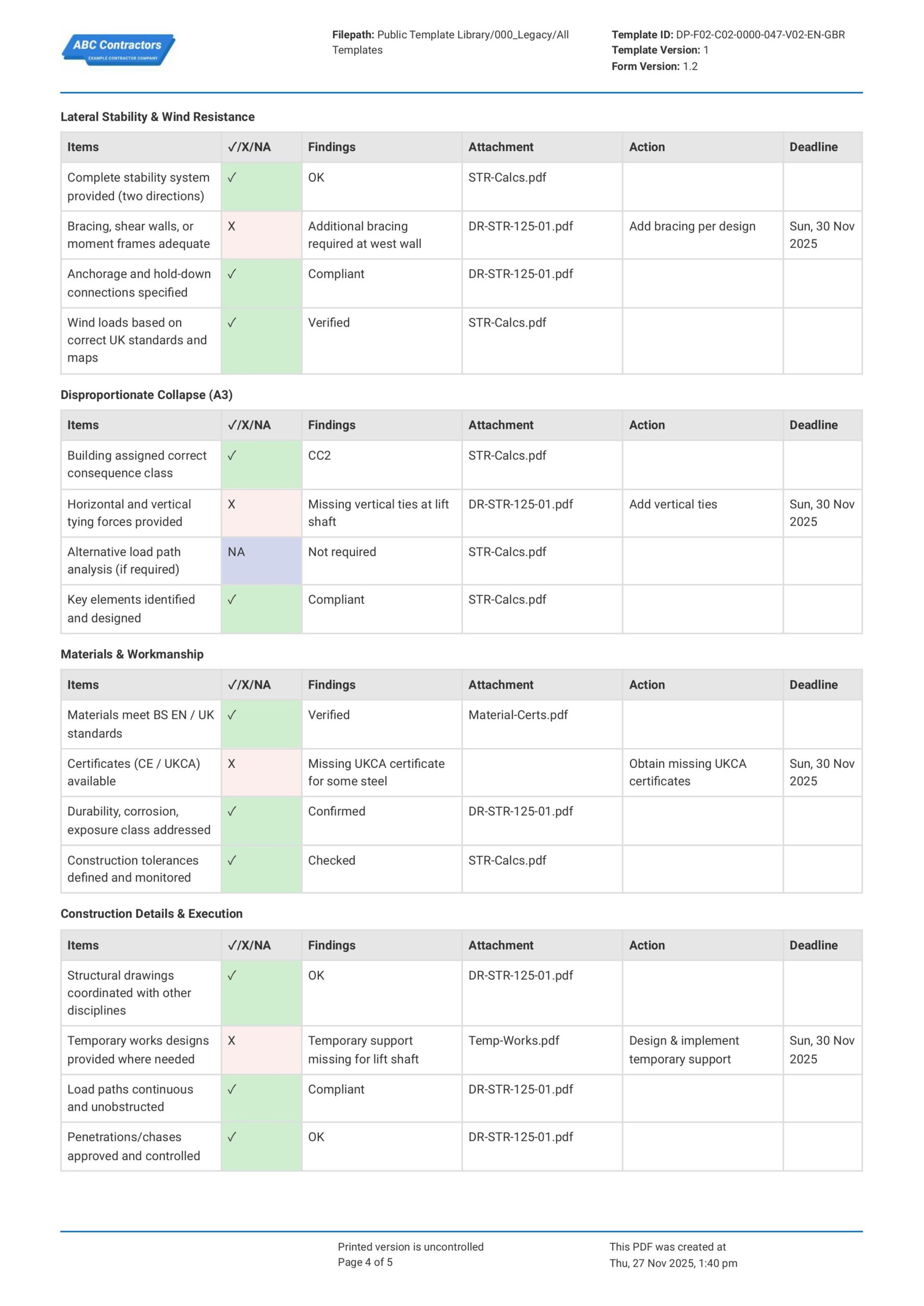
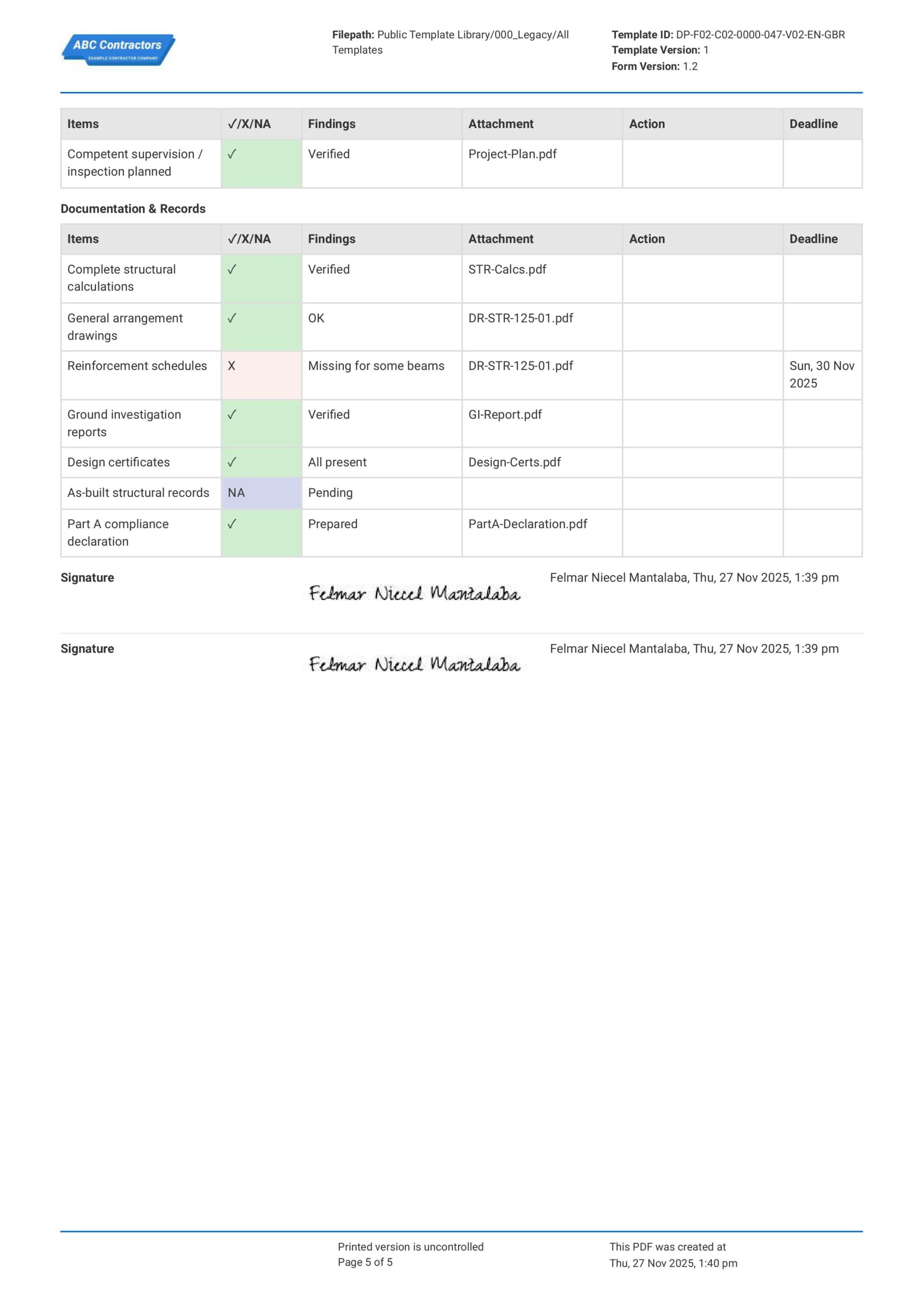
The Part A Structural Design Checklist is designed to be a useful tool for both the final review of construction project plans and specifications and for design development. This checklist guarantees the safety, robustness, and compliance of the proposed structure with the UK's building regulations. A certified inspector who is qualified to examine design calculations and procedures will evaluate the design. The inspector will collaborate with the relevant stakeholders to get hold of all documents related to the design and work procedures of the building.
Compare this Part A Structural Design Checklist to paper-based forms created with Word, Excel, or PDF.
Use this Part A Structural Design Checklist template for free.
Structural design example: A guide on Part A requirements
Approved Document A in the UK is a required guideline that helps the public, especially those in construction and building, understand how to design buildings to ensure they are strong and meet the Building Regulations of 2010 (for England and Wales). Approved document part A highlights three major key factors of a structurally sound building, which are loading, ground movement, and disproportionate collapse.
Loading
Part A places importance on how loads on a building are considered and calculated. Loading plays an important role in keeping a building supported to avoid deformation, deflection, or any movement that could place the building’s integrity in jeopardy. The combined load of a building—including dead load, wind load, and imposed loads—must be fully identified and accounted for on ordinary loads and dynamic loads to ensure that the structural parts that carry these loads are adequately designed for full integrity.
Because of its criticality, construction companies are strongly recommended to follow codes, like BS EN 1990 for structural design basis and BS EN 1991 for loading that includes dead load (building’s own weight), elemental loads (wind, snow, and ambient heat), and accidental loads. Following Part A and these codes ensures that the building, its occupants, and the neighboring structures are free from any impending danger and collapse.
Ground Movement
The ground where a building will be constructed needs to be surveyed as per approved document A. The ground needs to be surveyed for any movements, like swelling and shrinkage of subsoil, freezing, erosion, or subsidence, which could pose a threat to the safety and integrity of the constructed building. During the design phase, it should be ensured that these surveys are conducted to help anticipate any potential ground movement and provide the necessary measures to mitigate and eliminate risks.
The foundation and structural design of the building should integrate these measures prepared during the design phase to ensure that they are fully equipped to stay steady and sturdy for any sudden ground movements. Part A also mandates the frequent continuation of these surveys to guarantee the provision of measures tailored to new ground and soil conditions. Doing so helps protect the building and occupants living in it.
Disproportionate Collapse
Approved document, Part A, has provided a mandate on how the robustness of a building is defined. It said that buildings should be designed so that if a structural part fails or a portion collapses, the entire structure should remain standing. The building should be designed in a way that redundancy, ties, load paths, and alternative load-sharing are integrated to ensure that a total collapse will not happen.
A full collapse of a building will mean a catastrophic event and put the occupants and the surrounding neighborhood in critical danger. To avoid such occurrences, different building classes should practice providing keen attention to detail when designing the structure. The design should provide details, like floor anchoring, horizontal ties, and proper connections between design elements. Providing these details places a higher level of survivability on the occupants and everyone near the premises.
Residential structural design guide
The UK residential structural design guide revolves around 3 major provisions, which are Approved Document A, BS 8103-2:2013—Structural Design for low-rise buildings: masonry walls for housing, and BS 8103-3:2009—Structural Design for low-rise buildings: timber floors and roofs for housing. Approved document Part A gives legal advice on structural safety in England, while the two British standards set rules for wall design and detail, as well as the recommended sizes and fasteners for timber parts in homes. However, for non-traditional residential units, it's best to follow provided Euro codes. These codes and provisions would fully suffice in designing and constructing a rigid, sound, and safe home.
Frequently Asked Questions
Why use this Part A Structural Design Checklist template?
Sitemate’s Part A Structural Design Checklist is the best structural compliance and verification template because it’s already trusted and used by thousands of construction and engineering companies. It’s purpose-built to align with Part A structural design, stability, and documentation best practices, ensuring every requirement is captured clearly and consistently. The template is streamlined, intuitive, and ready to use—making it fast and easy for any worker to complete accurate structural assessments.
Is this template compliant with Approved Document A standards?
Yes – this template is fully configured to comply with Approved Document A and UK structural design standards. Trusted by certified contractors across the construction and engineering industry, it streamlines compliance, ensures thorough verification, and simplifies accurate documentation for all Part A structural requirements.
Can I edit this Part A Structural Design Checklist for my project or company?
Yes – the template is fully editable with intuitive drag-and-drop functionality. You can create countless document layouts using tables, formulas, sketches, photos, and more to capture any type of data. Customize it further with your company logo, headers, and other key elements—all powered by Dashpivot’s robust template builder.
On which platforms can the Part A Structural Design Checklist be accessed?
This template works seamlessly across all devices—desktop, tablet, and mobile. You can complete Structural Design Checklist forms in the office or directly on-site. Once filled out, records can be generated or exported as PDF or CSV, giving you the flexibility of Word, Excel, and PDF with the efficiency of modern software.

Other popular templates you can use and edit for free

Part A Structural Inspection Checklist
Thoroughly assess if all structural members of the building are built by design and are compliant with Part A regulations in the UK

Structural Load Path Verification Checklist
Confirm that a building's load path complies with the approved design and efficiently supports and transmits loads to the ground.
Ground Condition Report
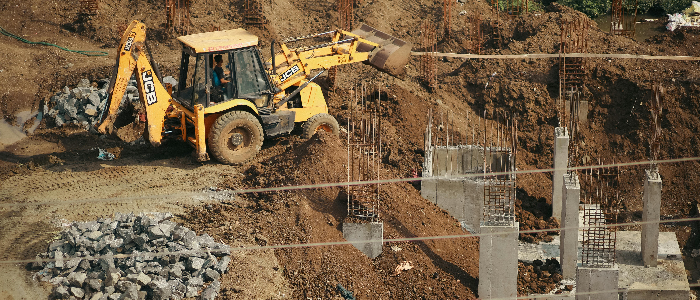
Examine the soil and ground conditions thoroughly and correctly before beginning construction.

This Structural Design Checklist was generated with Dashpivot
Secure a brilliant structural design by fully checking if it meets all the safety and compliance requirements. The Part A Structural Design Checklist Template assists engineers and relevant stakeholders in easily identifying flaws in the structural design, which facilitates prompt decision-making and immediate resolution.
- Complete, edit, and review the EV charging infrastructure report on any device.
- Export reports as perfectly formatted PDF documents with your company logo.
- Securely store and manage your reports for easy searching and finding.
- Upload relevant attachments to provide a more comprehensive information on findings

Sitemate builds best-in-class software tools for built world companies.

 English (United States)
  English (Australia)
  English (UK)
  English (New Zealand)
  English (South Africa)
  German