













Dashpivot Safety

Safety documentation that writes itself as the work happens

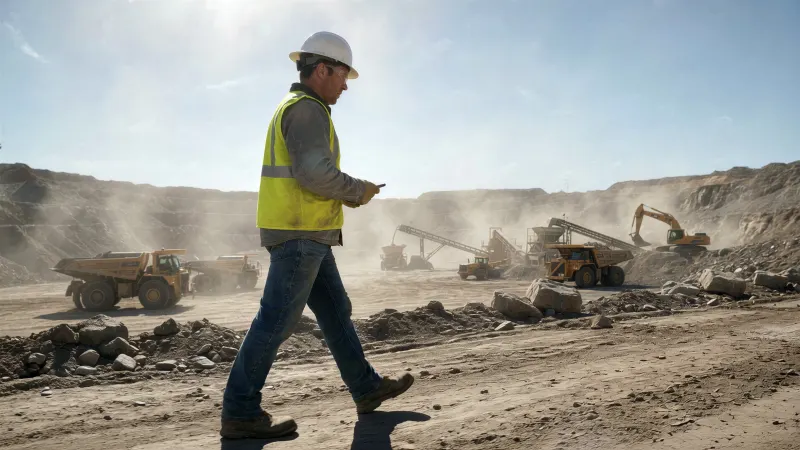
Safety teams describe hazards, take photos, and brief crews like they always have. Now the safety records draft themselves from the work already happening, ready for the safety officer to review and approve.

Powered by Storm

Storm drafts safety records from voice notes and photos. Your team reviews and signs.

Built in Dashpivot

One platform for safety, quality, site diaries, inductions, and timesheets.

Works offline

Capture safety data on-site with the mobile app, even without internet.

Audit-ready

Records export as audit-ready PDFs for ISO 45001 and your local regulator.

Trusted by companies, projects and teams of all sizes

Phoenix Offshore Solutions
Stonebond
Tesmec
Snowy Hydro
Mack Civil
JVS Industries
The APP Group
AJC
Cherrie
Burton
Great Southwestern Construction
AM1 Projects
Ward
Caras
SciDev

What is a Safety Management System?

How a company identifies hazards, controls risks, and proves compliance, all in one place.

Why use a Safety Management System?

Catch hazards before they become injuries, and stay audit-ready without the paperwork.

Book a quick call

Every safety workflow, drafted by Storm, controlled by your team

From inspections and incidents to permits and audits, here's how teams use Dashpivot to run their safety workflows. Storm handles the documentation. Your team stays in control.

Safety inspection

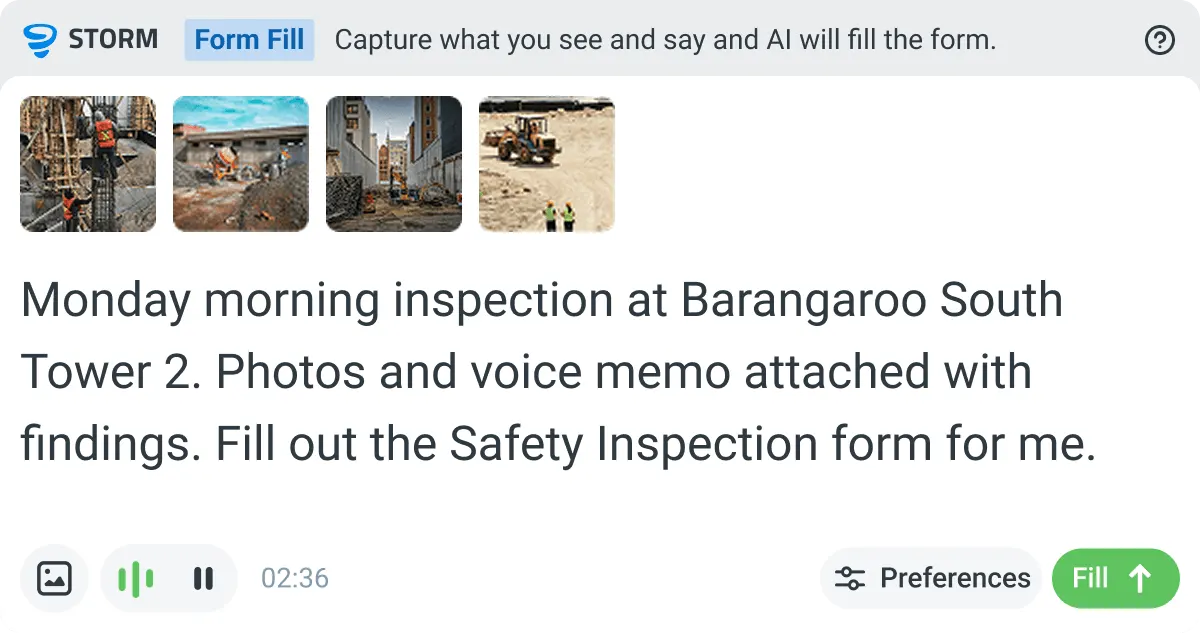
The inspection report gets drafted as the safety officer walks the site, capturing photos, voice notes, and observations automatically. They review and submit before leaving the area, with all findings logged and actions assigned immediately.

Storm Form Fill capturing a voice note and photos during a safety inspection

Identified from photos captured on-site

The safety officer takes photos on the walk. Storm picks out hazards and suggests risk ratings from what's in each image.

Transcribed from voice observations

Storm turns voice notes into written findings and corrective actions, and the safety officer assigns them to the right person.

Date and location captured automatically

The device adds the date, GPS location, and timestamp, so the record is ready for the supervisor to review.

View use case

Storm drafted this from site photos and a voice note. Sign-off stays with your team.

Safety Inspection

J. MorrisonCreated Mon - 14/04/2026

Inspector J. Morrison
Site / Project Barangaroo South Tower 2
Inspection Date 14/04/2026
Start Time 09:30
Inspection Area
Inspection Type Routine
Weather Conditions Clear
Findings
FindingRisk LevelAction Required
Missing edge protection - L2 scaffoldingHighInstall guardrails before next shift
Unsecured gas bottles near storageMediumChain bottles to rack and tag
Site Conditions Excavator on site Workers beside a trench Site works in progress
Hazard Evidence Scaffolding without edge protection Materials stored near the site office Narrow access between buildings Loader working near people
Immediate Actions Are immediate corrective actions required?
Inspector Sign-Off
Supervisor Sign-Off
Review & Approval
ReviewerDateSignature
Awaiting review

Job hazard analysis

Storm drafts the JHA automatically from work scope, location data, and environmental conditions. The safety officer reviews each hazard, adds site-specific controls, and approves before the crew starts work.

Template matched to the work type

Describe the job or import an existing JHA, and Storm builds the template with hazard categories and a risk matrix.

Filled from a site walkthrough

The supervisor records conditions on site, and Storm maps each observation to the right hazard row with its controls.

Approved before the crew starts

The safety officer validates each entry, adjusts ratings and controls, and signs off before work commences.

View use case

Storm drafted this from a site walkthrough. Sign-off stays with your team.

Job Hazard Analysis

K. NguyenCreated Wed - 16/04/2026

JHA Reference JHA-2026-0112
Project / Site Westconnex M8 Tunnel - Section 4
Task Description Confined Space Entry - Stormwater Pipe
Date 16/04/2026
Start Time 06:30
Work Area
Overall Risk Level High
PPE Required
Environmental Controls
Hazard Register
HazardRisk RatingControl Measure
Limited ventilation in confined spaceHighForced ventilation, continuous gas monitoring
Standing water at pipe entry pointMediumPump out before entry, non-slip boots
Additional Controls & Notes Overhead power lines 3m east of entry - exclusion zone marked. Spotter required for all crane movements. Emergency retrieval system rigged before entry.
Site Conditions Excavator on site Workers inspecting a pipeline Concrete mixer and spoil piles on site
Crew Briefing Have all crew members been briefed on identified hazards and controls?
Supervisor
Safety Officer
Crew Leader
Crew Acknowledgement
NameTradeSignature
Awaiting crew sign-off

Incident reporting

The incident report gets drafted automatically from photos, voice recordings, and witness input captured at the scene. The safety officer reviews, adds context, and submits within minutes of the event happening.

Captured at the scene

Storm reads the scene photos alongside the voice recording to fill the incident details. The safety officer checks every entry.

Transcribed from voice and witness input

Storm transcribes voice recordings and witness statements into a structured report, with the regulatory fields filled in.

Auto-stamped at time of capture

The device stamps the date, time, and GPS location, so every report carries a geotagged timestamp.

View use case

Storm drafted this from scene photos and a voice note. Sign-off stays with your team.

Incident Report

D. ChenCreated Tue - 15/04/2026

Incident Reference INC-2026-0047
Reporter Name D. Chen
Injured Person M. O'Brien
Date of Incident 15/04/2026
Time of Incident 14:22
Incident Location
Incident Type Near Miss
Severity Moderate
Incident Description Worker slipped on wet surface near loading bay. No fall from height. Wet conditions from overnight rain not flagged during pre-start.
Immediate Actions Taken Area cordoned off and anti-slip matting deployed. All crews briefed on wet conditions. First aid administered on site.
Scene Photos Compact excavator on site Two workers beside a pipeline Concrete mixer near a site building
Injury / Damage Evidence Machinery in an excavated area Excavator working beside new buildings Timber ladder against a concrete wall
First Aid Was first aid administered on site?
Medical Treatment Was external medical treatment required?
Body Parts Affected
Witnesses
NameRoleStatement
R. TorresForemanSaw worker slip on wet concrete near Bay 3
K. WalshLabourerWas working nearby, heard the fall
Reporter Sign-Off
Safety Officer Sign-Off
Management Review
ReviewerRoleSignature
Awaiting review

Method statements

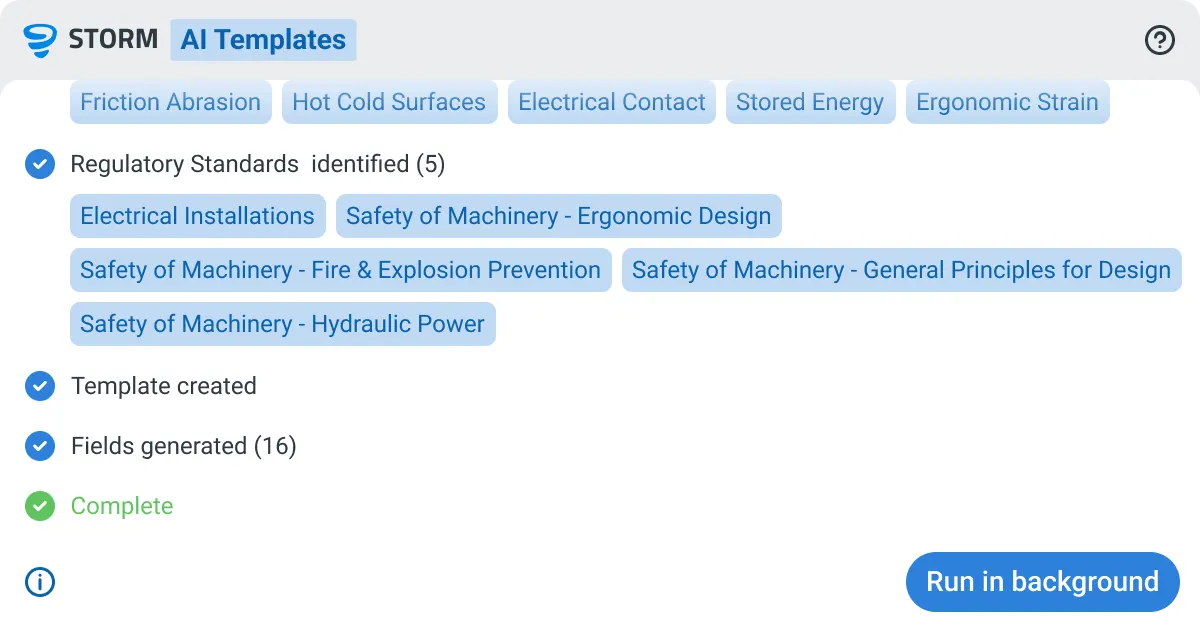
Storm drafts the method statement from work orders, drawings, or voice input. The supervisor reviews, edits, and signs off before work commences.

Storm AI Templates generating a method statement template

Built from a description or existing document

Describe what you need or upload a Word or PDF, and Storm builds the template with hazard-control pairings and sequencing.

Filled from your site briefing

The supervisor records a voice note, and Storm maps the scope, responsibilities, and equipment to the right sections.

Signed off before work starts

The supervisor reviews every section, edits controls for their crew, and signs off before work begins.

View use case

Storm drafted this from a site briefing voice note. Sign-off stays with your team.

Method Statement

R. PatelCreated Wed - 16/04/2026

Document Reference MS-2026-0023
Project Harbor Bridge Maintenance
Task Description Structural Steel Erection - Bay 4
Date Prepared 16/04/2026
Review Date 30/04/2026
Scope of Work Erection of structural steel beams and columns in Bay 4, including crane lifts, bolted connections, and temporary bracing installation.
Methodology 1. Pre-lift meeting and exclusion zone setup
2. Crane positioning and load verification
3. Steel lift and placement sequence
4. Temporary bracing and bolt-up
5. Surveyor alignment check
PPE Required
Plant & Equipment
Work Steps & Hazard Controls
StepHazardControl Measure
Crane lift and steel placementSuspended load, crush zoneExclusion zone, dogman signals, tag lines
Bolted connections at heightWorking at height, dropped toolsHarness tie-off, tool lanyards, barricade
Risk Assessment Has a risk assessment been completed for this task?
Prepared By
Reviewed By
Approved By
Crew Acknowledgement
NameTradeSignature
A. KovacSteel FixerAwaiting signature
T. SinghRiggerAwaiting signature

Enterprise safety management, governed from day one

Set the rules once at head office, and every site captures records inside them, with a full trail behind each one.

Control where Storm works

Control where Storm drafts, where people review, and where sign-off is required. Set guardrails at the workspace, template, field, and cell level.

Full audit trail

Every permit, JSA, and incident report is timestamped, signed, and traceable back to the job. Records are ready to export when an auditor asks.

Central oversight, local execution

Head office sees real-time compliance status across all projects. Site teams capture documentation their way, within the boundaries you set.

Integration into existing systems

Safety records flow into your project management, compliance, and reporting tools. Nobody re-types the same data twice.

Access controls and permissions

Control who can create, review, approve, and export at every level. Each person only sees the records their role allows.

Scalable rollout

Start with one site or roll out across hundreds. The system scales without adding admin overhead or requiring IT support.

Snowy Hydro Dashpivot
“Our contractors are using Sitemate to sign-on to start cards and pre-starts. It's a great tool.”

Shane, Site Manager at Snowy Hydro Limited

View customer stories

Complete safety compliance without the admin burden

Safety teams shouldn't have to choose between managing hazards and documenting compliance. The Safety Management System captures records as the work happens, so your team stays focused on crew protection while maintaining full audit compliance.

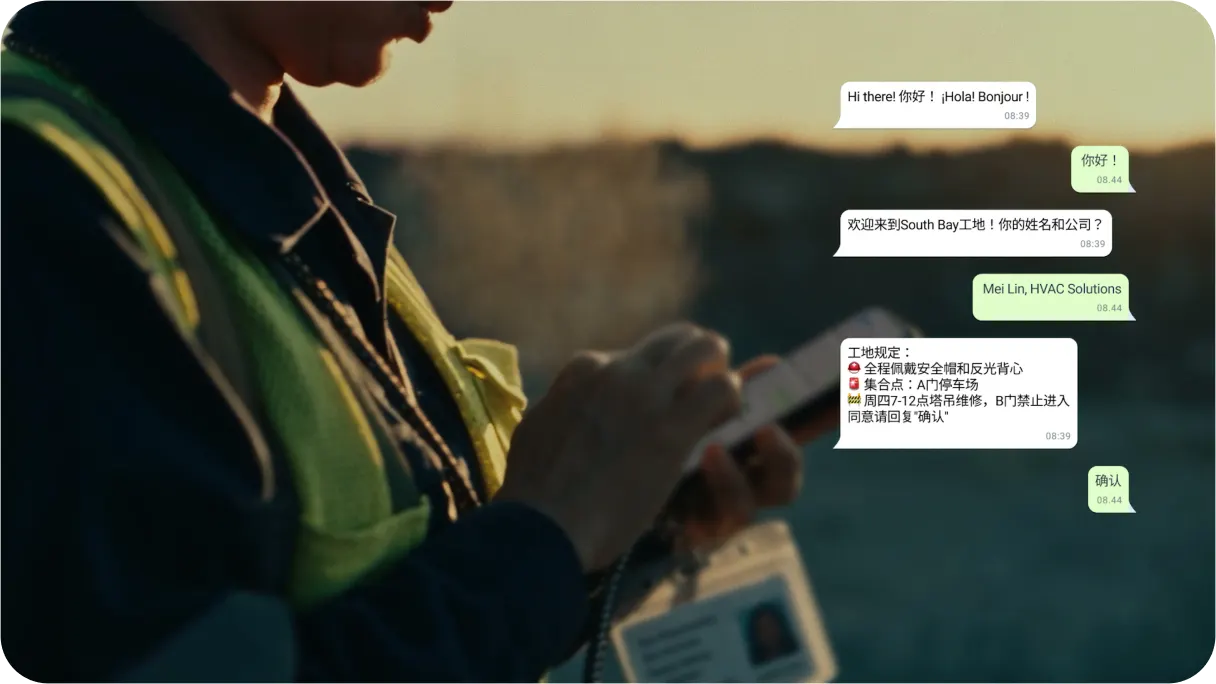
Fill in a form by text or phone call

Subcontractors scan a QR code, and Storm asks the form's questions by text, WhatsApp or call. No app or login needed.

A worker on site answering Storm's questions in a WhatsApp chat, in Chinese

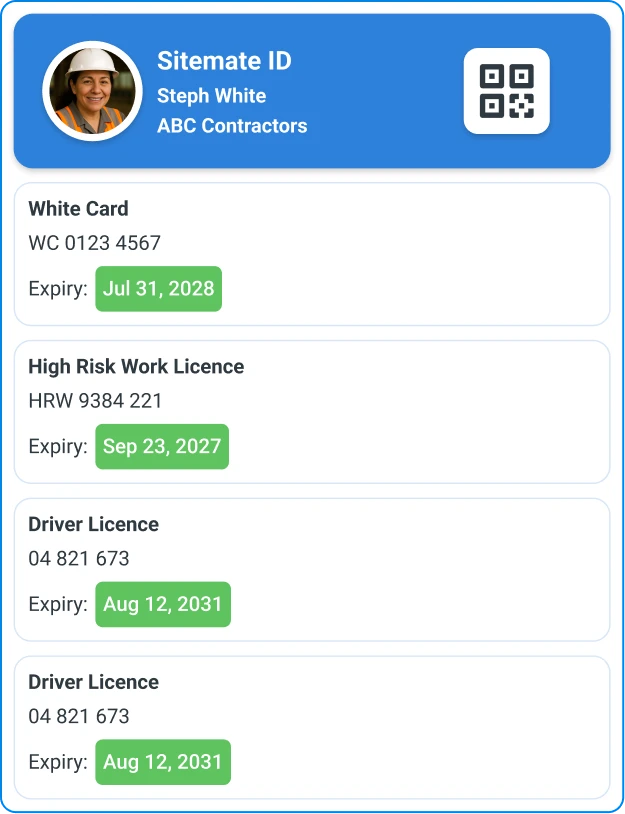
Sitemate Wallet

Workers carry their Sitemate ID and certifications in the app, and add them to any form that asks.

A worker's Sitemate ID with their White Card, High Risk Work Licence and Driver Licence

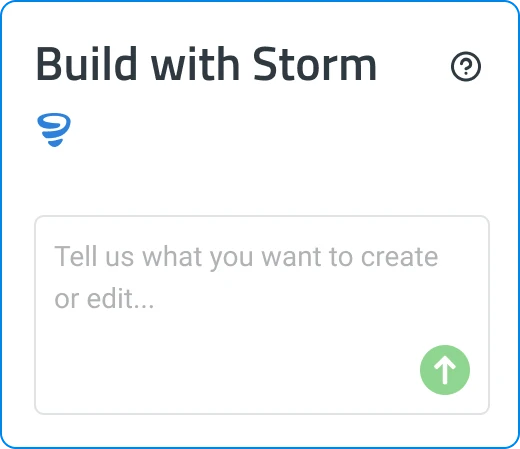
Build with Storm

Ask Storm to add a section, reorder fields or clone a table, and the edits apply directly. Undo any change you don't want.

The Build with Storm panel in the Dashpivot template editor

Digital signatures

Capture approvals on the spot with digital signatures, without waiting for paperwork to be passed around.

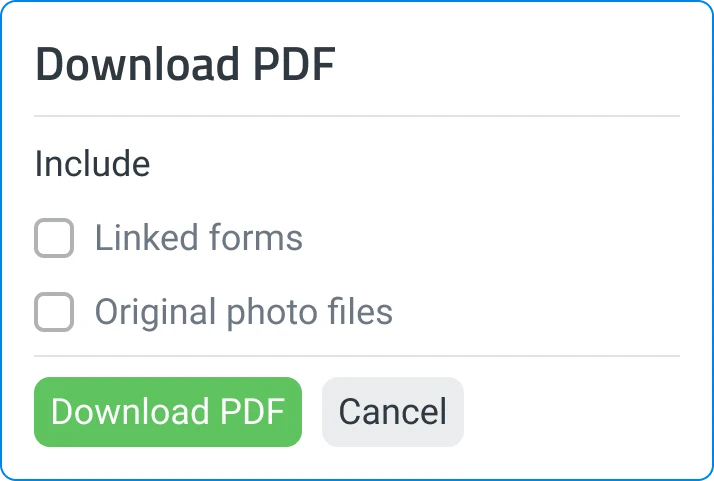
Audit-ready exports

Generate clean PDF reports or registers instantly for compliance checks and external audits.

The Download PDF dialog, with options to include linked forms and original photo files

Workers speak in their own language

Storm turns what they say into a record in your business's language, ready for review.

A worker talking to Storm in Spanish on a phone call

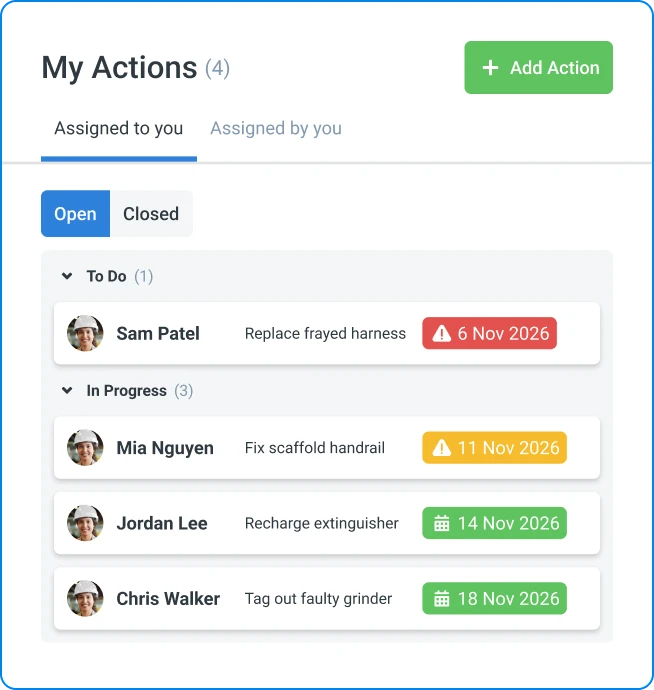
Create, assign, and track actions

Create actions against safety checks and assign them to the right team member. Set due dates and priorities to track progress.

A My Actions list with safety actions assigned to workers and their due dates
ISO 9001, ISO 14001 and AS/NZS 4801 compliance badges

Automated safety compliance

Every document, from JSAs to method statements to lockout procedures, gets reviewed and approved by qualified safety officers before sign-off. The difference is they're editing accurate drafts instead of starting from scratch.

Full traceability means every safety decision has a paper trail, and every incident has complete context.

Connect your safety data to the rest of your business

Safety records shouldn't live in a silo. Flowsite allows you to connect your safety data to the tools your business already runs on, from plug-and-play integrations to full programmatic access.

Flowsite integrations

Push safety data from Dashpivot into your other business tools with no-code integrations. Connect in minutes with drag-and-drop configuration, no developers required.

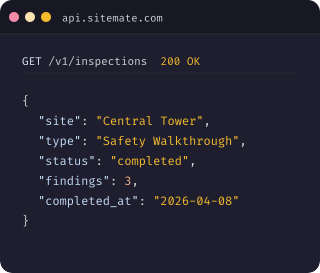
Open API

Build custom integrations and pull safety data directly into your own systems. Full programmatic access for teams that want complete control over how data moves.

Example Open API response for a safety inspection
Sitemate MCP connecting Dashpivot data to AI tools

Sitemate MCP (Model Context Protocol)

Connect your safety data to AI tools like ChatGPT, Claude, and Copilot. MCP gives external systems structured read access to your Dashpivot data with proper authentication and permissions.

How to set up a safety system using Dashpivot

Get your team from sign-up to capturing safety records in four steps. You won't need IT to set it up.

  1. Start with Dashpivot

    Choose Dashpivot as your safety platform. The Safety Management System sits inside Dashpivot alongside Quality, Field Reporting, Time and Materials, and Custom, so safety records share approvals, data, and governance with the rest of your operation.

    • Workspace setup
    • User invites
    • Project structure
    • Role-based access
  2. Generate templates with AI Templates

    Describe the safety document you need (method statement, JHA, permit, induction, toolbox talk, audit checklist) and Storm builds the structured digital template with AI Templates, complete with the right field types and approval flow.

    • Prompt examples
    • Required fields
    • Field types
    • Approval chain
  3. Import existing documents

    Already have your own safety documents? Upload your Word, Excel, or PDF and Storm converts them into smart digital templates with AI Templates, keeping your fields, sections, and approval flow intact.

    • File formats (Word, Excel, PDF)
    • Field mapping review
    • Signature points
    • Conditional logic
  4. Refine it with Storm

    Ask Storm to add a section, reorder fields or change a table, and it edits the template as you talk. Set approval chains and role-based permissions to match your sign-off flow.

    • Smart fields
    • Approval routing
    • Signature points
    • Role-based access
  5. Storm fills records as work happens

    Site teams record voice notes and take photos as they work. Storm transcribes, maps content to the right fields, and drafts the record. Your safety officer reviews and approves before anything is signed off.

    • Voice notes
    • Photo prompts
    • Review workflow
    • Approval roles
  6. Storm controls and governance

    Set guardrails at the workspace, template, field, and cell level. Control where Storm operates and where humans must approve. Every record Storm drafts is clearly marked and fully traceable.

    • Workspace-level controls
    • Template permissions
    • Field-level rules
    • Audit trail

Comparison: digital system vs legacy systems

Most safety teams already know paper and spreadsheets aren't cutting it. Here's what changes when you move to a digital safety management system.

Legacy
When docs happenAs the work happensAfter work, at a desk
How docs are createdVoice notes + photos, auto-draftedBlank forms, manual typing
Safety team timeFocused on preventionSplit between paperwork and prevention
Audit readinessAlways audit-readyScramble to compile records
Incident reportingReal-time, detailedDelayed, incomplete
TraceabilityEvery record linked to the jobManual filing, gaps

Frequently asked questions

What does the Safety Management System cover?

The Safety Management System covers the full safety compliance cycle from planning through execution and incident management. It includes method statements, safety management plans, JHAs, permits, LOTO procedures, inductions, toolbox talks, pre-work briefings, safety audits, safety inspections, incident reporting, and near miss reporting.

Is the Safety Management System standalone, or does it work alongside other Sitemate components?

The Safety Management System sits inside Dashpivot. It works alongside the Sitemate App for front line worker access and Flowsite for integrating safety data into back-office systems. Quality, Field Reporting, and Time and Materials systems can run on the same Dashpivot platform if you need them.

What does a typical safety workflow look like?

A typical safety workflow starts with a JHA before work begins, runs a toolbox talk and pre-work briefing on site, captures safety observations through inspections during work, and logs any incidents or near misses as they happen. Each record links to the next, creating a complete safety trail for the project.

Are there regional variations of common safety documents?

Yes. JHAs are also called JSAs, Job Safety Analyses, or Risk Assessments depending on region. Method statements are also known as SWMS (AU), RAMS (UK), or Work Method Statements. The platform supports all variants. You choose your terminology in the template.

What does Storm do in the Safety Management System?

Storm generates structured digital templates for safety documents (method statements, JHAs, permits, LOTO procedures, inductions) when you describe what you need or upload an existing document. It also fills out safety forms by reading voice notes, photos, and observations captured on site, and maps them to the right form fields.

Where does the human stay in control?

All Storm-generated templates and form fills are drafts until a qualified person reviews and saves them. Safety officers, supervisors, or managers approve every record before it's committed. Admins control which workspaces, templates, and fields Storm is allowed to write to.

Does the Safety Management System support ISO 45001 compliance?

Yes. Audit checklists for ISO 45001 and other relevant standards can be generated as templates, and findings are logged with full traceability. Records are timestamped, signed off, and exportable as audit-ready PDFs.

How does the system handle audit trails and traceability?

Every safety record is linked to the project, site, or job it belongs to. Each change has a traceable owner. Records can be filtered, searched, and exported as PDFs or CSVs for internal or external audit review.

How long does it take to set up the Safety Management System?

Most teams are running their first workflow within days, not weeks. Pre-built templates are ready to use out of the box, and AI Templates can build custom templates from a description or by importing your existing documents.

Can we tailor the system to match our existing safety processes?

Yes. Ask Storm for the change in plain words, or edit the template yourself. Forms support conditional logic, smart fields, and role-based sign-offs.

Safety documentation that writes itself

Watch demo