Output: Report
Applies to: Construction (Commercial), Infrastructure
Updated on: September 21, 2026
Construction Site Visit
This guide explains what a construction site visit template covers and how to conduct a structured, compliant site visit from preparation through to final documentation. You will learn when site visits are required, what to check on arrival, and how to record findings in a way that holds up to regulatory scrutiny.


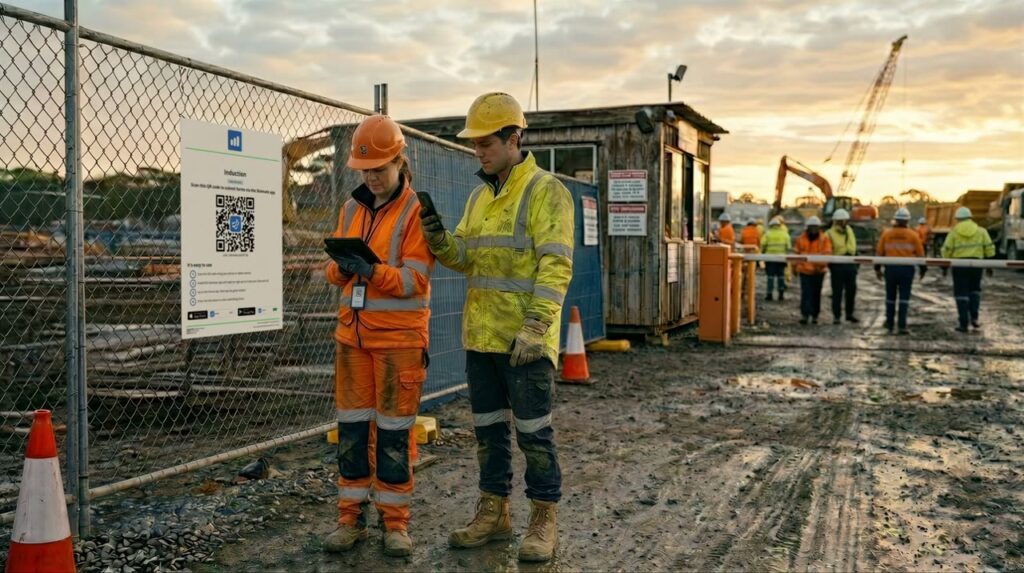
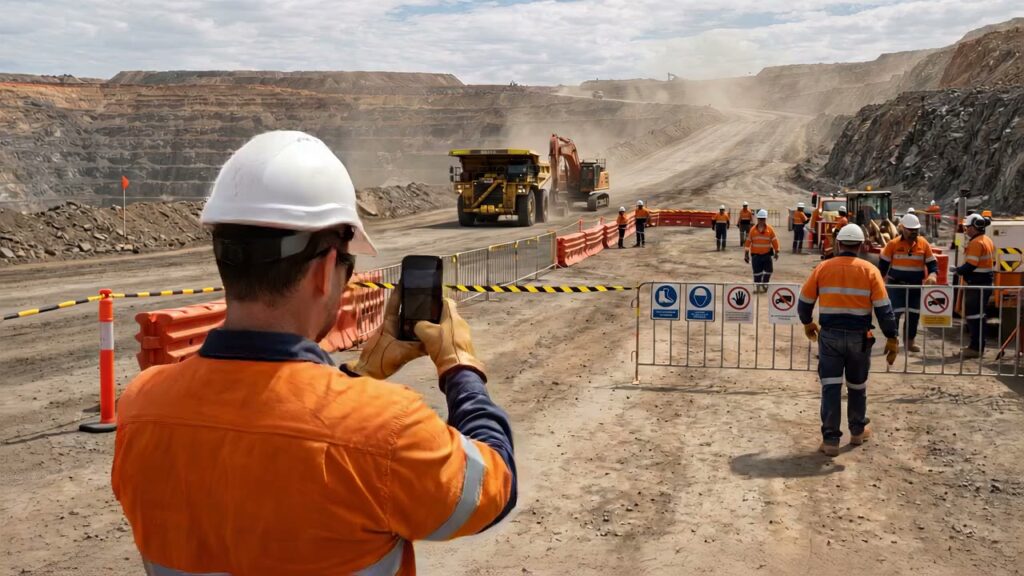
Table of Contents
- Summary
- What Does Construction Site Visit Mean?
- When Does Construction Site Visit Apply?
- Prerequisites: What You Need Before Starting Construction Site Visit Compliance Work
- Step-By-Step: How To Run The Construction Site Visit Process
- Evidence Checklist: What Good Construction Site Visit Documentation Looks Like
- Decision Points And Common Pitfalls
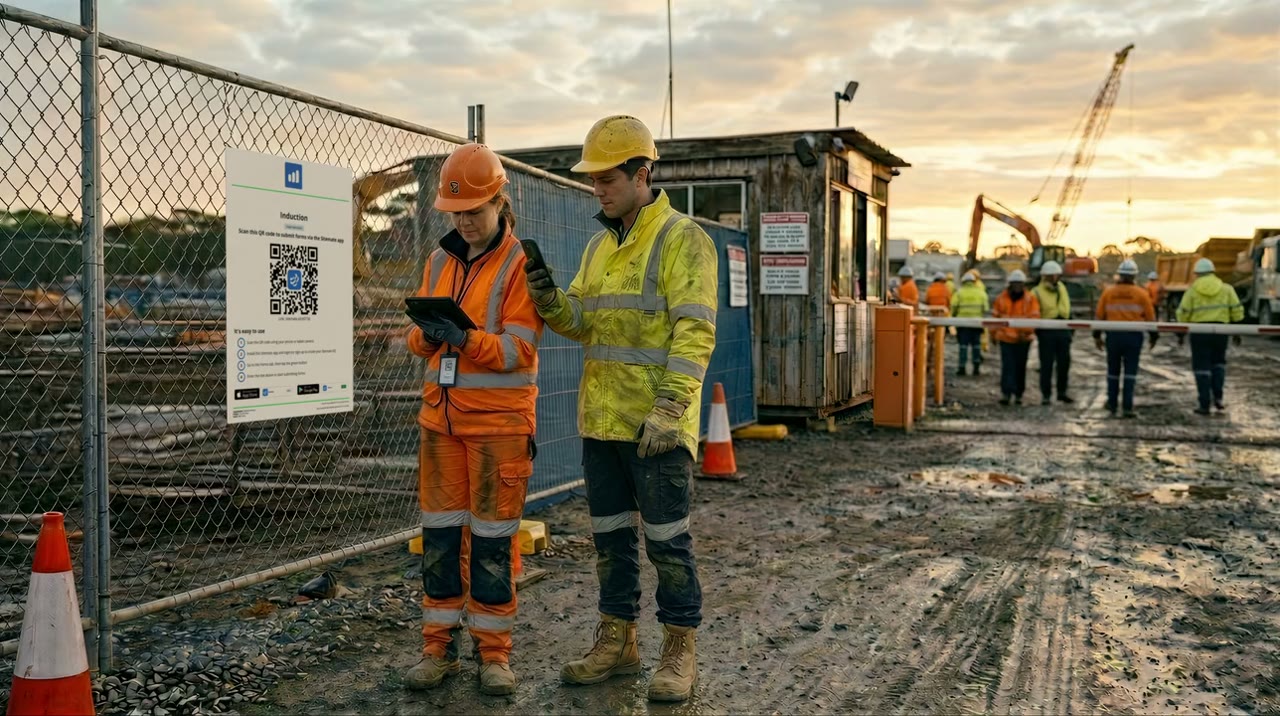
Summary
A construction site visit is a scheduled or unscheduled inspection carried out by a qualified person to assess progress, safety compliance, workmanship quality, and regulatory adherence on an active construction site. The visit generates a documented record, often called a site visit report, that captures observations, deficiencies, actions required, and sign-offs. Regulatory frameworks across the US, UK, and Australia require documented site monitoring at defined intervals. A well-structured construction site visit template ensures that every visit follows the same process and produces a consistent, defensible record.
What Does Construction Site Visit Mean?
What a construction site visit is
A construction site visit is a formal, purposeful inspection of a construction site conducted by a project manager, engineer, safety officer, client representative, or regulatory inspector. The visitor assesses the site against an agreed standard, which may relate to safety, quality, programme, or environmental compliance. The findings are recorded and communicated to relevant stakeholders, and any non-conformances are tracked until they are resolved.
The difference between a site visit and a site audit
A site visit is a broader, often more frequent check that covers multiple aspects of site activity simultaneously, including progress, housekeeping, safety, and workmanship. A site audit is a deeper, more structured examination of a specific system or process, typically carried out against a defined standard or certification requirement. Both generate written records, but a site audit usually follows a stricter protocol and may be carried out by an independent third party.
Who carries out a construction site visit
Site visits are conducted by a range of people depending on purpose. Project managers or site supervisors carry out routine progress and safety checks. Client representatives visit to verify that work matches contract specifications. Local authority building control officers visit to confirm compliance with planning conditions and building regulations. Principal designers or principal contractors may visit under their statutory duties to verify that health and safety obligations are being met across the project.
When does Construction Site Visit apply?
Routine progress and quality checks
On most commercial and residential construction projects, site visits are scheduled at defined intervals tied to the construction programme. A structural engineer may visit at each significant frame stage. A project manager may walk the site daily or weekly. A client representative may attend at key milestones such as foundation completion, structural topping out, or pre-handover inspection. These visits confirm that work is proceeding in line with drawings, specifications, and the agreed programme.
Regulatory and statutory inspections
Certain site visits are not discretionary. Under OSHA 29 CFR 1926 Subpart C, construction employers must maintain safe working conditions and are subject to compliance inspections by OSHA officers without prior notice. In the UK, the Construction (Design and Management) Regulations 2015 require the principal contractor to make arrangements for ongoing site monitoring, which in practice means regular documented inspections. In Australia, Safe Work Australia guidance requires construction sites to have documented safety monitoring processes that are verifiable through records. These regulatory visits generate official inspection notices or improvement notices if deficiencies are found.
Hazardous or high-risk activities
Some site visits are triggered by specific high-risk activities rather than a fixed schedule. Before and during demolition work, for example, a site visit is required to verify that OSHA 29 CFR 1926 Subpart T requirements are met, that hazardous materials have been assessed and controlled, and that the structural survey has been completed. Similarly, a visit is warranted before confined space entry, before work at height commences, or before hazardous substances are used on site. These visits verify that the relevant risk controls identified in the risk assessment and method statement are physically in place before work starts.
Incident response and reactive visits
When a near miss, injury, or structural failure occurs on site, an unplanned site visit is conducted immediately. The purpose shifts from routine monitoring to fact-finding and containment. The visit documents the scene, captures photographic evidence, identifies immediate hazards, and records witness accounts. This type of visit feeds directly into the incident investigation process and may be required by the insurer, the regulator, or both.
Prerequisites: What You Need Before Starting Construction Site Visit Compliance Work
Confirm the purpose and scope
Before arriving on site, establish clearly what the visit is intended to assess. A visit focused on structural quality requires different reference documents than one focused on safety compliance. Define whether the visit is routine, triggered by a specific event, or required by contract or regulation. This shapes the checklist, the personnel who should attend, and the records that need to be reviewed on the day.
Gather the relevant reference documents
Bring the current set of approved drawings, the specification, the programme, the risk assessment and method statement for active work packages, and any previous site visit reports or open action logs. Comparing current site conditions against these documents is the core activity of the visit. Without them, observations cannot be assessed against an agreed standard and the report will lack the authority needed to drive corrective action.
Confirm site induction and PPE requirements
Every person attending a site visit must complete the site induction before entering the works area. Site inductions cover emergency procedures, restricted zones, site rules, and personal protective equipment requirements. At minimum, a hard hat, high-visibility vest, and safety boots are required on virtually all construction sites. Sites with specific hazards, such as overhead work, grinding, or chemical handling, may require additional PPE such as eye protection, hearing protection, or respiratory protection.
Arrange access and notify the site team
For planned visits, notify the site manager or principal contractor in advance so that the relevant foremen and subcontractors are available. Confirm the access points, any visitor log or sign-in process, and whether any areas will be inaccessible due to active high-risk work. Arriving without notice at a major site can result in access being refused to live working areas for safety reasons, which limits the usefulness of the visit.
Step-by-step: How to run the Construction Site Visit process
Carrying out a construction site visit follows a consistent sequence that ensures nothing significant is missed and the resulting record is accurate and complete. The steps below apply to the majority of planned visits, though the emphasis on each area shifts depending on purpose.
Sign in and complete the site induction
On arrival, sign into the visitor log and complete or confirm the site induction. Record the date, time, your name, your company, and the purpose of your visit. Collect the required PPE if you have not brought your own. Note the emergency assembly point and the name of the site manager or primary contact for the visit. This step creates a time-stamped record of attendance that supports the visit report.
Review the programme and recent progress against the last report
Before walking the site, spend a few minutes with the site manager reviewing the programme. Identify what work was planned since the last visit and what has actually been completed. Check the open action log from the previous visit to confirm which items have been closed out and which remain outstanding. This context makes the site walk more targeted and ensures the report reflects a continuous record rather than a series of disconnected snapshots.
Conduct the site walk and capture observations
Walk each area of the site systematically, working from the perimeter inward or from ground level upward depending on the project type. Assess safety conditions including housekeeping, access routes, edge protection, scaffolding integrity, signage, and PPE compliance. Assess workmanship quality by comparing visible work against drawings and specifications. Note any deficiencies, record photographic evidence, and mark the location of each observation on a site plan where possible. Speak with workers and foremen directly to understand current conditions and any constraints they are working under.
Assess compliance with active risk controls
For any high-risk activities underway during the visit, check that the controls set out in the risk assessment and method statement are physically in place. If welding or cutting is active, verify that fire prevention measures, ventilation, and appropriate PPE are present as required under applicable standards such as OSHA 29 CFR Subpart Q. If hazardous substances are in use, confirm that safety data sheets are accessible and that exposure controls are functioning. Document any gap between the required controls and what is observed.
Hold a closing discussion with the site manager
Before leaving, summarise your key findings verbally with the site manager. Distinguish between items that require immediate action and those that can be addressed within the next reporting period. Agree on a realistic timeframe for each corrective action and identify who is responsible. This conversation reduces the risk of the report being treated as a surprise and increases the likelihood that actions will be completed before the next visit.
Complete and distribute the site visit report
Write up the report as close to the visit as possible while observations are fresh. The report should record the date, attendees, scope of the visit, each observation with its location and severity, the corrective action required, the responsible party, and the target completion date. Attach photographs and reference the relevant drawing or specification where applicable. Distribute the report to the site manager, the principal contractor, the client representative, and any other stakeholders specified in the contract. File the report in the project record so it forms part of the ongoing site monitoring log.
Evidence Checklist: What Good Construction Site Visit Documentation Looks Like
Signed visitor log
The visitor log records who was on site, at what time, and for what purpose. It confirms that the visiting party completed the site induction and received the required briefing. This record is the baseline evidence that the visit took place and that basic site safety protocols were followed.
Dated and signed site visit report
The report itself, signed by the person who conducted the visit and countersigned by the site manager where required, is the primary evidence record. It should include the visit date, the scope assessed, each finding with its location, the severity classification, and the required corrective action. A report without a signature or date has limited evidentiary value.
Photographic evidence with timestamps and location references
Photographs taken during the walk substantiate observations and provide a point-in-time record of site conditions. Each photograph should be labelled with the date, time, location on site, and a brief description of what it shows. GPS-tagged images provide additional assurance of location accuracy.
Open action register
The action register tracks every non-conformance or deficiency raised across all site visits. Each item should record the original visit date, the nature of the finding, the responsible party, the agreed completion date, and the date it was verified as closed. A well-maintained register demonstrates continuous monitoring rather than one-off checks.
PPE and induction compliance records
Where the visit includes an assessment of PPE compliance or induction status for workers on site, records of who has been inducted and what PPE was issued or verified should be retained. These records support any enforcement action if a worker is found non-compliant and demonstrate that the site management team is actively monitoring obligations.
Previous site visit reports for comparison
Retaining the full chronological set of site visit reports for a project allows patterns to be identified, repeat non-conformances to be flagged, and overall site performance to be tracked across the project lifecycle. Regulators and clients may request this full history during audits or in the event of an incident.
Decision Points And Common Pitfalls
Deciding when to stop work rather than log a finding
Not every deficiency identified during a site visit can wait until the next reporting cycle. Edge protection that is missing over a significant drop, an unsecured excavation, or active work in a confined space without atmospheric monitoring are conditions that warrant an immediate stop-work instruction rather than an action item. The visiting party needs to know in advance what their authority is to issue such instructions and under what circumstances they are obligated to do so. OSHA standards and equivalent regulations in other jurisdictions impose personal liability on site personnel who knowingly allow workers to continue in unsafe conditions.
Scope creep and incomplete coverage
A common pitfall is arriving on site with a defined scope and then being drawn into lengthy conversations about programme or commercial matters, leaving insufficient time to complete the physical inspection. Set a realistic duration for the site walk based on the size and complexity of the site, and protect that time. A visit report that covers only part of the site because time ran out creates a false sense of assurance about the areas not assessed.
Regulatory classification of findings
Under OSHA 29 CFR 1926 and equivalent frameworks, construction site hazards are classified by the immediacy and severity of the risk they pose. A visiting safety professional needs to apply a consistent classification to each finding so that the report accurately communicates the urgency of each required action. Misclassifying an imminent danger as a routine observation can delay correction and expose the project to enforcement action or liability. Where CDM Regulations 2015 apply in the UK, the principal designer and principal contractor have specific duties to record and act on site safety findings, and the visit report feeds directly into that duty chain.
Relying on verbal confirmation instead of physical verification
A recurring mistake is accepting a site manager’s verbal assurance that a risk control is in place without physically verifying it during the walk. If the risk assessment requires atmospheric testing before confined space entry, the test record should be present and the equipment should be visible. If a RAMS requires specific barriers before demolition begins, those barriers should be standing. Document what you observe directly, not what you were told.
Frequently asked questions about construction site visits
What is the main purpose of a construction site visit?

The primary purpose is to verify that actual site conditions match the requirements set out in the contract documents, drawings, specifications, and applicable safety regulations. Site visits create a documented, time-stamped record of progress and compliance that protects all parties and drives corrective action when conditions fall short of the required standard.
How often should construction site visits be carried out?
Frequency depends on project size, risk level, and contractual or regulatory obligations. A high-risk demolition or civil engineering project may require daily visits from a safety officer and weekly visits from a project manager or engineer. A smaller residential project may require visits at defined construction stages. Some regulatory frameworks set minimum frequencies, so always check the applicable requirements for the jurisdiction and project type.
What PPE is required for a construction site visit?
At minimum, a hard hat, high-visibility vest, and safety boots with steel toecaps are required on virtually all construction sites. Additional PPE such as safety glasses, hearing protection, gloves, or respiratory protection may be required depending on the activities underway during the visit. PPE requirements should be confirmed with the site manager before entering the works area.
Who is responsible for conducting construction site visits?
Responsibility depends on the purpose of the visit. The principal contractor is generally responsible for routine safety monitoring. The project manager or engineer of record is responsible for progress and quality checks. Regulatory inspectors from bodies such as OSHA or local building control authorities conduct statutory compliance visits. Clients or their representatives may conduct contractual progress visits. On larger projects, all of these roles may be active simultaneously.
What should happen if a serious safety hazard is found during a visit?
If an imminent danger is identified, work in the affected area should be stopped immediately and the site manager and principal contractor should be notified without delay. The hazard should be documented with photographs and a written description before any remediation begins. Depending on the severity, the relevant regulatory authority may need to be notified. The corrective action and its verification should be recorded in the site visit report.
How is a construction site visit different from a site audit?
A site visit is typically a broader, more frequent inspection covering multiple aspects of site activity, including safety, progress, quality, and housekeeping. A site audit is a deeper examination of a specific system, process, or compliance obligation, usually conducted against a defined standard and often by an independent party. Both generate written records, but a site audit tends to be more structured and may feed into a certification or accreditation process rather than routine project management.
About the author

Jam Tanga-An
Content Engineering Manager
 LinkedIn
Education
Cebu Institute of Technology - University - Mechanical Engineering
Bio
Jam is a multi-disciplinary engineering professional and content marketer with hands-on experience across the construction and manufacturing verticals, operating to industry standards, and testing and compliance requirements. They apply their engineering background across core functions including Health and Safety, Quality, Design, Production and Construction, and Operations, ensuring consistency and compliance across projects and content.
Past Projects
High-rise building developmentMEPF Engineer Intern primarily supporting the design, coordination, and implementation of the building’s wastewater treatment system, while also contributing to multidisciplinary MEPF coordination and on-site implementation.
Product engineering and manufacturing projectHardware Engineer responsible for product design, testing, packaging, and transport of user-facing proprietary electromechanical systems, including cost-reduction analyses and improvement initiatives across the product lifecycle
Shipping test and compliance operationsShipping Test Laboratory In-Charge overseeing destructive and performance testing of products, transport documentation, data analysis, regular machine maintenance, while managing end-to-end testing procedures and technical reporting
Industrial machinery R&D project end-to-end machine designContributed to the full engineering lifecycle of bespoke industrial cutting machineries from concept design, 3D models, manufacturing drawings, to fabrication, supported by Finite Element Analysis (FEA) for structural validation
Version History:
Other popular templates you can use and edit for free
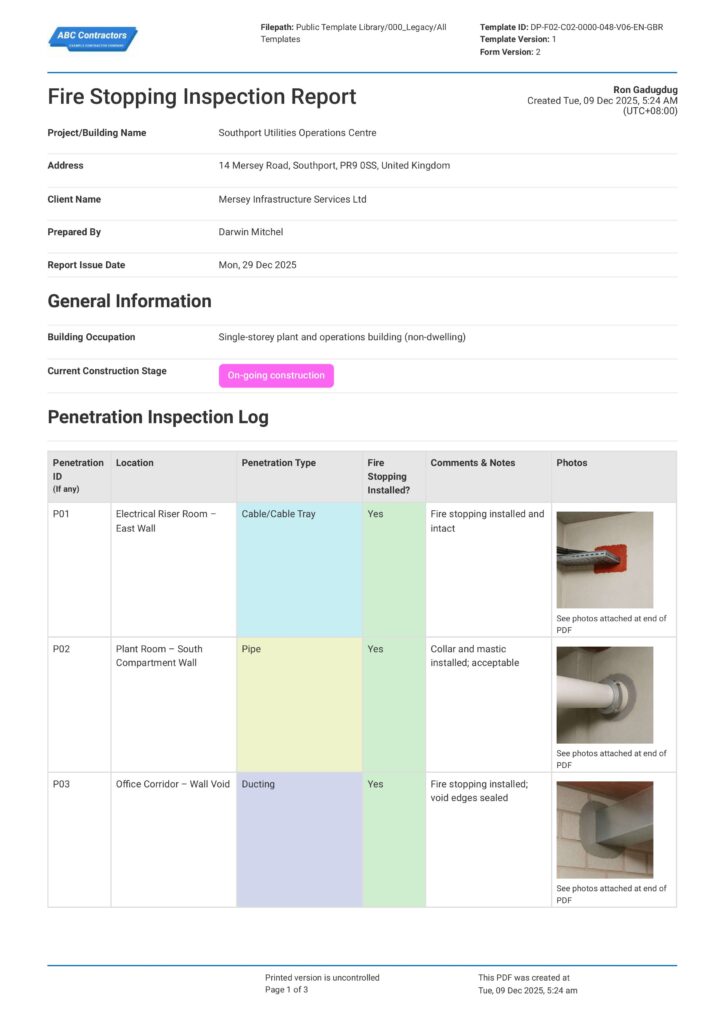
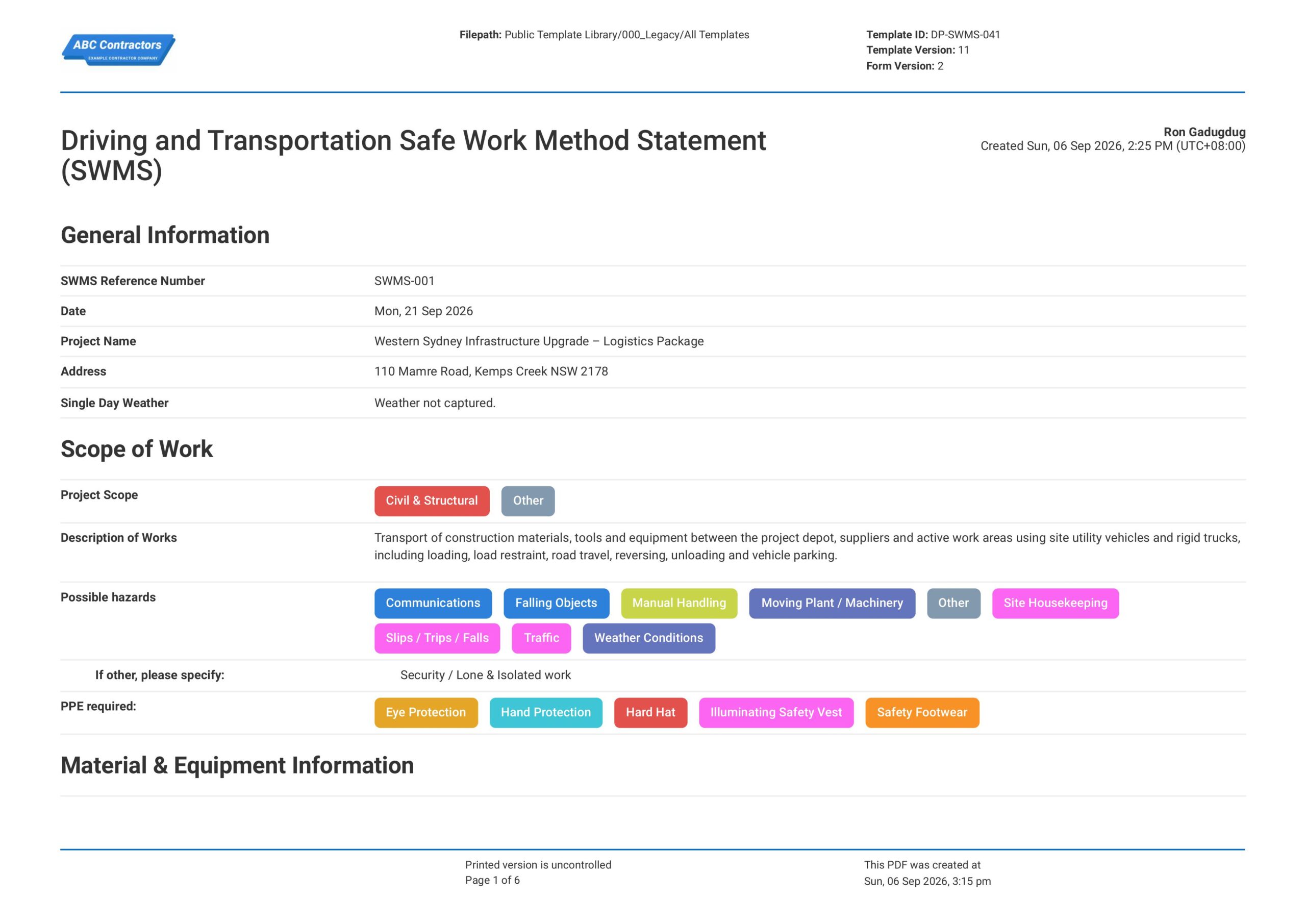
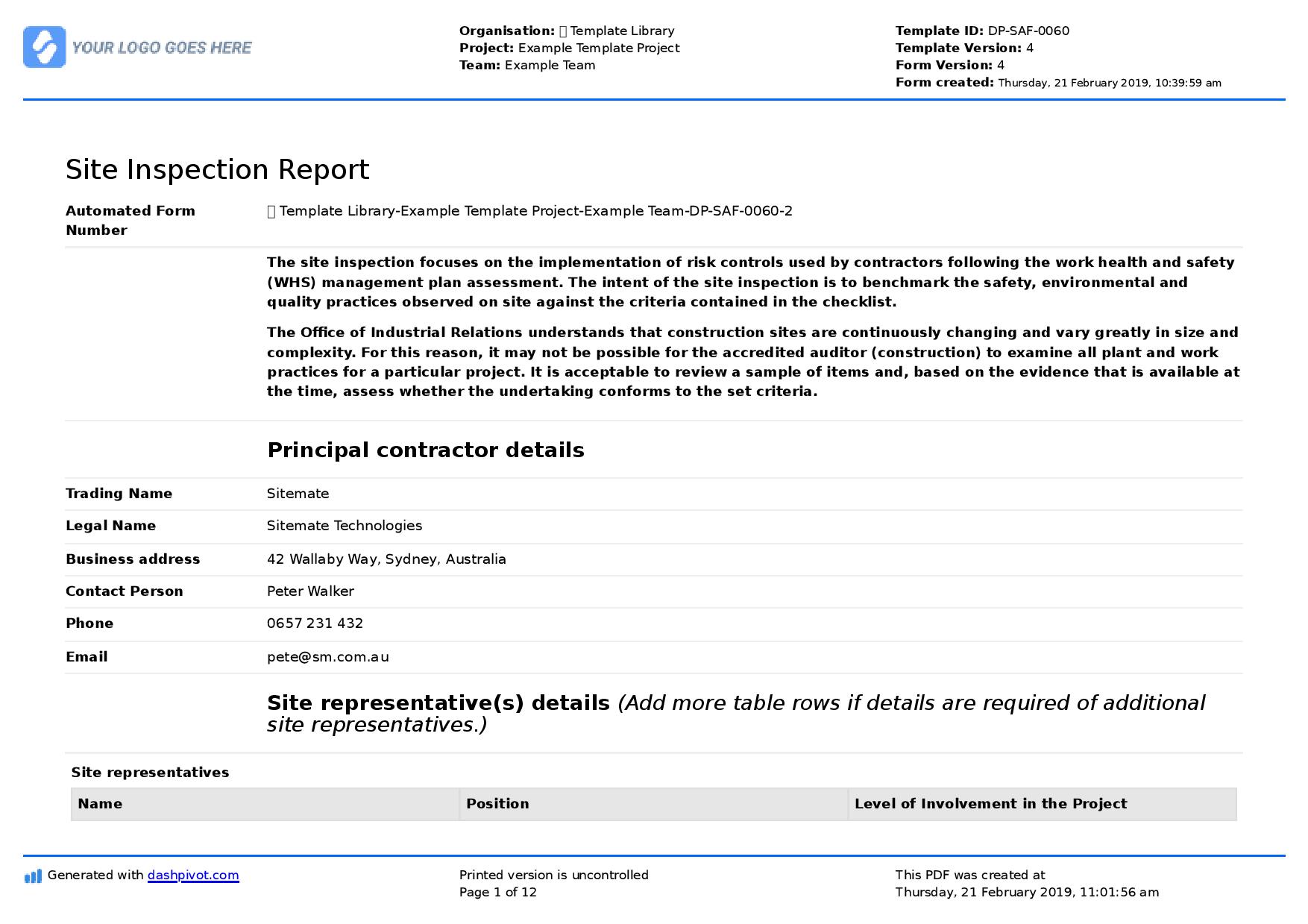
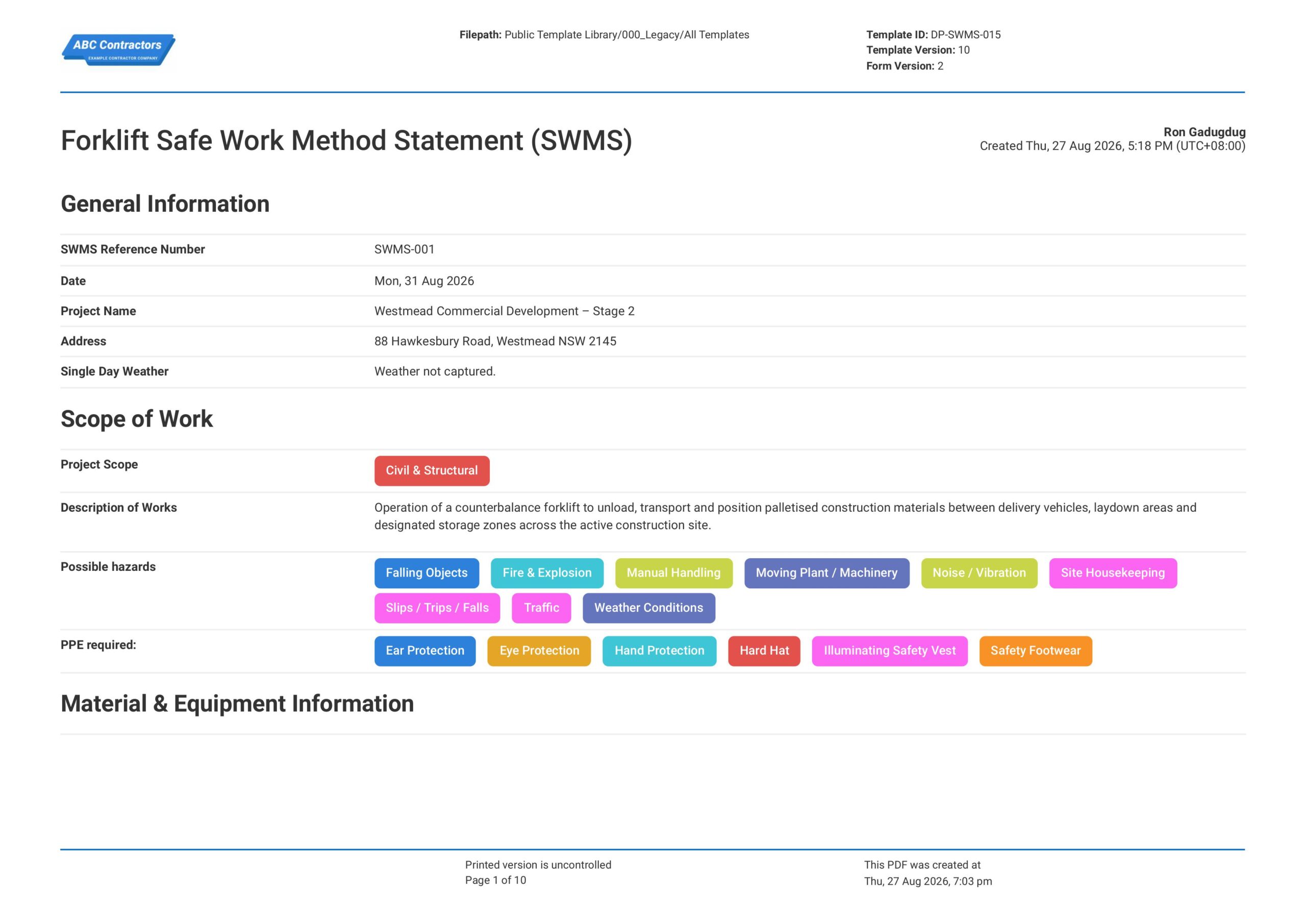
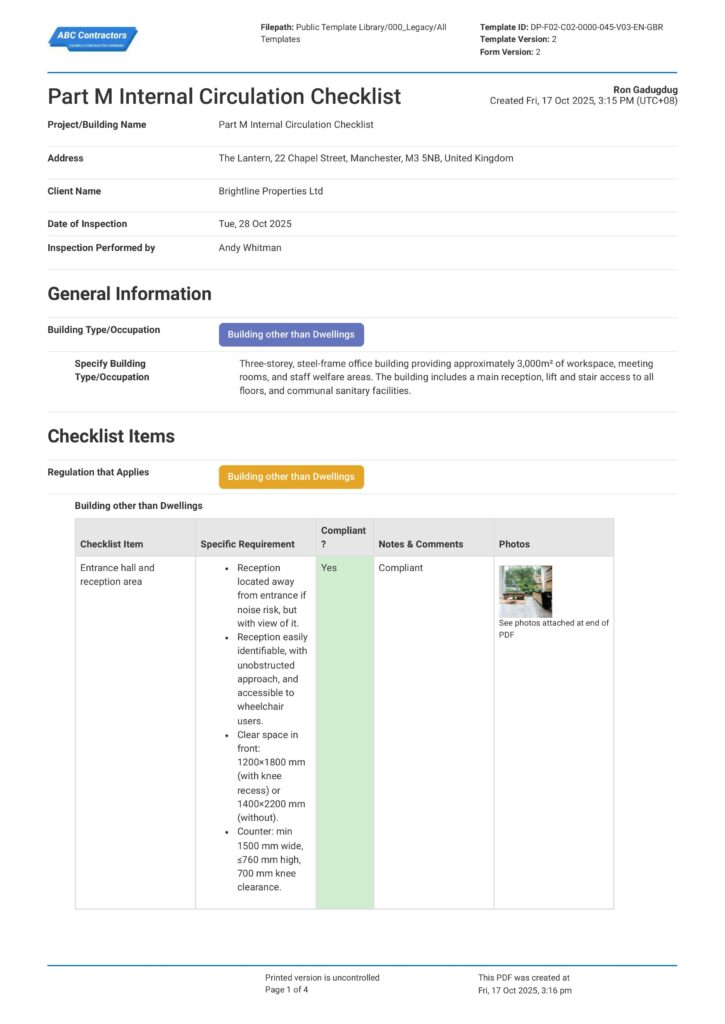
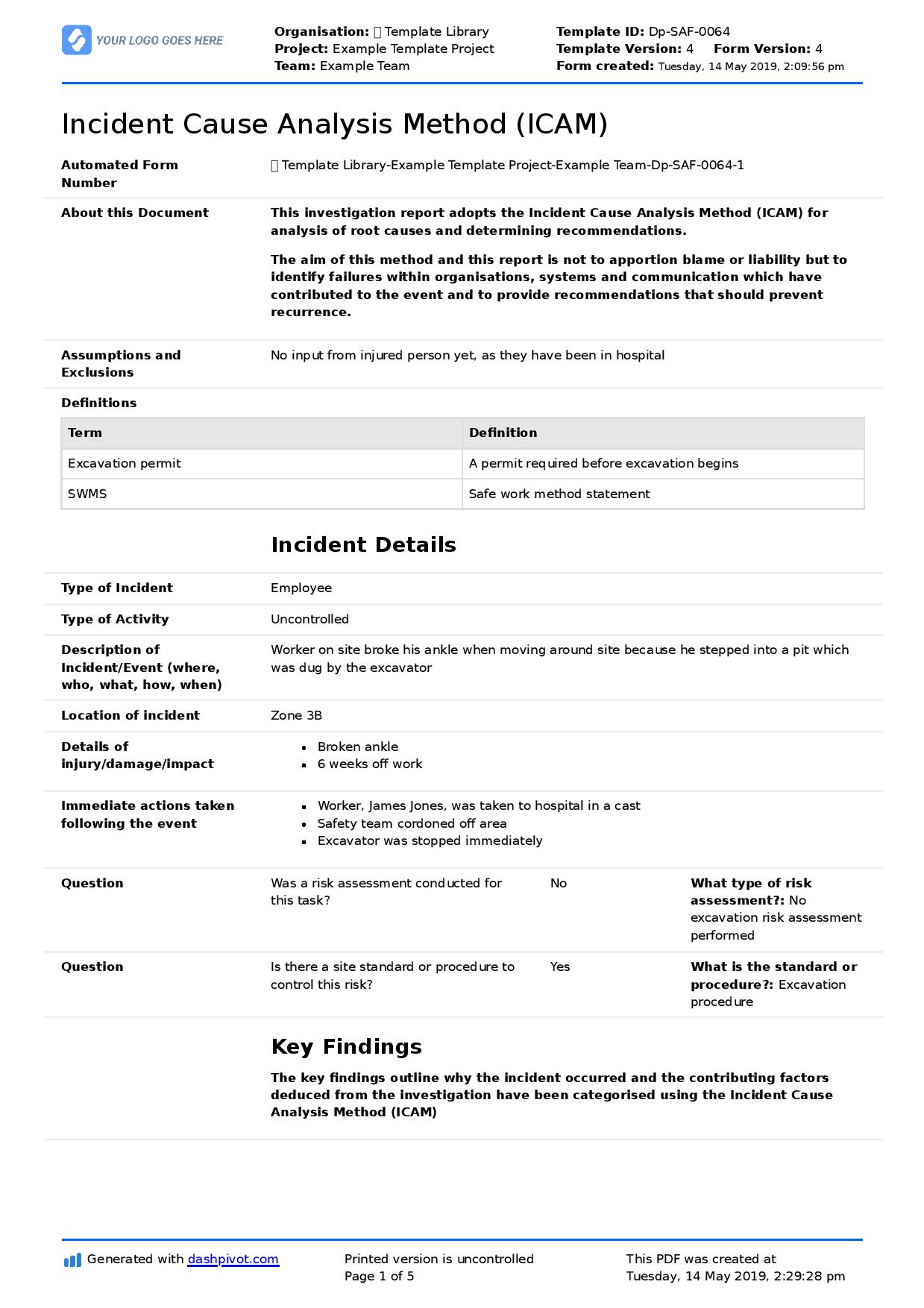
Use Dashpivot to manage site visit reports
Dashpivot streamlines the entire site visit reporting process. Capture observations with photos and markup on your phone, auto-generate professional PDF reports, and distribute them instantly.
