Critical Lift Plan Template

Start with a free 30-day trial. No credit card required.
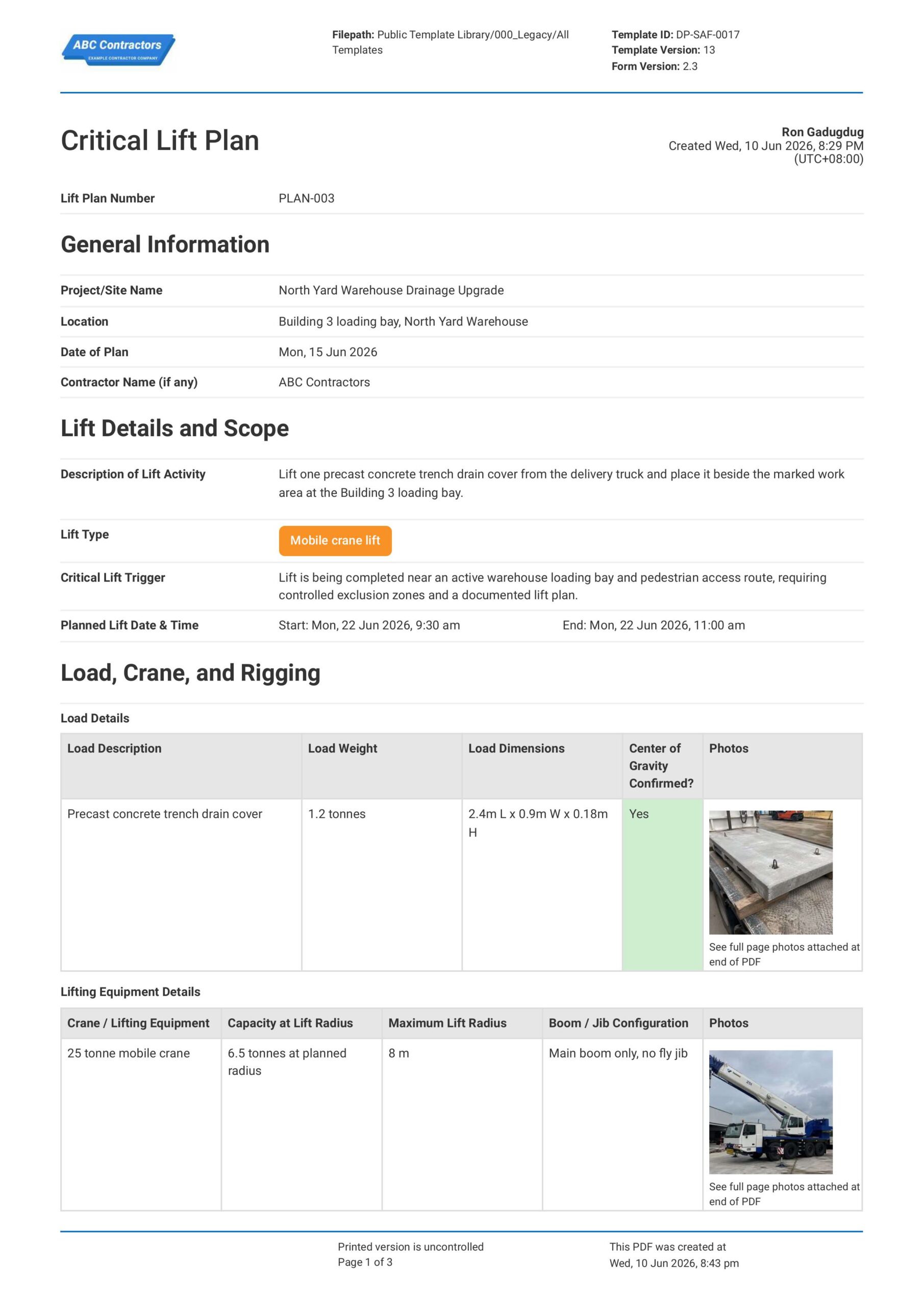
This Critical Lift Plan is an easy-to-use form that your workers can use to create plans for high-risk or complex lifting operations before work begins. Record important lift details such as the load description, crane or lifting equipment configuration, ground conditions, exclusion zones, rigging set-up, communication methods, approvals, and sign-offs in this free form.
Planning a complex crane lift or high-risk lifting activity on your site? Looking for a sample critical lift plan to help guide your own lift planning? This Critical Lift Plan helps teams document important work procedures such as the lift sequence, required controls, and key responsibilities before the lift takes place. Then, you can even share the completed plan with engineers, contractors, and other stakeholders by exporting it to PDF or CSV.
 100% fully editable Critical Lift Plan
Export your Critical Lift Plan to PDF or CSV
Access Critical Lift Safety Plan on mobile, tablet or computer


Trusted by companies, projects and teams of all sizes















What is Critical Lift Plan?
A Critical Lift Plan is a document used by lifting teams and engineers to plan lifting activities that involve higher risk, unusual conditions, heavy loads, or complex equipment arrangements. This plan usually includes details on the load, crane or lifting equipment, rigging method, lift path, ground conditions, exclusion zones, communication process, and people responsible for the lift.
Due to the elevated risks that come with lifting heavy weight in less than ideal circumstances, hazards and incidents have to be mitigated and planned around to lessen potential accidents. This makes Critical Lift Plans highly relevant in industries like construction, infrastructure, manufacturing, mining, oil and gas, utilities, and industrial maintenance, where critical lifts are unavoidable and commonplace.
Compare this Critical Lift Plan with traditional formats like Word or PDF
Tired of manually creating plans for every critical lift? Check out the free preview below and see how you can create a comprehensive Critical Lift Safety Plan in just a few clicks.
Use this Critical Lift Plan template for free

Generate this template automatically with Storm
You don't have to build the Lift Safety Management field by field. Let Storm, the AI Data Capture Agent inside Dashpivot, build the template for you in seconds.
Describe what you need
Tell Storm the form you want in plain language and it builds a structured digital template from scratch, with fields, tables, and signatures in place.
Upload what you already use
Drop in your existing PDF, Word, Excel, or even a photo of a paper form. Storm rebuilds it as a smart digital template with the structure intact.
 Storm
Storm
Generate a Lift Safety Management form template that I can use for my business
Applicable Standards and Policies for Critical Lift Plan
There are generally no specific universal requirements for formatting a Critical Lift Plan. However, most lifting and workplace safety laws, like the ones below, require businesses to assess lifting hazards and document controls before critical lifting operations begin:
- OSHA crane standards require safe planning for crane and lifting operations
- ASME B30 standards support crane, hoist, and rigging safety requirements
- UK LOLER requires lifting operations to be properly planned and supervised
- Safe Work Australia guidance covers crane and lifting work controls
- Local WHS laws commonly require lift planning, competent persons, and safe lifting procedures
Staff Members and Parties that use Critical Lift Plan
A Critical Lift Plan is primarily used by businesses, contractors, and project teams that manage high-risk lifting operations involving cranes, heavy loads, complex rigging, or restricted site conditions. Here are examples of common parties that you can expect to use a Critical Lift Plan:
- Lift supervisors and project managers
- Crane operators and riggers
- Doggers, signalers, and spotters
- Health and safety teams
- Contractors and subcontractors involved in lifting operations
Business Risks Reduced by Critical Lift Plan
Using a Critical Lift Plan helps reduce the risk of hazards such as dropped loads, crane instability, equipment failure, poor communication, powerline contact, and unsafe exclusion zones during lifting operations. Ultimately, this can help businesses to:
- Reduce risk of injury, fatality, or lifting-related incidents
- Avoid non-compliance with crane, rigging, and workplace safety requirements
- Prevent unsafe lifts caused by poor planning, overloading, or incorrect rigging
- Lower exposure to legal claims, enforcement action, and incident-related costs
- Reduce project delays caused by crane incidents, damaged assets, or failed lifts
Business Opportunities Created by Critical Lift Plan
A well-prepared Critical Lift Plan helps businesses improve control over complex and high-risk lifting activities. Here are some ways a well-designed Critical Lift Plan can help businesses:
- Improve worker confidence during high-risk lifting operations
- Strengthen contractor prequalification and tender-offer competitiveness
- Improve coordination between lift supervisors, crane operators, riggers, and site teams
- Build trust with clients, regulators, insurers, and project stakeholders
What Should be Included in a Critical Lift Plan?
A Critical Lift Plan should explain how a high-risk or complex lifting operation will be planned, controlled, and carried out safely. While requirements can vary across regions and project types, the plan should clearly show that the load, crane, rigging, ground conditions, work area, and people involved have all been checked before the lift begins.
- Load details, weight, dimensions, center of gravity, and lifting points
- Crane or lifting equipment type, capacity, configuration, and lifting radius
- Rigging equipment, slings, shackles, spreader beams, and inspection details
- Ground conditions, crane setup area, exclusion zones, and nearby hazards
- Lift team roles, communication methods, emergency controls, and approval sign-off
When is a Critical Lift Plan Required?
A Critical Lift Plan is required when a lifting operation involves higher-than-normal risk due to the load, crane setup, lifting environment, or potential consequences of failure. This commonly applies to lifts involving heavy or unusual loads, tandem or multiple-crane lifts, lifts near live services or structures, personnel lifting, limited access areas, or lifts where the load path creates serious risk to people, plant, or property.
On built-world projects, the exact triggers for a Critical Lift Plan can vary depending on local regulations, client requirements, crane supplier procedures, and site safety rules. However, it is generally expected when the lift is complex, close to capacity limits, affected by poor ground conditions or weather, or requires special engineering review, detailed supervision, and formal approval before work can proceed.
How to Create a Critical Lift Plan
Creating an effective Critical Lift Plan requires systematic evaluation of all lifting variables and thorough documentation of safety procedures. This step-by-step process ensures comprehensive planning and regulatory compliance.
Before creating a Critical Lift Plan, gather the following information:
- Complete load specifications including weight, dimensions, and center of gravity
- Crane specifications, capacity charts, and current inspection certificates
- Site survey data including ground conditions and overhead clearances
- Weather forecast and environmental condition assessments
- Personnel qualifications and certifications for all lifting crew members
- Rigging equipment inventory and inspection records
- Emergency contact information and evacuation procedures
-
Start with Project and Lift Information
Placing high-level general information at the beginning of the Critical Lift Plan helps establish where the lift will take place, what load will be lifted, and who is responsible for the lifting activity. Here are some examples of core elements that you can use:
Project name and site location
Description of the load to be lifted
Planned lift date and lift location
Crane, hoist, or lifting equipment details
Names and roles of the lift supervisor, crane operator, riggers, and signal person -
Assess the Critical Lift Requirements
It is important that the lift requirements and potential risks are identified before the work starts so it can be determined whether the lift qualifies as a critical lift. This helps confirm whether additional planning, engineering input, or approvals are required before lifting begins.
- Load weight, dimensions, and center of gravity
- Lift radius, boom length, and lifting height
- Percentage of crane capacity to be used
- Use of multiple cranes, complex rigging, or unusual load shapes
- Nearby structures, power lines, live traffic, or restricted work areas
-
Plan the Lifting Method and Rigging Arrangement
After the lift requirements are identified, you will want to define how the load will be lifted, moved, and placed safely. For example, you will want to list the following information in your Critical Lift Plan:
- Crane position and setup location
- Lift path and final landing area
- Rigging gear, lifting points, and sling angles
- Crane configuration and load chart reference
- Ground conditions and outrigger or matting requirements
-
Identify Hazards and Safety Control Measures
Hazards and potential risks should be assessed before the lift takes place so the appropriate safety control measures can be implemented. Common hazards that should be checked and recorded include:
- Unstable ground or poor crane setup conditions
- Contact with power lines, structures, or nearby equipment
- Dropped load or rigging failure
- Workers entering the exclusion zone
- Weather conditions such as high winds, rain, or poor visibility
-
Complete Communication, Review, and Approval
Complete the Critical Lift Plan with communication, review, and approval details to confirm that the lift has been checked before work begins. This also helps show that the lifting crew, supervisors, and relevant site personnel understand the lift sequence, hazards, and safety control measures.
- Pre-lift briefing or toolbox talk record
- Communication method between the crane operator, riggers, and signal person
- Names and roles of reviewers and approvers
- Signatures of responsible personnel
- Date of review and approval
Frequently asked questions
How to create Lift Safety Management in an App or Software System
A streamlined Lift Safety Management process ensures that all key lift details such as load and equipment information, safety control measures, and personnel training are documented and structured for easy review and sharing.
35 minutes
Medium difficulty
-
Start your Critical Lift Plan with General Information
It is important to begin your Critical Lift Plan with the key project, site, contractor, and plan details so the document can be traced to the correct lifting activity. This section should use simple text and date fields for fields such as:
Automatic Form Counter for Lift Plan Number
Text fields for Project/Site Name, Location, and Contractor Name
Date selector field for Date of Plan
Text field for the person creating the plan -
Create a Text Fields for Lift Details and Scope
Next, create a section where users can describe the lift type, planned lift schedule, and reason the lift is being treated as critical. For simplicity, we recommend using the following fields:
- Dropdown field for Lift Type
- Multi-line text field for Critical Lift Trigger
- Date and time selector fields for Planned Lift Date & Time Start and End
- Multi-line text field for Description of Lift Activity
-
Create Tables for Load, Crane, and Rigging Details
Users will next need to list down the load, lifting equipment, and rigging arrangement before the lift is approved. We highly recommend using tables for this section so each load, crane, and rigging detail can be reviewed in one place.
- Table for Load Details with columns for Load Description, Load Weight, Load Dimensions, Gravity Point Confirmed, and Photos
- Table for Lifting Equipment Details with columns for Crane / Lifting Equipment, Capacity at Lift Radius, Maximum Lift Radius, Boom / Jib Configuration, and Photos
- Multiple-choice selector field for Rigging Set-up
- Multi-line text field for Comments & Remarks
- Photo upload field for rigging and lifting equipment photos
-
Create Sections for Site Conditions, Lift Team, and Communication
Next, create sections where users can document ground conditions, site hazards, lift controls, access requirements, and the personnel involved in the lift. We recommend using text fields for site conditions and a table for the lift team, with fields such as:
- Multi-line text fields for Ground Conditions, Site Hazards, Control Measures Required, and Access & Egress Requirements
- Table for Lift Team with columns for Name, Role, and Training and Competency Confirmed
- Multi-line text field for Communication Methodology
- Dropdown field for overall lift team approval status
-
Create a Section for Lift Sequencing and Emergency Response
After the lift team and site controls are documented, add fields that explain the lift method, hold points, stop-lift conditions, and emergency response. Be sure to add the following fields:
- Multi-line text field for Step-by-Step Lift Method
- Multi-line text field for Hold Points
- Multi-line text field for Abort / Stop-Lift Conditions
- Multi-line text field for Emergency Response Method
-
End your Critical Lift Plan with Acknowledgements and Approvals
Finally, complete the Critical Lift Plan with a certification statement and sign-off fields for the personnel preparing and approving the lift. If your app or software allows, use automatic e-signature fields and include fields like:
- Pre-filled text field for Acknowledgements and Approvals Statement
- E-signature field for Prepared By
- E-signature field for Approved By
- Company field for each sign-off
- Automatic date and time stamp fields for each sign-off
About the author

Ron Gadugdug
Content Engineer
 LinkedIn
Education
Cebu Institute of Technology - University - Civil Engineering
Bio
Ron is a Civil Engineer with 6 years of experience in the construction industry, primarily focused on quantity surveying, cost estimation, project management, quality control, contract administration, and property & engineering insurance. At Sitemate, he writes about practical applications of evolving technologies and digital solutions that support construction professionals in improving efficiency, compliance, and project delivery across the built world.
Past Projects
Quantity Surveying & Cost EngineeringPerformed quantity take-offs of several high-rise and horizontal structures using sheets and applications like Revit and Bluebeam Revu, and spearheaded trials with Building Information Modeling (BIM) software.
Project Management & ConsultancyCoordinated with project management teams during the construction of local projects such as a 4-tower hotel & resort, a 22 storey condominium project, and a school dormitory project.
Contract AdministrationAssisted during contract biddings and negotiations with general contractors and sub-contractors, and oversaw progress reporting, billings, and payment.
Property & Engineering InsuranceDedicated non-life claims handler, overseeing property and contractor all-risk insurance claims, risk management, and bonds.
Version History:
Related apps and templates
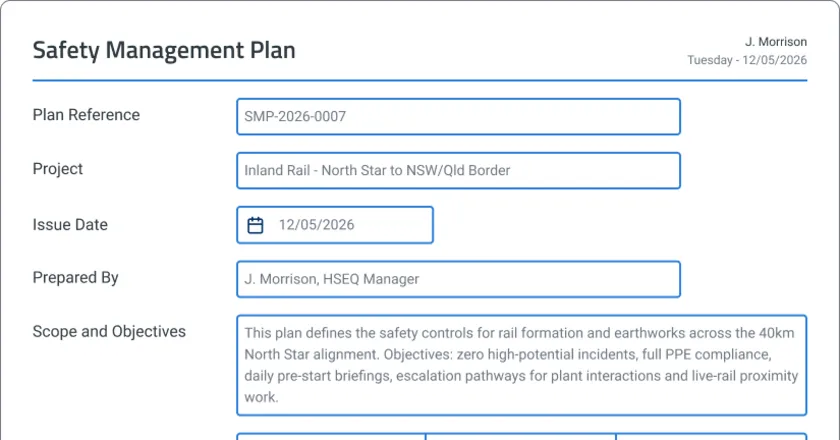
Safety Planning App
Safety planning app template that auto-generates site-specific safety management plans, hazard registers, and compliance documentation. Review,
View app
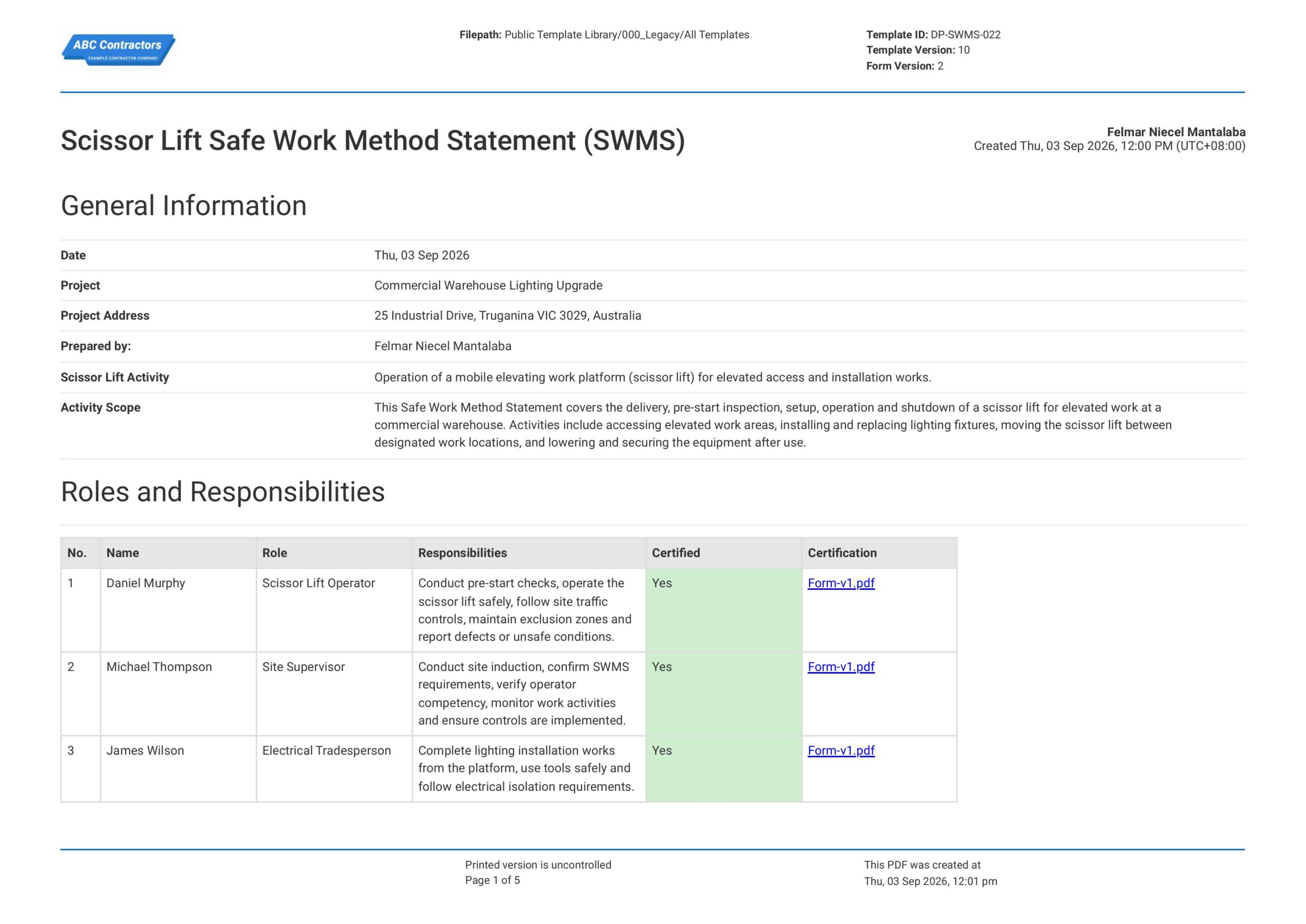
Scissor Lift Safe Work Method Statement
This Scissor Lift Safe Work Method Statement (SWMS) template is free and readily available to document how each person performing work involving a scissor lift will conduct themselves. The template includes the main
View template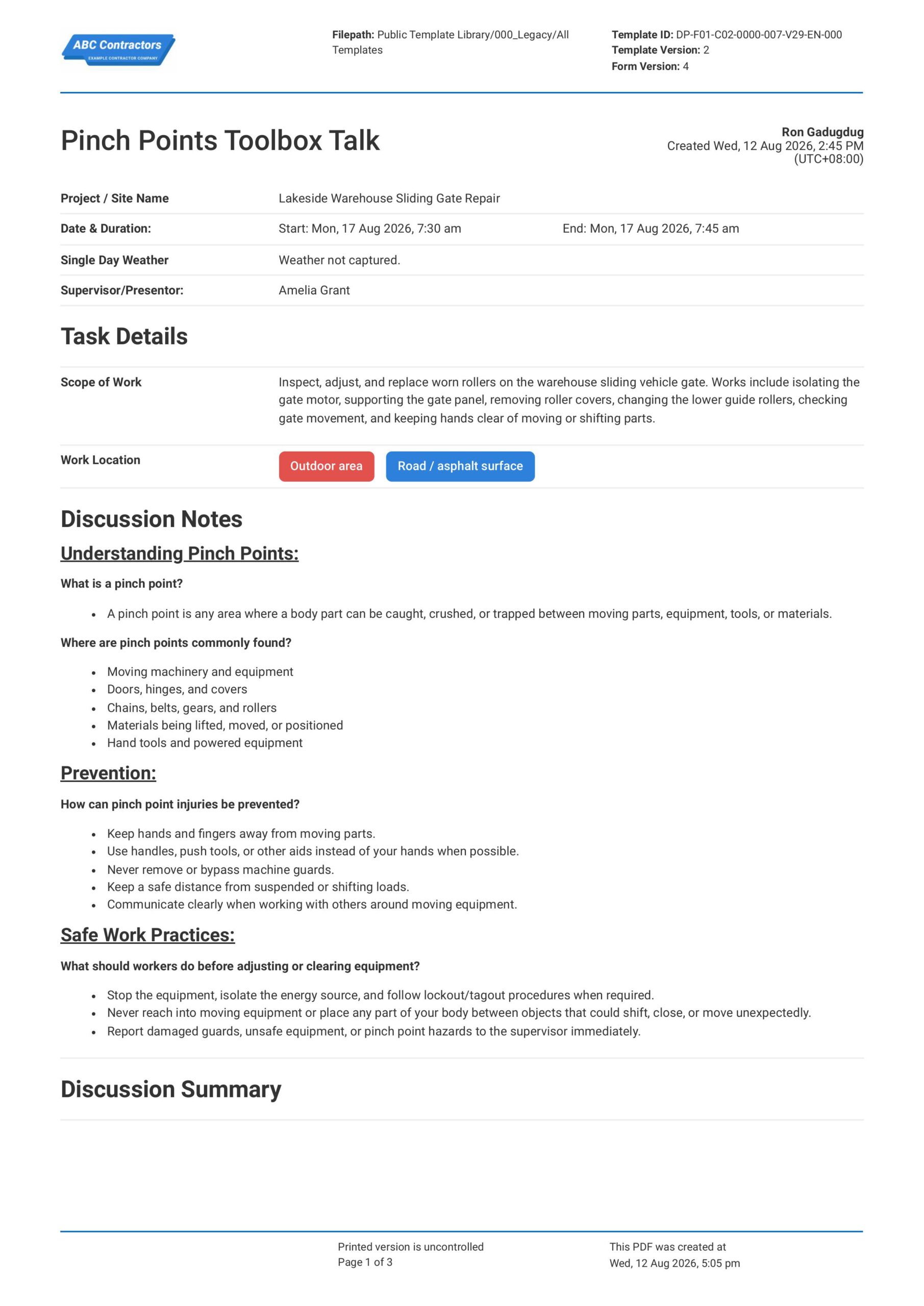
Pinch Points Toolbox Talk
This Pinch Points Toolbox Talk is an easy-to-use form that your workers can use to discuss crush, caught-between, and hand injury hazards before starting work around tools, equipment, materials, or moving parts. Record
View templateThis critical lift plan was generated with Dashpivot software
- Access, edit and complete your Lift Safety Management from any device - mobile, tablet or computer.
- Print, download or send your Lift Safety Management as perfectly formatted PDF documents with your company logo.
- Store your Lift Safety Management securely online, where they can be searched and found in seconds
- Invite internal and external parties to see, edit and sign off on Lift Safety Management online.

 English (United States)
  English (Australia)
  English (UK)
  English (New Zealand)
  English (South Africa)
  German